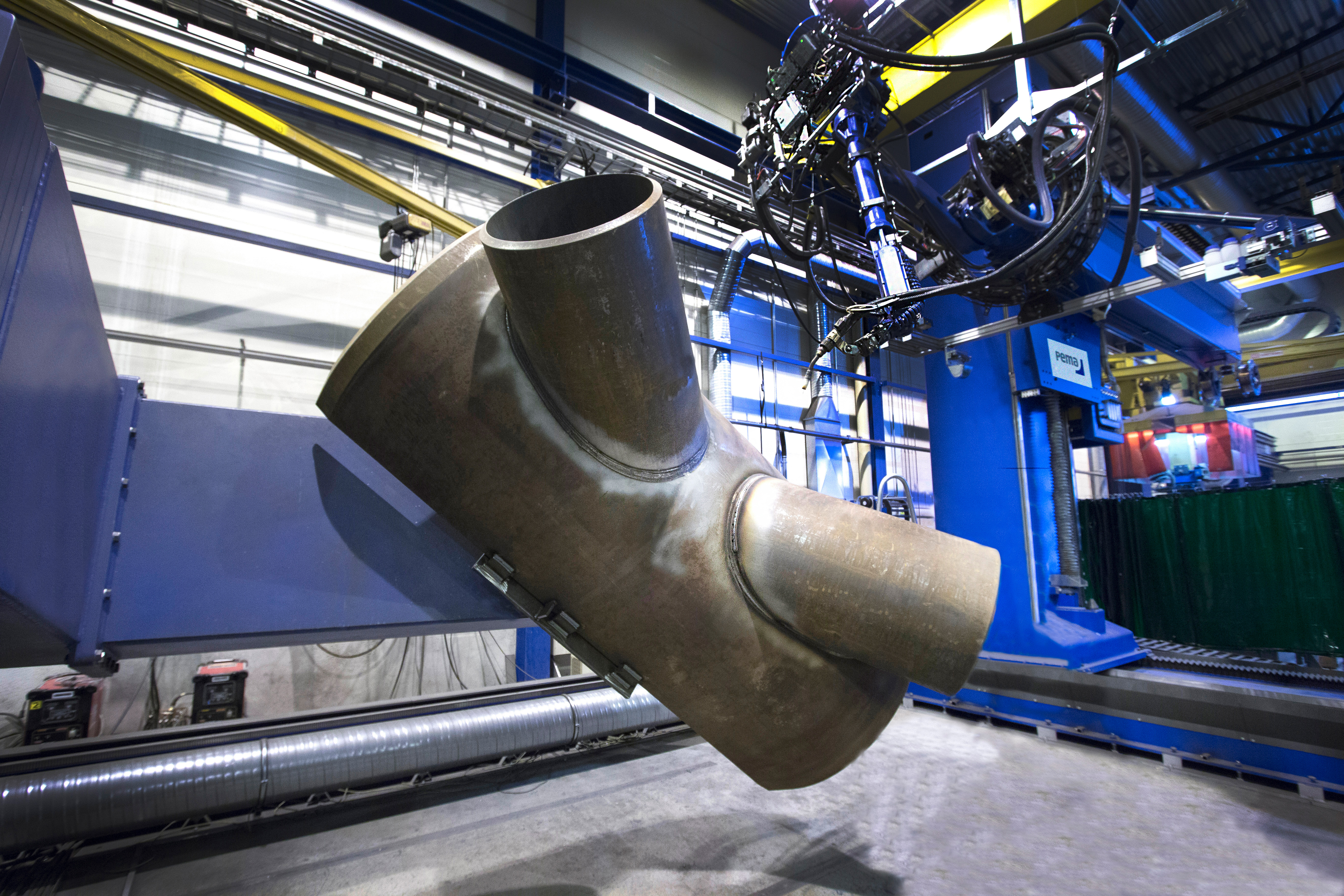
Much of the discussion around wind energy focuses on blades, nacelles and massive installation vessels. Yet, one of the most critical challenges of the energy transition lies far from the wind farm itself, in the fabrication halls where steel towers and offshore foundations are built. Here, kilometres of weld seams determine the structural integrity of turbines expected to operate for decades under extreme environmental fatigue.
As global wind energy targets require manufacturing capacity to expand significantly over the coming decade, the real constraint is no longer turbine design. Instead, it is the ability to automate the production of these massive steel structures. Fabrication processes that once relied heavily on manual welding are rapidly evolving into automated, digitally controlled production systems capable of delivering both scale and consistency.
The pressure of scale and dimension
Wind tower and foundation manufacturing is undergoing rapid industrialisation due to two converging pressures:
- Escalating production targets: meeting global climate and energy security goals demands a significant increase in annual wind installations.
- Demanding structural dimensions: as turbines scale up, the physical structures become heavier and more complex. Manufacturers must work with much thicker steel materials, larger diameters and intricate offshore foundations.
Among all production stages, welding sits at the centre of this industrial transition. The ability to weld large steel structures efficiently and consistently has become a decisive factor in factory throughput.
Overcoming the skilled welder shortage
A severe global shortage of skilled, certified manual welders directly restricts the wind sector's industrial scale-up. This workforce deficit is not a temporary resourcing bottleneck, because it represents a permanent structural challenge.
Heavy manufacturing environments face intense competition for technical talent across all industrial sectors. Furthermore, manual welding on large-scale tower structures introduces heavy physical strain, demanding working conditions and safety risks that make long-term workforce retention difficult.
To sustain throughput without compromising quality, manufacturers are turning to adaptive heavy automation. Modern robotic systems can execute complex, multi-pass heavy welds continuously, maintaining the exact technical parameters required to prevent structural defects. This technological shift allows factories to optimise their existing workforce by transitioning operators from manual labour into high-level automated system managers.
Data-driven productivity and fleet monitoring
Automation and robotics do far more than replace manual tasks, because they integrate the manufacturing floor into a connected, data-driven ecosystem.
Modern welding automation platforms feature integrated sensors that monitor arc stability, voltage, travel speed and material deposition rates in real time. This continuous data flow enables automated quality assurance, allowing software systems to identify and correct deviations before they lead to a subsurface weld flaw.
Furthermore, cloud-based fleet monitoring platforms allow management teams to analyse welding performance across multiple production systems simultaneously. This high-level visibility transforms heavy fabrication from a traditional workshop method into a highly predictable, optimised digital manufacturing science.
How is your manufacturing team using adaptive robotics to de-risk heavy welding operations and accelerate tower throughput? Share your thoughts in the comments below.
Looking for the full technical breakdown? To read the complete industrial insight on heavy automated fabrication and smart welding platforms, visit the official Pemamek website: https://pes.eu.com/exclusive-articles/automation-and-robotics-transform-wind-tower-manufacturing




-1.jpg)