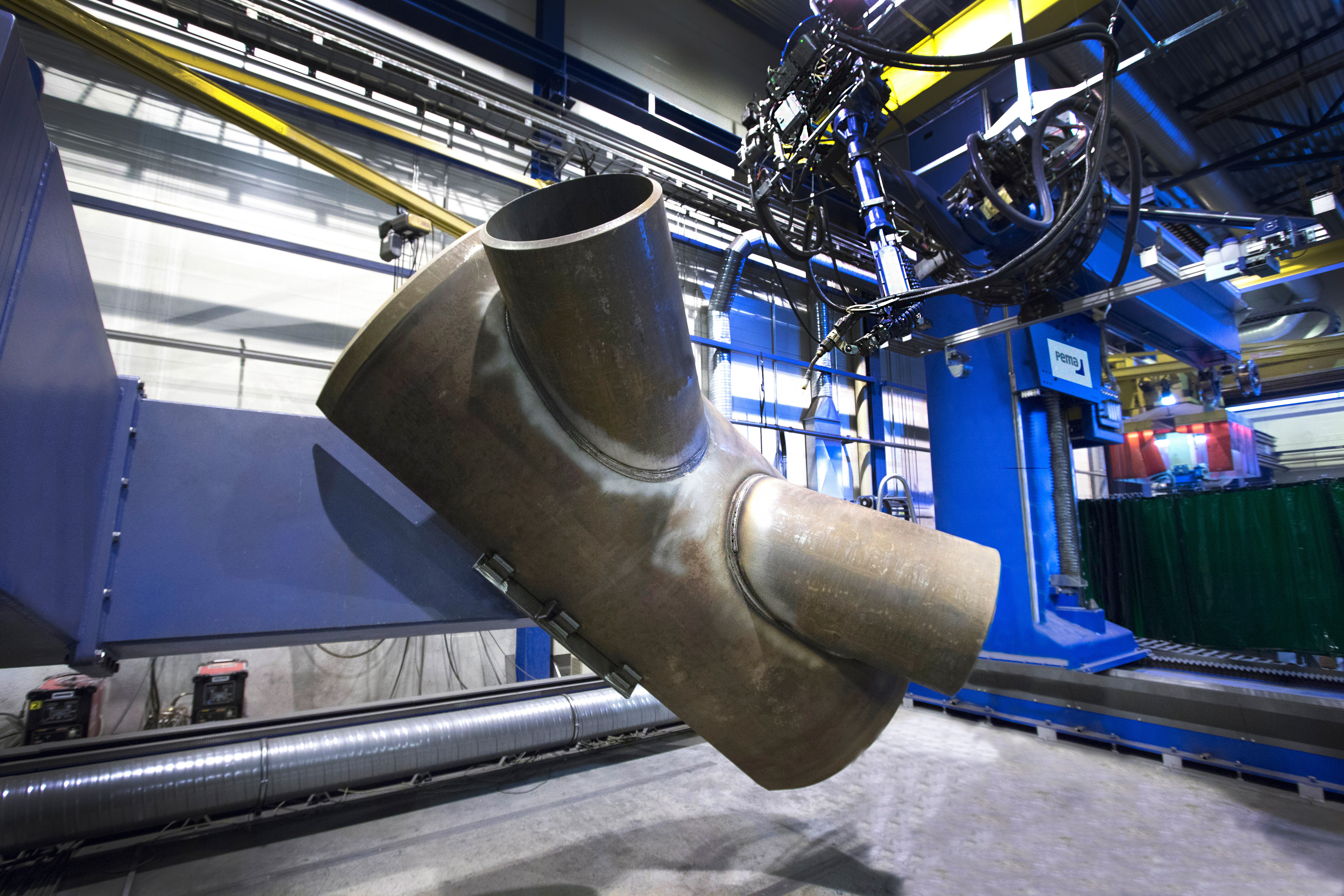
Much of the discussion around wind energy focuses on blades, nacelles and installation vessels. Yet one of the most critical challenges of the energy transition lies far from the wind farm itself, but it is in the fabrication halls where towers and offshore foundations are built. Here, kilometres of weld seams determine the structural integrity of turbines expected to operate for decades. As wind energy scales up, manufacturers are discovering that the real constraint is not only turbine design, but the ability to automate production of these massive steel structures.
Wind tower and foundation manufacturing is undergoing rapid industrialisation. Fabrication processes that once relied heavily on manual welding and conventional workshop methods are evolving into automated, digitally controlled production systems capable of delivering both scale
and consistency.
This transformation is driven by two converging pressures. On the one hand, global wind energy targets require manufacturing capacity to expand significantly during the coming decade. On the other hand, the structures themselves are becoming more demanding: thicker materials, larger diameters and more complex offshore foundations.
Among all production processes, welding sits at the centre of this transition. The ability to weld large steel structures efficiently and consistently is becoming a defining capability for tower and foundation manufacturers.
Download full article