The success of large-scale offshore renewable projects relies on precise operations carried out in some of the world's most challenging environments. At the heart of these efforts are specialized vessels and dedicated teams who manage vast amounts of environmental data to ensure both safety and efficiency.
We spoke with Bas Milatz, a marine engineer at Jumbo Offshore, to understand how his team uses a Radac wave radar system aboard the Fairplayer to transform the unpredictable ocean into a controlled workspace.
The Challenge: When Wind, Waves, and Currents Collide
For a marine engineer, the primary challenge is managing the dynamic forces of the ocean. While wind, current, and waves are manageable individually, their combination determines a project's "workability"—the number of days a vessel can safely operate.
"All three separately are not necessarily a problem, but the combination of them is always an issue," Bas explains. A vessel might need to face a specific direction to counter a strong current, inadvertently exposing itself to unfavorable waves.
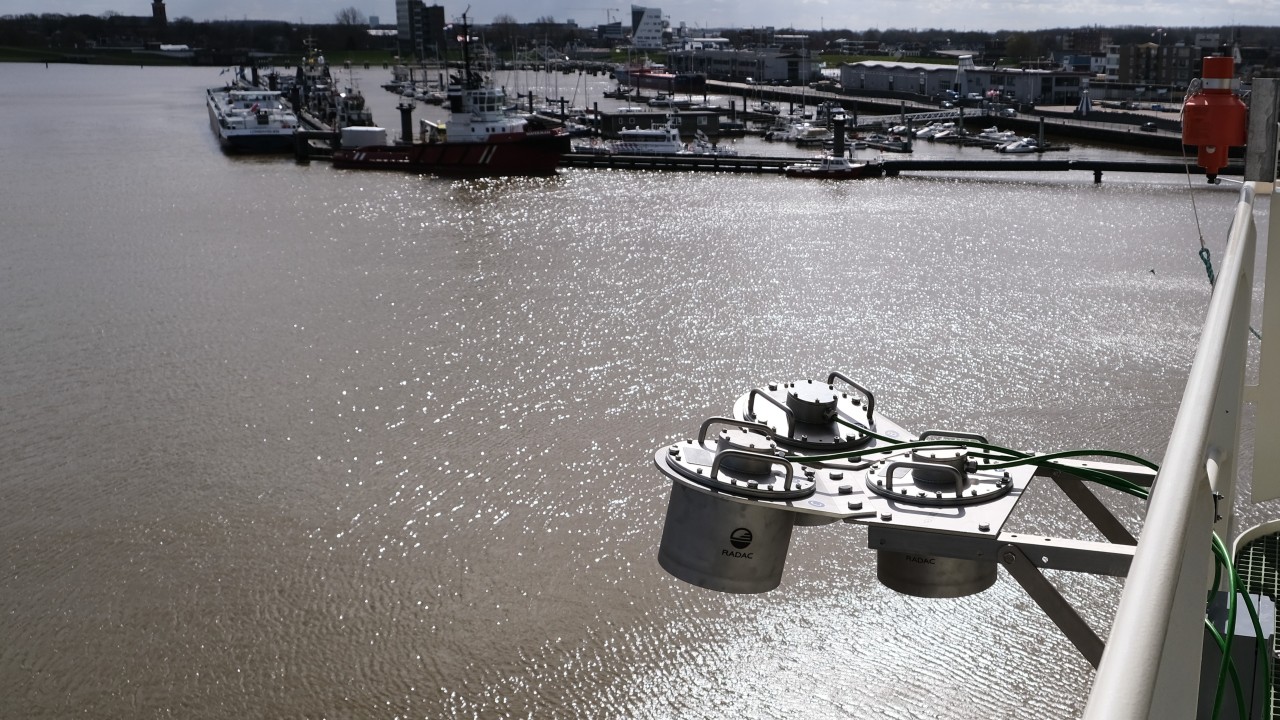
To tackle this, the Fairplayer—a hybrid heavy-lift and construction vessel—is equipped with a highly accurate wave radar system installed under the helideck. This provides a clear, unobstructed view of the sea state directly around the ship.
Data-Driven Decisions: 4 Key Benefits
The team uses this local, real-time data to optimize operations in four critical ways:
- Improving the Alpha-Factor: Real-time radar data brings the forecasted sea state closer to the design parameters, directly improving workability.
- Validating Forecasts: By comparing historical radar data with past forecasts, the team can quantify the accuracy of weather models. "If we see that the forecast and our measured data match perfectly over the past few days, we have more confidence in the forecast for the next two days," says Bas.
- Optimizing Heading: The radar's 2D wave spectrum data allows the team to run simulations and find the optimal vessel heading to minimize motion. In one instance, the radar revealed a secondary wave system invisible to the naked eye, allowing the crew to adjust and minimize heave.
- Post-Project Analysis: Data is stored in the Radac Connect cloud for in-depth "hindcast studies," allowing the team to analyze the actual environmental conditions encountered and learn for future projects.
Seamless Integration for Smarter Operations
Gone are the days of manually downloading data to USB sticks. The Radac system integrates seamlessly with the team's workflow, allowing data to be pulled directly into Python scripts for immediate use onboard.
This ability to validate in real-time and analyze after the fact elevates the technology from a simple sensor to a strategic tool. It allows operators to move beyond generalized forecasts and distant wave buoys, building a clear, data-driven picture of the environment for critical "go/no-go" decisions.
The Future of Offshore Success
The experience aboard the Fairplayer marks a shift in the operational paradigm of the offshore industry. Success will be defined by those who prioritize local, immediate environmental intelligence. By integrating advanced wave radar technology, companies can reduce costly weather-related downtime, streamline project timelines, and set a new standard for safety and reliability.