What if offshore crews didn't have to wait for the weather to change before putting their plans into action? As offshore wind projects move further from shore into deeper, more remote waters, operators face a constant balancing act between safety, costs, and uptime. At the heart of every decision is the metocean condition—sea state, weather, and environment dictate everything.
For decades, the industry has relied on scattered wave buoys and legacy radar systems. But today, a new wave of technology is delivering live, location-specific data directly to the cloud, transforming how wind farms are operated.
The Problem with Traditional Monitoring
Every offshore project faces the challenge of a shifting sea. Weather changes rapidly, and wave heights can vary significantly across a vast wind farm. Traditional methods like wave buoys offer useful insights but come with limitations:
- High Maintenance: Buoys require mooring systems and costly offshore interventions.
- Vulnerability: Exposed to harsh conditions, they are prone to damage.
- Limited Scope: A single buoy provides data for only one point, failing to capture the complex variations across a site spanning hundreds of square kilometers.
End-to-End Ocean Visibility: Enter WaveFusion
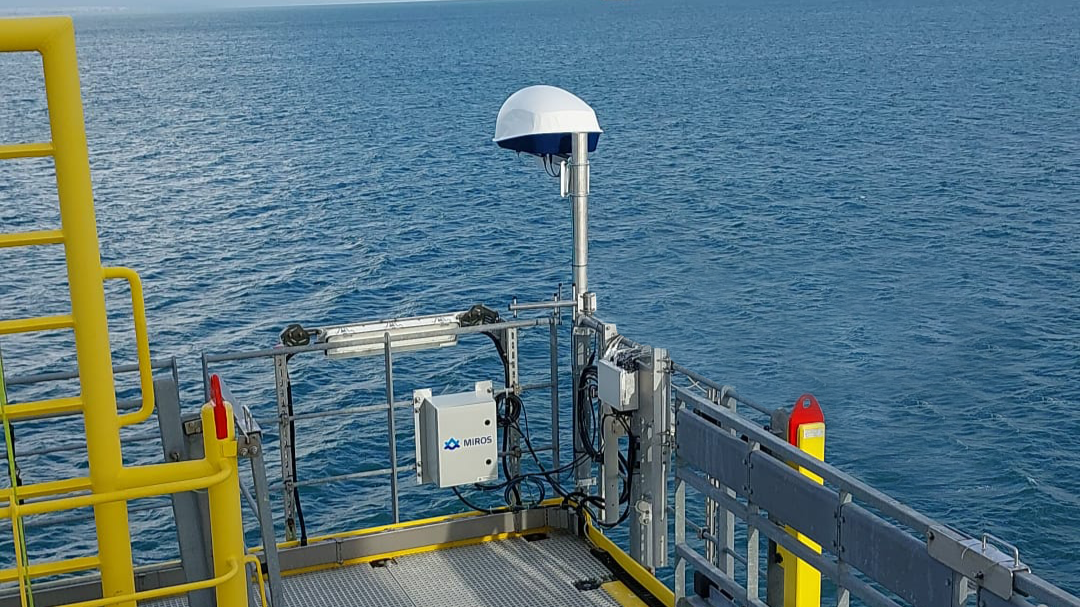
Imagine a world where you don't have to choose between localized accuracy and broader context. Systems like Miros' WaveFusion® are dry-mounted directly onto turbines, observing the sea state at multiple distances simultaneously.
- Dual Measurement: It combines a downward-looking sensor for precise water level data beneath the structure with a directional wave radar monitoring the broader sea state up to 200 meters away.
- Smart Algorithms: Merging these datasets filters out interference and the "shadowing effect" of large structures, providing a clear, accurate picture of local conditions.
Why Multiple Sensors Increase ROI
Installing sensors strategically across multiple turbines offers granular visibility into wave height, direction, and period variations across an entire site. This allows operators to:
- Tailor Decisions: Dispatch vessels only to specific areas where conditions allow.
- Optimize Planning: Update operational plans in real-time based on actual site conditions.
- Reduce Downtime: Improve turbine availability and maximize weather windows, directly boosting Return on Investment (ROI).
From Data to Actionable Intelligence
Collecting data is only half the battle; the value lies in accessibility. WaveFusion streams real-time measurements to secure cloud platforms (utilizing Microsoft Azure), making data instantly available to onshore control centers and offshore crews alike.
- Shared Awareness: Everyone works from the same detailed view, enabling faster, safer collaboration.
- Smarter Logistics: Optimize vessel dispatch, reduce unnecessary voyages, and plan maintenance with confidence by combining live and historical data.
Future-Proofing with "Sea-State-as-a-Service"
To keep pace with evolving demands, Miros offers a Sea-State-as-a-Service subscription model. Instead of buying hardware, operators subscribe to the data. Miros handles installation, maintenance, and upgrades, ensuring the system remains cutting-edge without the headache of ownership. This model aligns economic efficiency with sustainability targets by reducing the need for physical interventions and mooring systems.
Can You Afford Not to Know?
Offshore wind is entering an era where success is defined by intelligence and efficiency. The industry's next leap won't just come from bigger turbines, but from sharper decisions powered by real-time insights. In an industry where every decision carries weight, the clarity of real-time ocean data isn't just an advantage; it is a necessity.








-1.jpg)