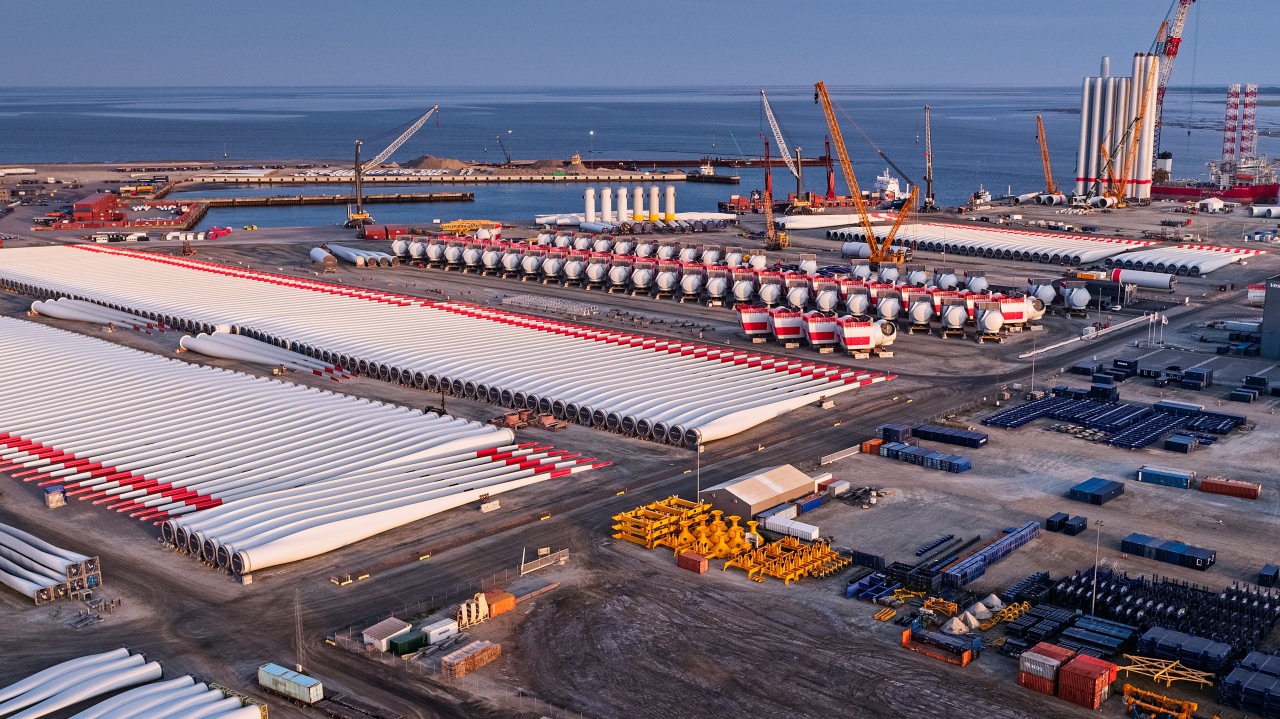
As Europe strives to meet rising energy demands and strengthen energy security, offshore wind is emerging as a cornerstone of the continent’s sustainable energy strategy. However, the industry faces mounting challenges—chief among them sluggish development cycles, logistical bottlenecks, and a shortfall in infrastructure. According to Dennis Jul Pedersen, Port Director of Esbjerg, unlocking the full potential of offshore wind requires coordinated investment, bold policy reform, and above all, deeper collaboration between ports across Europe.
Offshore Wind: Energy Security Meets Development Delays
WindEurope reported just 2 GW of new offshore wind capacity installed in 2024—far below the targets set by European governments. While the desire for energy independence is strong, manufacturers and developers are contending with complex approval processes, supply chain fragility, and inadequate grid systems.
This slow pace is out of step with what’s required to decarbonize Europe’s economies, especially as sectors like AI drive new demand for green electricity. Public funding and better trading mechanisms are urgently needed to support viable offshore wind projects and accelerate deployment timelines.
The North Sea’s Unrealised Potential
With its shallow waters and reliable wind resources, the North Sea is ideally suited for offshore wind. Yet Denmark—despite being at the heart of this opportunity—lacks the industrial capacity to scale alone. Broader collaboration between European nations is essential, not just for energy generation, but for shared energy security and economic competitiveness.
One promising development is the Alliance of Major Offshore Wind Ports of Europe, a network of ports including Esbjerg, Ostend, Saint-Nazaire, Cuxhaven, and others. These ports are not just logistical hubs but centres of turbine manufacturing and offshore expertise. Together, they represent a powerful coalition capable of accelerating offshore wind rollout across the continent.
Ports: The Hidden Backbone of Wind Energy Expansion
Despite their critical role, ports have been largely overlooked in Europe’s offshore wind strategy. The lack of port capacity is already causing delays in wind projects. Upgrades to infrastructure, operations, and inter-port coordination must become top priorities if Europe is to keep pace with turbine innovation and installation demand.
To address this, the Port Alliance has developed a planning and operations guide specifically for offshore wind ports—highlighting best practices and identifying unique operational needs. Such guidance lays the foundation for a more efficient, resilient offshore wind logistics ecosystem.
Logistics and Local Manufacturing: A Competitive Edge
Historically, logistics account for 12% to 14% of an offshore wind farm’s capital expenditure. As turbine components grow in size, these costs are only expected to increase. Ports that can support on-site manufacturing near major wind developments will gain a distinct competitive advantage.
However, not all ports are equally equipped for this role. A more structured, EU-wide strategy is needed to identify and invest in ports with the most potential, similar to the Trans-European Transport Network (TEN-T) model. Applying this logic to offshore wind infrastructure would streamline development and reduce cross-border inefficiencies.
A Call for Unified Action
Now is the time for Europe to act. Offshore wind offers not only a path to low-cost, low-carbon energy, but also a strategic tool for economic resilience. Moving beyond national interests toward collaborative development of the most promising waters and ports is essential for long-term sustainability.
With a shared commitment to upgrading port infrastructure, improving logistics, and accelerating project timelines, Europe can position offshore wind as a defining pillar of its green energy transition.
Learn more about Port Esbjerg and the Alliance of Major Offshore Wind Ports at: www.portesbjerg.dk






-1.jpg)