Europe’s growth in artificial intelligence (AI) is creating new demands on electricity infrastructure. Data centres using graphics processing unit (GPU) workloads require high power densities and can experience rapid changes in demand, while operators are also under pressure to reduce emissions and manage constrained grid connections.
Nina Stuttmann and Raf Bruggeman of Exide Technologies argue that battery energy storage systems (BESS) are therefore moving beyond their traditional backup role to become an active part of energy infrastructure.
AI changes the power requirement
Traditional data centre loads developed relatively predictably. AI workloads can behave differently, with high-density GPU racks creating much sharper fluctuations in electricity demand.
The International Energy Agency (IEA) figures cited in the feature indicate that global data centre electricity consumption could more than double by 2030, with AI a major driver.
This places greater emphasis on:
- High power quality
- Rapid response to load changes
- Grid resilience
- Lower-carbon backup
- Greater control over energy costs
Battery storage can respond in milliseconds, helping manage short-term changes while supporting renewable generation.
Three roles for battery storage
The authors identify three main areas where BESS can support high-consumption sites.
First is grid flexibility. Batteries can balance changes in supply and demand and provide fast frequency response as the proportion of wind and solar generation increases.
Second is renewable integration. Surplus renewable electricity can be stored and used later when grid electricity is more carbon intensive or expensive.
Third is cost management. Behind the meter storage can support peak shaving and tariff optimisation while reducing exposure to electricity price spikes.
Exide Technologies suggests that a 20 to 50 MW AI facility could use BESS to reduce peak grid imports and potentially defer some grid reinforcement requirements.
From backup to active operation
Historically, batteries in data centres provided short-term power while diesel generators started during an outage. This model is changing.
New architectures can combine uninterruptible power supply (UPS), BESS and distributed energy resources. Rather than remaining idle until an interruption, batteries can support power quality, manage load fluctuations and participate in grid services.
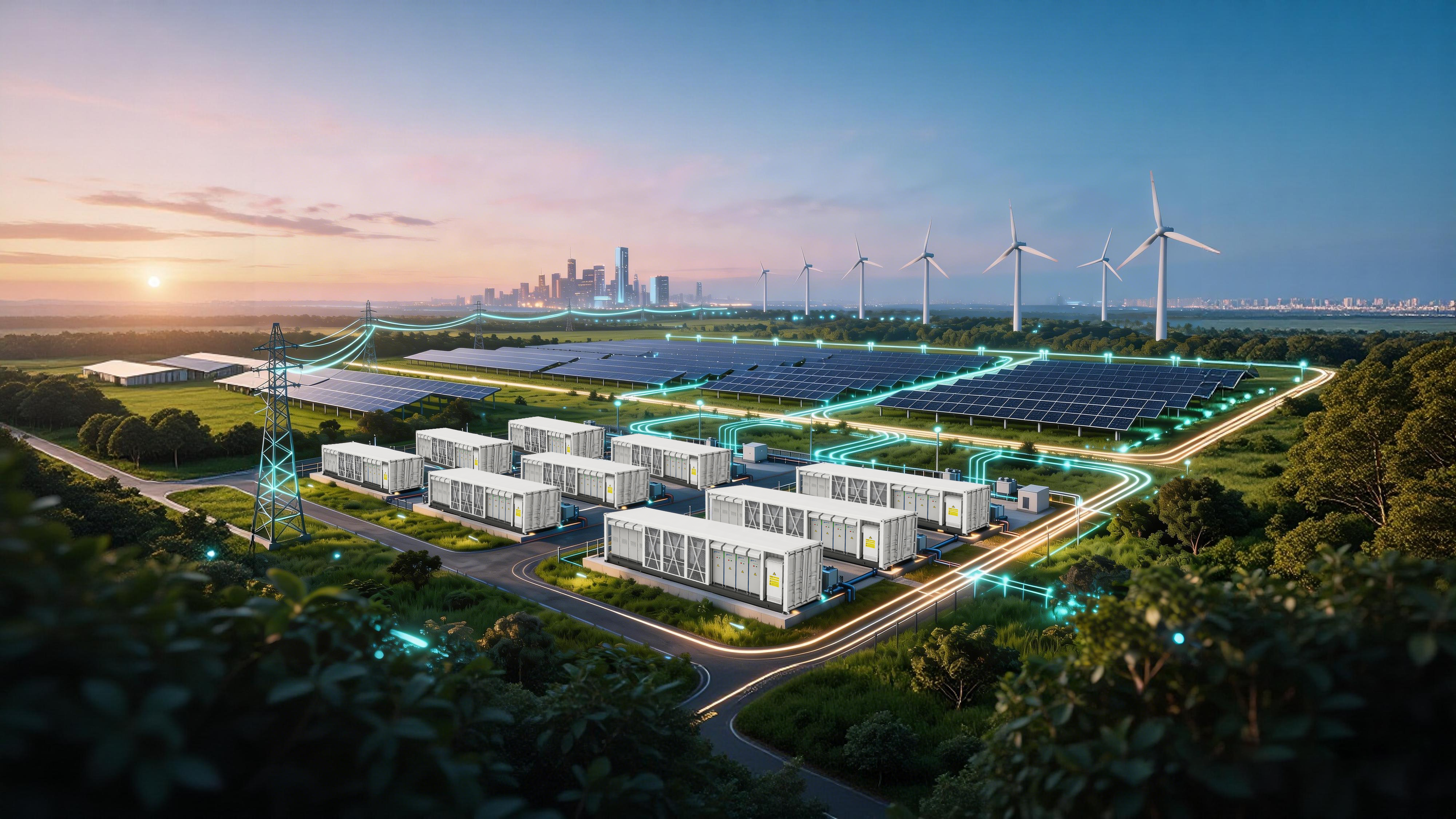
BESS infrastructure is supporting this transition.
Exide says its BESS portfolio is designed around grid support, renewable integration and peak management. These are company-specific statements about its system architecture.
Beyond the data centre
The same principles apply to manufacturing, logistics, process industries and other energy-intensive operations.
Behind the meter storage can:
- Increase onsite renewable self-consumption
- Reduce peak grid demand
- Support microgrid operation
- Respond quickly to grid instability
- Shift consumption towards lower-cost periods
As storage durations increase, systems can provide hours of flexibility rather than only minutes of emergency backup.
Flexibility becomes part of decarbonisation
European data centre operators are also facing greater scrutiny of energy and environmental performance. The European Commission requirements referenced in the feature introduce monitoring and reporting obligations intended to improve transparency.
BESS cannot deliver low-carbon operations alone, but it can help operators align electricity consumption with cleaner generation while reducing reliance on fossil-fuelled contingency power.
Rapidly expanding digital infrastructure is increasingly connected with the energy systems required to support it.
For Exide Technologies, the wider argument is that battery storage should now be treated as core infrastructure rather than an optional addition. As AI increases electricity demand while Europe pursues decarbonisation, flexibility, resilience and power quality will increasingly need to be addressed together.
Read the full feature from Exide Technologies on battery storage, AI data centres, grid flexibility and operational resilience in PES Solar: https://pes.eu.com/exclusive-articles/battery-storage-from-standby-asset-to-operational-backbone