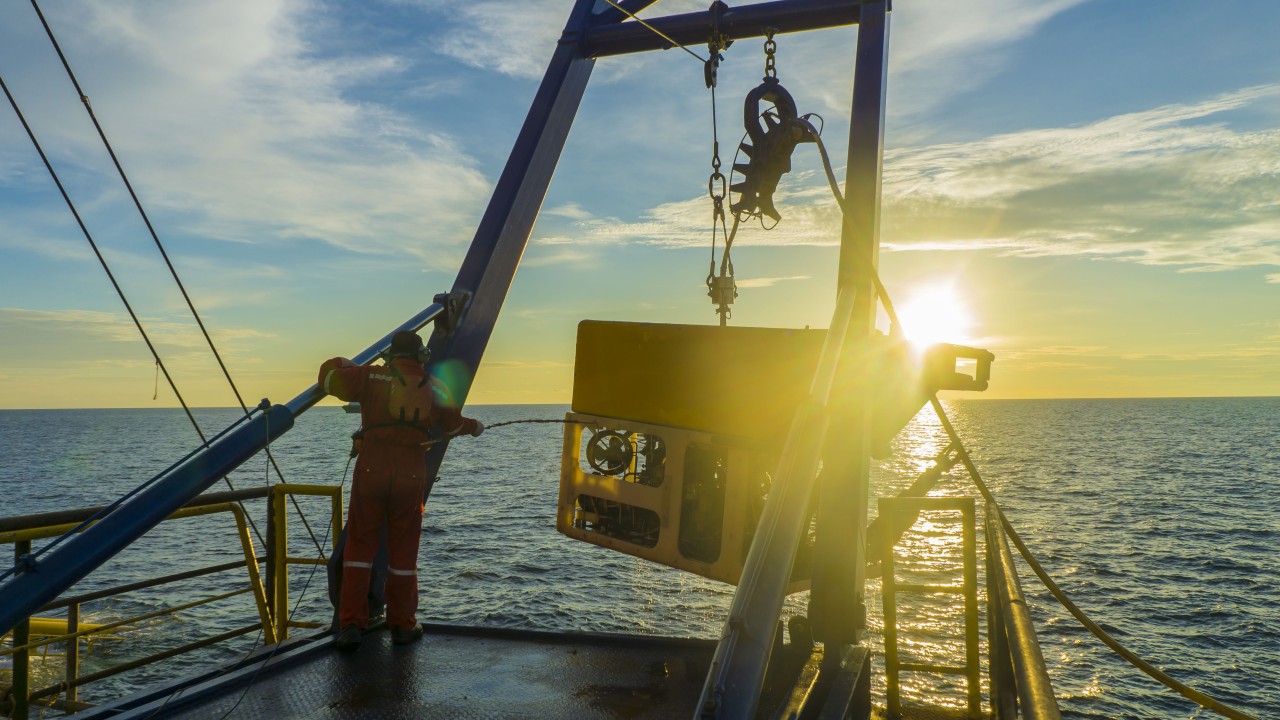
As offshore wind becomes central to the global energy transition, the vast arrays of turbines rely on a largely invisible support network operating beneath the waves. Remotely Operated Vehicles (ROVs) are vital workhorses for installation, inspection, maintenance, and repair, but demand for these subsea machines is rapidly outpacing supply, putting strain on the existing fleet.
Many ROVs originally built for oil and gas are being repurposed, offering temporary relief. However, the sheer scale of upcoming offshore wind projects, especially those venturing into deeper waters, necessitates both refurbishment programs and significant new builds. Amidst this expansion, mission-critical components like buoyancy modules demand careful attention. These modules ensure ROVs maintain stability and performance at depth, enabling safe, efficient, and reliable operations.
Driving Demand: Renewables, Deeper Waters, and Electrification
Several key trends are converging to reshape subsea operations and intensify ROV demand:
- Rapid Offshore Wind Growth: Including the move towards floating wind in deeper waters.
- Oil & Gas Expansion: Operators are revisiting brownfield sites and exploring previously unviable depths.
- Electrification Shift: The industry is moving from traditional hydraulic ROVs to lighter, more efficient, and environmentally sustainable electric-powered systems.
Whether building new ROVs or upgrading legacy units, the priorities remain consistent: improved efficiency, enhanced durability, and verified performance at depth.
The Unseen Risk: Why Buoyancy Module Failure is Not an Option
As ROV missions push into deeper, harsher, and more remote offshore environments, the materials used for buoyancy must meet increasingly stringent demands. These modules are engineered to withstand extreme pressures for extended periods.
Failure is not an option. If buoyancy modules fail, an ROV can lose its ability to maintain stable positioning, risking:
- Collisions with subsea infrastructure.
- Complete mission failure.
- Irretrievable loss of the ROV itself.
In remote locations, even minor buoyancy issues can cascade into major operational delays with significant financial and environmental consequences.
The Testing Imperative: Ensuring Performance Under Pressure
Rigorous testing is essential to verify the performance and reliability of buoyancy modules. Key tests include:
- Water Absorption: Excessive absorption reduces buoyancy over time.
- Hydrostatic Crush Pressure: Determines the maximum safe operating depth.
- Density and Compressive Strength: Confirms the material's ability to provide lift and resist operational stresses.
- Weight Verification: Precise weight-in-air and weight-in-water tests confirm the exact buoyancy force, crucial for hovering and maneuvering efficiently.
- Dimensional Checks: Laser scanning ensures modules meet exact design specifications.
Despite these critical requirements, a significant gap exists: many manufacturers still rely solely on in-house testing without independent oversight or universally mandated third-party verification. This practice introduces potential inconsistencies and risks. Independent, standardized testing is vital to remove uncertainty and guarantee reliable performance offshore.
DNV Type Approval: The Benchmark for Confidence
While not always mandatory, DNV type approval serves as a widely recognized benchmark for subsea buoyancy quality, durability, and performance. As the leading classification society, DNV provides independent validation that materials meet the demands of challenging subsea environments.
The rigorous DNV process involves comprehensive lab tests and quality audits, examining mechanical strength, water absorption, density, and pressure resistance. Achieving this certification helps designers, operators, and end-users mitigate risk and ensure long-term reliability – a valuable differentiator in high-cost, high-risk offshore wind operations.
Case Study: Equipping a Deep-Sea Explorer with Certified Buoyancy
The importance of certified materials was highlighted when Inkfish, a marine research organization, needed to replace the buoyancy on its full ocean depth-rated submersible, DSV Bakunawa (formerly Limiting Factor, used in The Five Deeps Expedition). As one of the few submersibles DNV-certified for repeated dives to the deepest parts of the ocean, it required DNV-approved materials.
Base Materials, the first syntactic buoyancy manufacturer to achieve full DNV type approval across its Subtec® portfolio, was selected. They will supply Subtec® 11500, a low-density, high-performance material rated for 11,500 meters, ensuring the vessel maintains its critical classification. Subtec materials use high-grade hollow glass microspheres in a novel polymer matrix to achieve ultra-high strength-to-weight ratios and water resistance.
Preparing for a Deeper, Busier, Greener Future
The transition to renewables is fundamentally transforming subsea operations. Offshore wind's move into deeper waters, the rise of electric ROVs, and the upgrading of legacy equipment all underscore the need for uncompromising quality in critical components.
Certification of buoyancy materials is no longer a routine check; it's a strategic necessity. As offshore infrastructure becomes more ambitious, only proven, independently verified components like DNV type-approved buoyancy modules will meet the demands of a deeper, busier, and greener energy future.