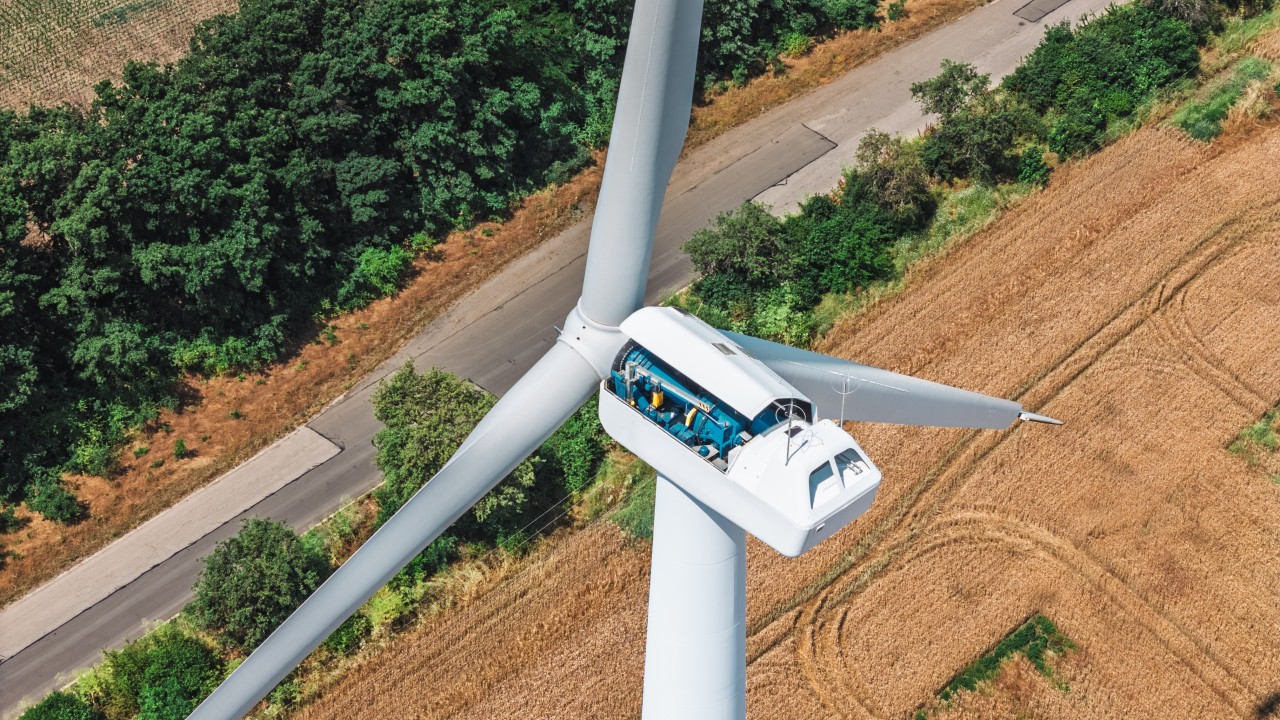
As Europe's wind energy sector matures, a growing number of first-generation turbines are reaching their planned end-of-life. But does decommissioning have to mean disposal? French startup Renvo is proving that end-of-life can be the start of a valuable second chapter.
We spoke with CEO Alexandre Bousquet and Managing Director Nicolas Vrecourt to understand how their digital marketplace is transforming end-of-life strategies, championing circularity, and creating new opportunities for developers across Europe.
From Mountain Ride to Market Solution
The idea for Renvo was sparked during a cycling trip near Montpellier, France. Alexandre, managing chaotic turbine dismantling operations, saw a disconnect. Ageing turbines, perfectly suited for permits allowing smaller dimensions (a size increasingly rare in new OEM portfolios), were being scrapped instead of reused. "Most of the dismantled equipment wasn't reused; it was simply recycled," explains Nicolas. "For us, that's a dead end, a waste of value-added assets".
They saw a need to bridge the gap between the available supply of smaller, decommissioned turbines and the persistent demand from developers facing height restrictions or seeking cost-effective solutions. After a year of planning, Renvo launched in August 2024 to create a structured, transparent marketplace for these assets.
Circularity in Practice: Beyond Dismantling
Renvo is challenging the traditional, often opaque, turnkey dismantling model where turbines are quoted at scrap value with little information shared with the owner.
"We operate with full transparency, using a brokerage model," says Alexandre. Customers know exactly where turbines go, to whom, and at what price, giving them greater control and confidence. This approach incentivizes better maintenance and responsible end-of-life planning.
But Renvo offers more than just matchmaking. Their services include:
- Thorough site assessments focused on asset condition and logistical alignment.
- Comprehensive project support: dismantling, transport, refurbishment, recertification, and reassembly.
- A network of experienced partners across Europe specializing in various turbine technologies.
- Cost-effective, long-term storage options.
Assessing Viability: Reuse, Refurbish, or Retire?
Evaluating ageing turbines is complex, especially given often incomplete historical data. Renvo's process involves:
- Reviewing available documentation (performance history, component replacements).
- Advising sellers on necessary third-party inspections to determine remaining lifespan and condition.
- Producing a comprehensive summary for potential buyers.
The decision to refurbish depends heavily on the destination project's context. "A turbine in good condition being reinstalled in a country with flexible regulations might not need refurbishment," notes Alexandre. "But in France, where auction-based tariffs apply, the turbine must be almost like new". The goal is tailored optimization, saving costs where possible while ensuring reliability. "Refurbishing every component by default isn't the most cost-effective strategy," adds Nicolas.
What Makes a Healthy Second-Hand Market?
Beyond price, several factors are crucial for a thriving resale environment:
- Transparency and Documentation: Sellers must provide sufficient data to demonstrate asset history and quality. Poor traceability increases buyer risk.
- Timing and Planning: Aligning seller decommissioning schedules with buyer project timelines is critical. Renvo advises starting the process 12-18 months in advance. Last-minute deals often fail.
- Regulatory Viability: Operating in countries where second-hand turbines are legally and practically feasible is key. Renvo closely monitors regulations to support clients.
ESG and Stewardship at the Core
For Renvo, Environmental, Social, and Governance (ESG) principles are foundational30. "Dismantling without a reuse strategy wastes resources and generates unnecessary emissions," states Alexandre. The company developed its own carbon calculator to quantify emissions generated versus avoided under different scenarios (reuse vs. recycling). This data helps clients make strategic, sustainability-aligned decisions. "Relocating a turbine can save several hundred tonnes of $CO_{2}$ compared to manufacturing a new one," notes Nicolas.
True stewardship involves viewing turbines as long-term responsibilities, applying principles like double materiality to consider both financial and environmental outcomes. "Just working in renewables doesn't automatically make a company sustainable," Nicolas adds. "That's no longer enough".
The Data Challenge and Cross-Border Collaboration
A major hurdle remains the lack of comprehensive data on older assets, often due to poorly structured legacy agreements or changes in ownership. Solid data is essential for assessment and crucial for securing financing for projects using second-hand turbines. Renvo is developing a digital pricing index to bring clarity to this historically opaque market.
Cross-border collaboration is essential for success. Renvo relies on its European network to connect buyers and sellers and manage the complex value chain, coordinating with partners specializing in specific OEMs (Nordex, Vestas, Enercon etc.) for refurbishment, installation, and maintenance. Navigating differing national regulations for certification and grid connection is also a key part of their service.
Vision for a Truly Circular Wind Industry
What does success look like? "When developers routinely assess second-hand turbines for their projects," says Alexandre. Nicolas envisions a market structure similar to automotive or aviation, with standardized traceability for spare parts.
Key changes still needed include:
- Greater industry competence and efficiency in reuse.
- Improved data management practices by asset owners.
- Better structure and traceability in the spare parts supply chain.
By demonstrating what's possible, Renvo is taking crucial steps towards shifting industry culture and building a more circular, resilient, and responsible wind sector.