Anyone working on wind turbine blades knows how quickly the weather can change a repair plan.
Wind, rain, moisture and temperature changes can stop work, shorten repair windows and put extra pressure on technicians, equipment and project schedules. Konrad Kosmala, CEO of BladeTent, looks at why protection from the weather is better planned before mobilisation than introduced once conditions have already disrupted the job.
Weather affects the whole repair campaign
A weather-related interruption rarely means only one lost working day. Blade repair depends on technicians, access systems, materials, tools and supporting equipment being available at the right time.
When conditions stop work, the consequences can include:
- Reorganising specialist personnel
- Extending equipment rental periods
- Rescheduling access and transport
- Changing the sequence of repairs
- Delaying work on other blades or locations
Rain and moisture can expose the repair area to unsuitable conditions, while high or low temperatures make it more difficult to maintain a stable workspace. Strong winds can further restrict the available working period.
The challenge is therefore not simply keeping technicians dry, but reducing the influence of changing external conditions on the repair process.
Creating a controlled workspace
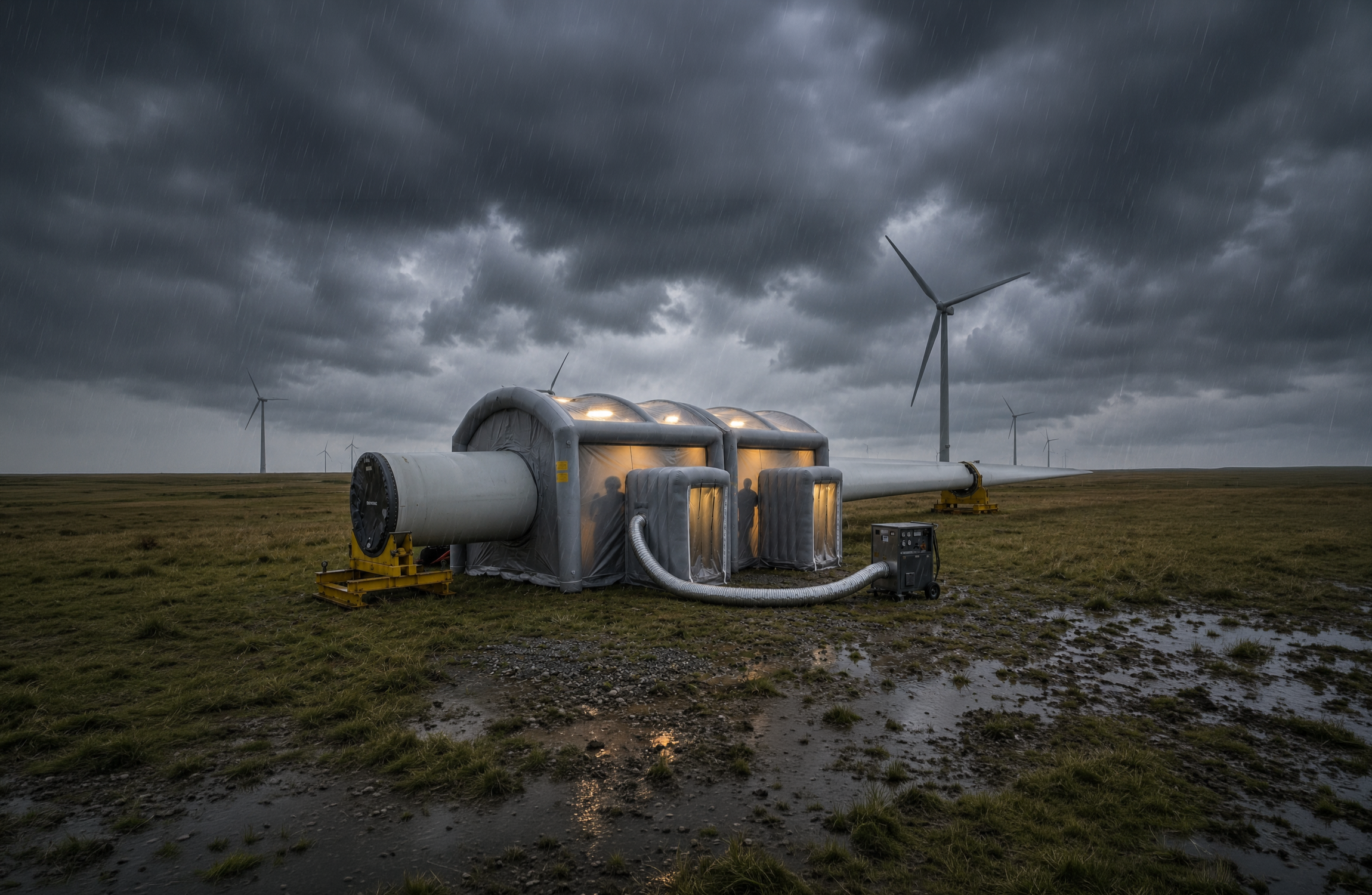
One approach is to create an enclosure around the specific blade section being repaired.
BladeTent uses a modular inflatable shelter positioned around the selected work area rather than enclosing the entire blade. The company says this allows the system to be adapted to blade geometry, repair location and access requirements.
For repairs requiring greater environmental control, the enclosure can also be connected to an external heating, ventilation and air conditioning (HVAC) system.
Conditioned air enters the enclosure while air from the workspace returns through a separate duct. The intention is not to reproduce laboratory conditions onsite, but to reduce temperature and airflow fluctuations during environmentally sensitive repair work.
Planning protection before mobilisation
Kosmala argues that a shelter is most effective when treated as part of the repair strategy rather than an emergency response to changing weather.
Before mobilisation, teams should consider:
- Where the repair will take place
- Which blade section requires access
- How the enclosure will be installed
- Whether temperature or airflow control is needed
- How access equipment, materials and HVAC will work together
For campaigns involving several blades, a repeatable enclosure and environmental control strategy can also simplify movement between repair locations.
The shelter, HVAC equipment, access system and repair materials should therefore be planned as one working setup rather than as separate elements.
From reactive to planned repairs
Enclosures can reduce the impact of some environmental conditions, but they can’t remove every limitation. Some conditions will still prevent work from continuing, and weather remains an important variable in wind energy operations.
The objective is instead to reduce unnecessary exposure and give project teams greater control over the conditions surrounding the repair.
For operators and service companies, considering environmental protection early can create a more predictable workspace and help teams make better use of available repair windows.
As Kosmala concludes, the weather itself cannot be controlled. Its impact on a repair campaign can be planned for.
Explore the complete industrial insight in PES Wind: https://pes.eu.com/exclusive-articles/the-real-cost-of-weather-windows









-1.jpg)
-1.jpg)