How can the UK revitalize its historic steel industry while simultaneously delivering on its ambitious offshore wind targets? The answer may lie in a new, collaborative approach that unites the key maritime sectors: offshore wind, shipbuilding and repair, and oil and gas decommissioning. By investing in shared, multi-purpose infrastructure and breaking down traditional industry silos, the UK can lay the groundwork for long term industrial strength and global competitiveness.
This vision requires a three tiered approach to transform the UK's steel sector into a cornerstone of the energy transition.
Tier 1: Investing in Smart, Multi-Purpose Infrastructure
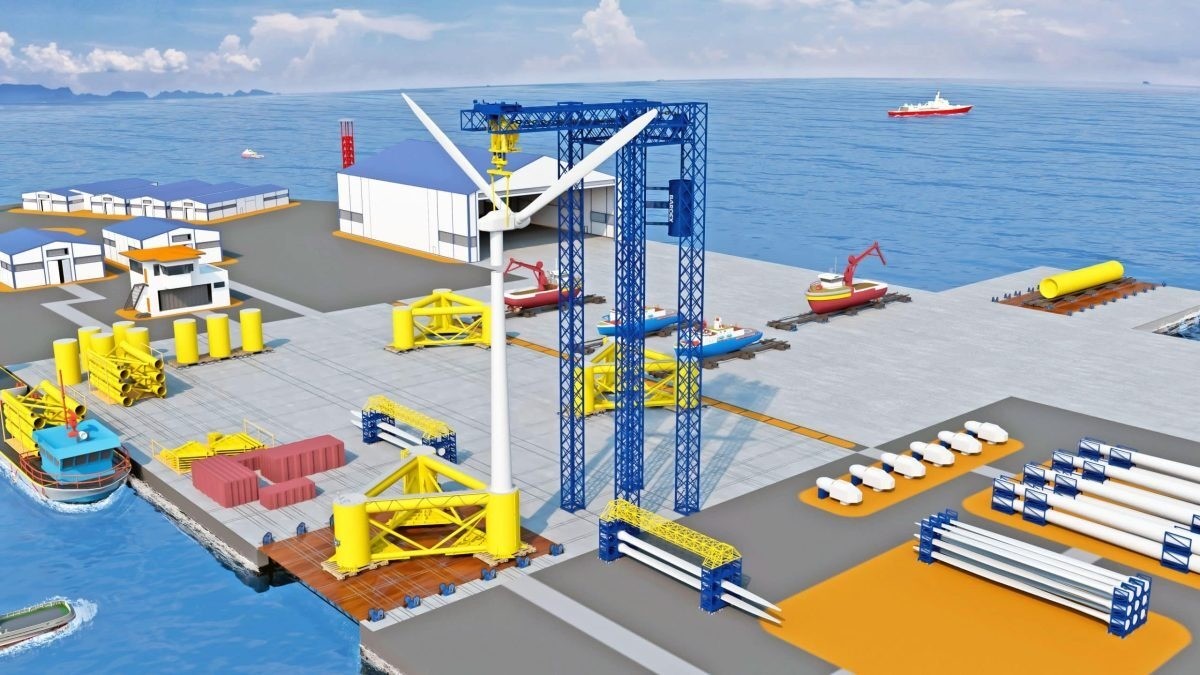
With limited coastline, even for an island nation, the smart move is to think about how to expand the coastline pie, rather than divide it between industries. This requires forward thinking, multi-purpose infrastructure that minimizes land use.
Current loadout methods for floating offshore wind often employ large, land-intensive slipways or rely on slow, expensive, and carbon-intensive barges and tugs. These methods typically cannot handle fully integrated turbines, creating additional marine operations and bottlenecks.
Innovative facility designs avoid these pitfalls. For example, Bardexs proven OmniLift™ hydraulic chain jack ship lifts, which have been safely launching and recovering ships for decades, can be scaled for floating offshore wind. Crucially, the same asset can also be used to lift monopiles, ships, submarines, or other floating assets, giving a port a diversified capability to support multiple sectors. As the offshore wind construction phase peaks and Oamp;M demands ramp up, this same infrastructure can be used to repair the very Service Operation Vessels (SOVs) that maintain the wind farms, keeping local jobs secure and maximizing the ports return on investment.
The Power of a Circular Economy: Connecting Decommissioning to Construction
This multi-purpose infrastructure also offers a prime opportunity to integrate oil and gas decommissioning into the renewable energy supply chain. Decommissioned offshore oil platforms can be brought ashore, where the high quality steel can be melted down and recycled into new products like foundations, anchors, and mooring components for the offshore wind industry. By locating these decommissioning and new construction yards near steel plants, the carbon footprint of the entire process can be reduced. This serves a practical purpose and helps transition oil and gas professionals into the clean energy sector.
Tier 2 & 3: Breaking Down Silos and Building Collaborative Partnerships
To optimize the marine sector, information silos cannot exist. Key players in offshore wind, shipbuilding, and decommissioning must connect and learn from one another, moving beyond industry specific echo chambers to collaborate on shared challenges like long term infrastructure needs and workforce training.
Elevating British industrial competitiveness requires a truly collaborative approach. This is already happening. US-based Bardex Corporation recently signed a memorandum of understanding (MOU) with UK based Gabriel Engineering Group to build a new advanced manufacturing facility for maritime supply chain assets, using British produced steel. They are also collaborating with steel mills, foundries, and the National Manufacturing Institute of Scotland (NMIS) with funding from The Crown Estate to design this purpose-built facility.
The fate of UK offshore wind hangs in the balance with the countrys steel industry. Without a local source of steel, shipping costs will impact already tight project budgets. By fostering a collaboration of marine industries, the UK can make a refreshing change, reinvigorating one of its most historic industries for a sustainable future.
Learn more about Bardex's multi-purpose infrastructure solutions: www.bardex.com