Exclusive Articles

Accelerating Moray West: How USVs Keep Wind Construction on Track


Published in: Wind, Digital Blog

Accelerating Moray West: How USVs Keep Wind Construction on Track image

In the fast-paced world of offshore wind construction, keeping to schedule is everything. XOCEAN recently demonstrated how cutting-edge uncrewed technology can be the key to maintaining momentum, delivering critical seabed data to Ocean Winds for the Moray West Offshore Wind Farm.

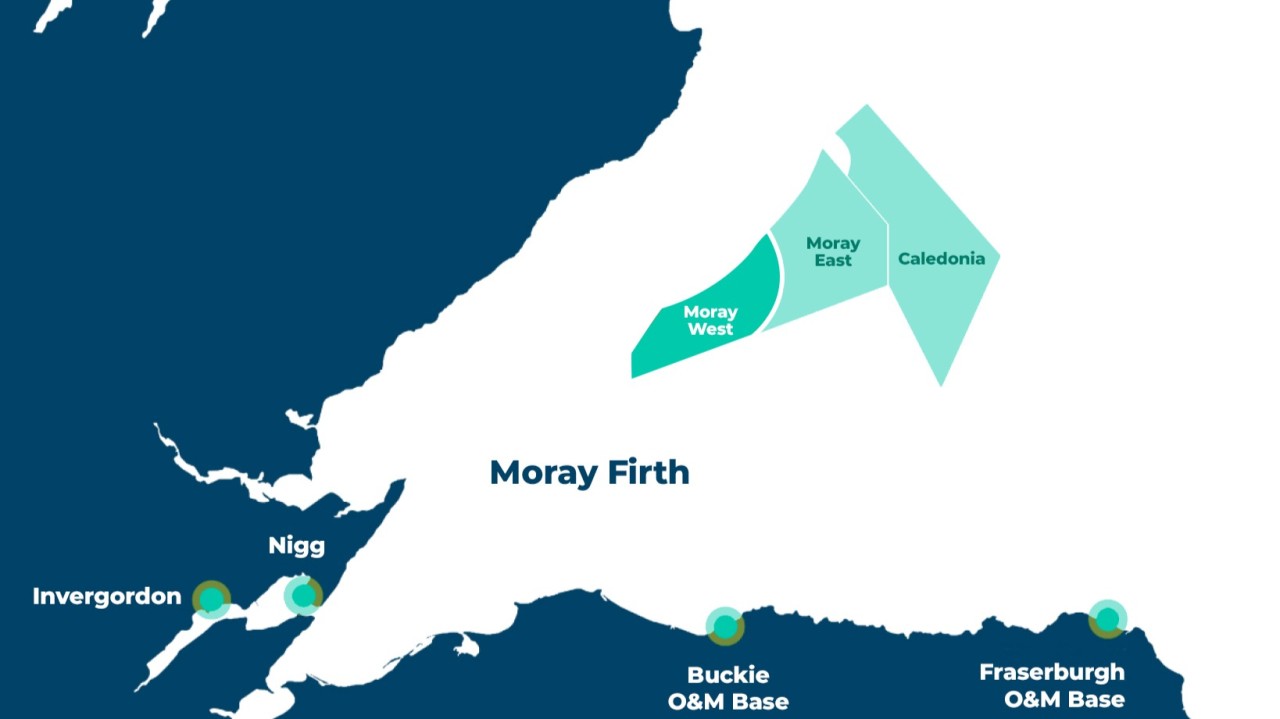
Developed by Ocean Winds (a joint venture between EDPR and ENGIE), Moray West is a significant project located in the Moray Firth, Scotland. Once complete, its 60 turbines will generate 882 MW, powering over 1.33 million homes and offsetting 1.1 million tonnes of $CO_2$ annually. But before the turbines could turn, the seabed needed to be cleared and verified.

The Challenge: Precision Under Pressure

Ocean Winds required detailed debris clearance surveys following the installation of transition pieces and before turbine installation. The mission was clear:

  • Accurately determine water depths around monopiles.
  • Identify any obstructions that could hinder jack-up barge deployment.
  • Execute surveys across four distinct phases, perfectly synchronized with the construction schedule.

The requirements were stringent: 100% coverage with a 0.5m object detection threshold, and all data delivered within 30 days of acquisition to inform immediate planning.

The Solution: Uncrewed Efficiency

XOCEAN mobilized Uncrewed Surface Vessels (USVs) for each phase, operating out of Buckie Harbour. These "Over-The-Horizon" vessels were controlled 24/7 via satellite by pilots in a remote control room.

  • Technology: The USVs were equipped with NORBIT Winghead Multibeam Echo Sounders (MBES) for high-resolution bathymetry and Valeport Swift SVPs for environmental compensation.
  • Safety & Integration: Operating at Autonomy Level 2, the USVs integrated seamlessly with existing marine traffic. Ocean Winds noted that simultaneous operations with other construction vessels were smooth and safe.

Delivering Results

The project was a resounding success. Over the four phases, XOCEAN identified 461 targets, including boulders, debris, and jack-up footprints.

  • On Time: All acquisition phases were completed on schedule, with priority data delivered within milestones to keep construction moving.
  • Flexible: The team coordinated multiple mobilizations with flexible dates, ensuring contractors always had the latest data.
  • Added Value: The surveys also provided unexpected insights into sediment dynamics around monopiles, allowing for proactive mitigation decisions.

Conclusion

This collaboration highlights the pivotal role of innovative maritime technology in advancing large-scale renewable energy projects. By deploying flexible, safe, and precise USV solutions, XOCEAN not only met stringent requirements but helped de-risk the construction timeline for a major green energy asset.