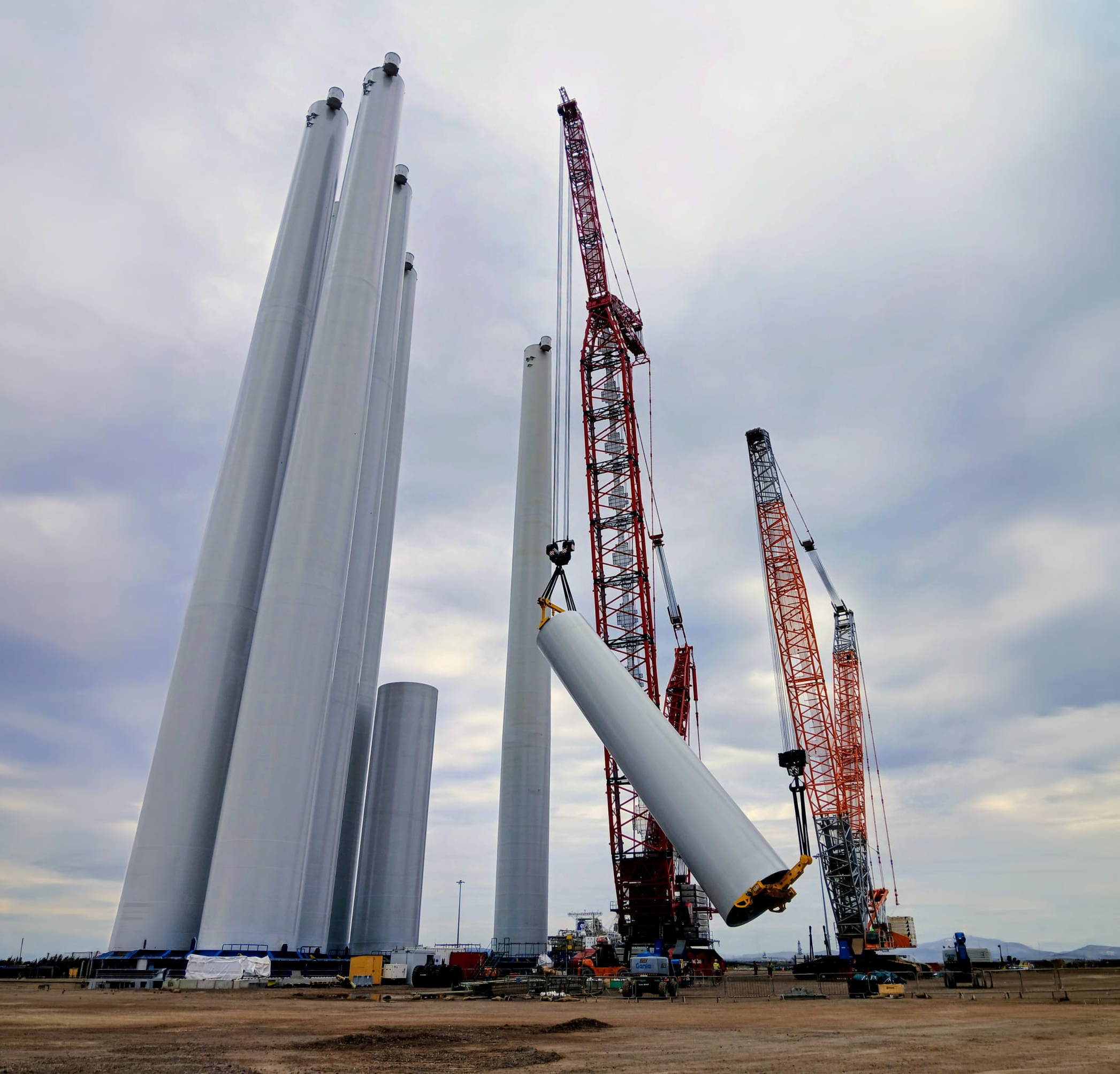
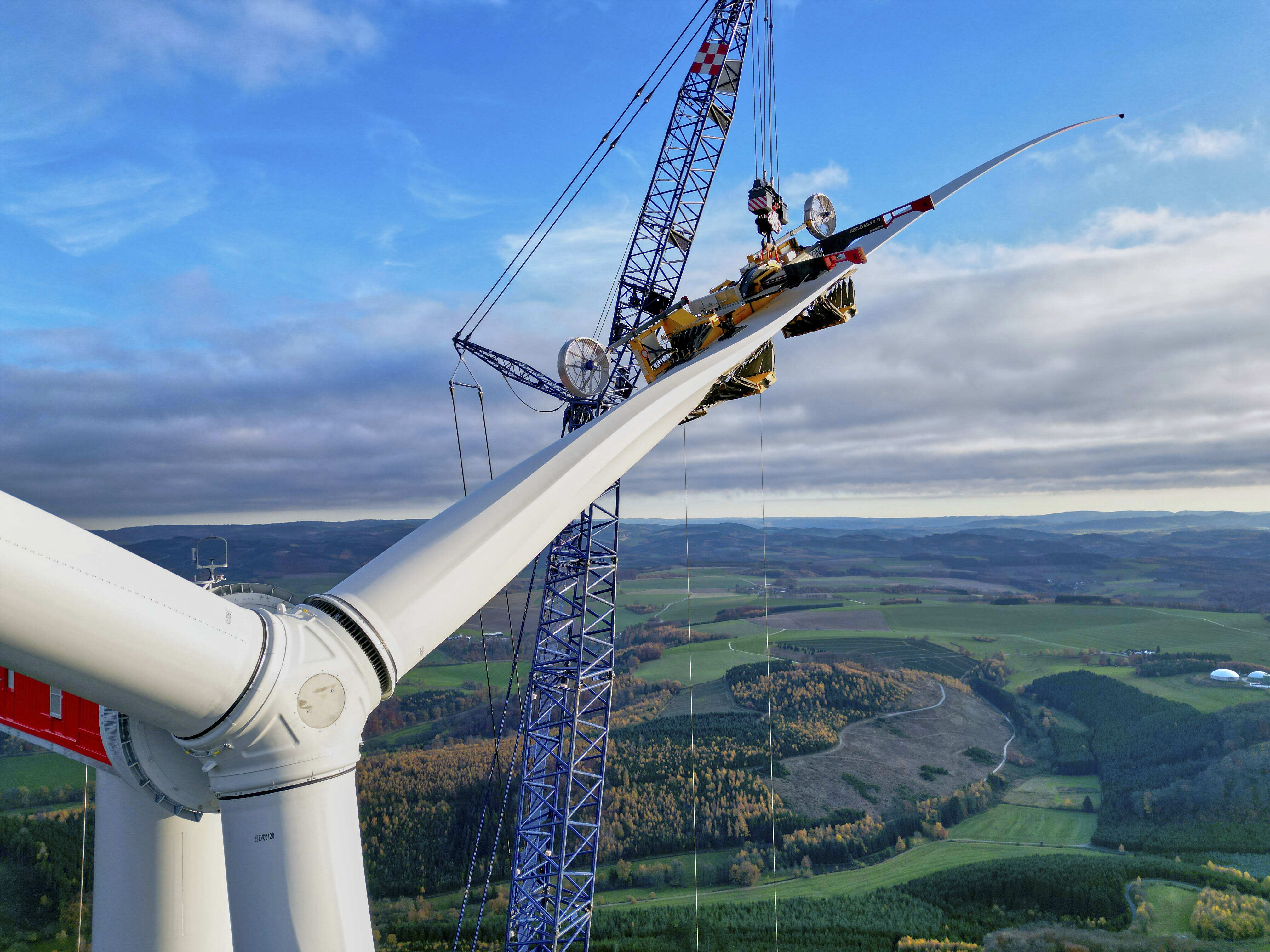
The rise of wind energy across Europe and beyond is undeniable. Where wind turbines were once modest structures, today's installations soar above the horizon, with rotor blades longer than an Airbus A380 and nacelles weighing hundreds of tons. This scale-up is a necessary step to achieve the capacity required for the energy transition.
Behind these impressive numbers lies a less visible yet crucial element: the lifting operations that connect every component of this infrastructure, from the factory floor to the end user.
The Indispensable Link: From Factory to Seabed
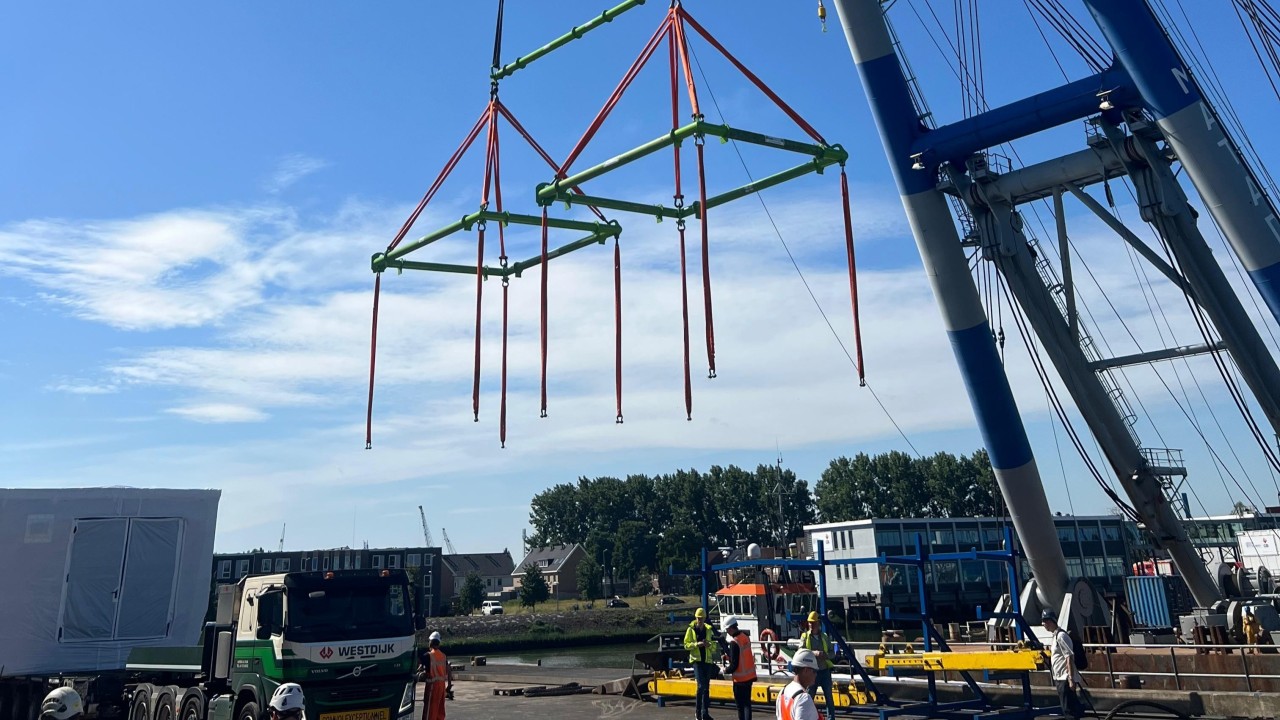
Whether installing offshore monopiles, transporting transformers to onshore substations, or replacing a damaged blade at sea, success depends on the correct configuration of spreader beams, frames, slings, and shackles. Lifting is not a side condition; it is a central factor in every project's success.
Offshore Challenges: Gravity, Sea, and Speed
At sea, the stakes are high. Installing a 90-meter monopile or a 300-ton nacelle requires millimeter precision within narrow weather windows. A missing or uncertified spreader can derail an entire installation schedule, costing millions.
- Rapid Response: When a storm threatened a project in the German Bight, Safe Lifting Europe quickly delivered additional equipment from a nearby site, saving days of delay and substantial costs.
Onshore Complexity: Ports and Power
Ports act as logistical hubs where every step involves critical lifts. Subsea cable reels, transformers, and delicate E-houses must be positioned with precision. The right gear—like high-capacity synthetic slings—is essential to prevent damage and ensure safety.
Technological Advancements: Modular, Lightweight, Digital
The growth of the wind energy sector drives continuous innovation in lifting technology:
- Modular Systems: Spreader beams and frames can be quickly reconfigured for different loads, from broad jackets to narrow towers.
- Synthetic Slings: High-modulus polyethylene (HMPE) slings are replacing steel cables, offering lighter weight, safety, and corrosion resistance.
- Digital Monitoring: Real-time sensors track load distribution, crucial for installations from floating platforms.
- Lifecycle Management: Every component has a unique ID for full traceability, ensuring safety and compliance.
Safe Lifting Europe: A Strategic Partner
As a rental and long-term lease partner, Safe Lifting Europe positions itself as the connecting link in complex operations. Their strengths include:
- Proactive Engineering: Early involvement to align lifting configurations with design.
- Operational Flexibility: Ability to quickly relocate equipment across Europe to meet urgent needs.
- Sustainability: Commitment to reuse, recycling, and lighter materials to reduce the sector's environmental footprint.
The Invisible Backbone
Wind energy is often depicted in megawatts and tower heights, but lifting operations are the invisible backbone ensuring everything falls into place. As the sector moves toward even larger turbines and floating installations, lifting requirements will only grow. Partners who actively support these developments will play a decisive role in the pace and scale of the energy transition.