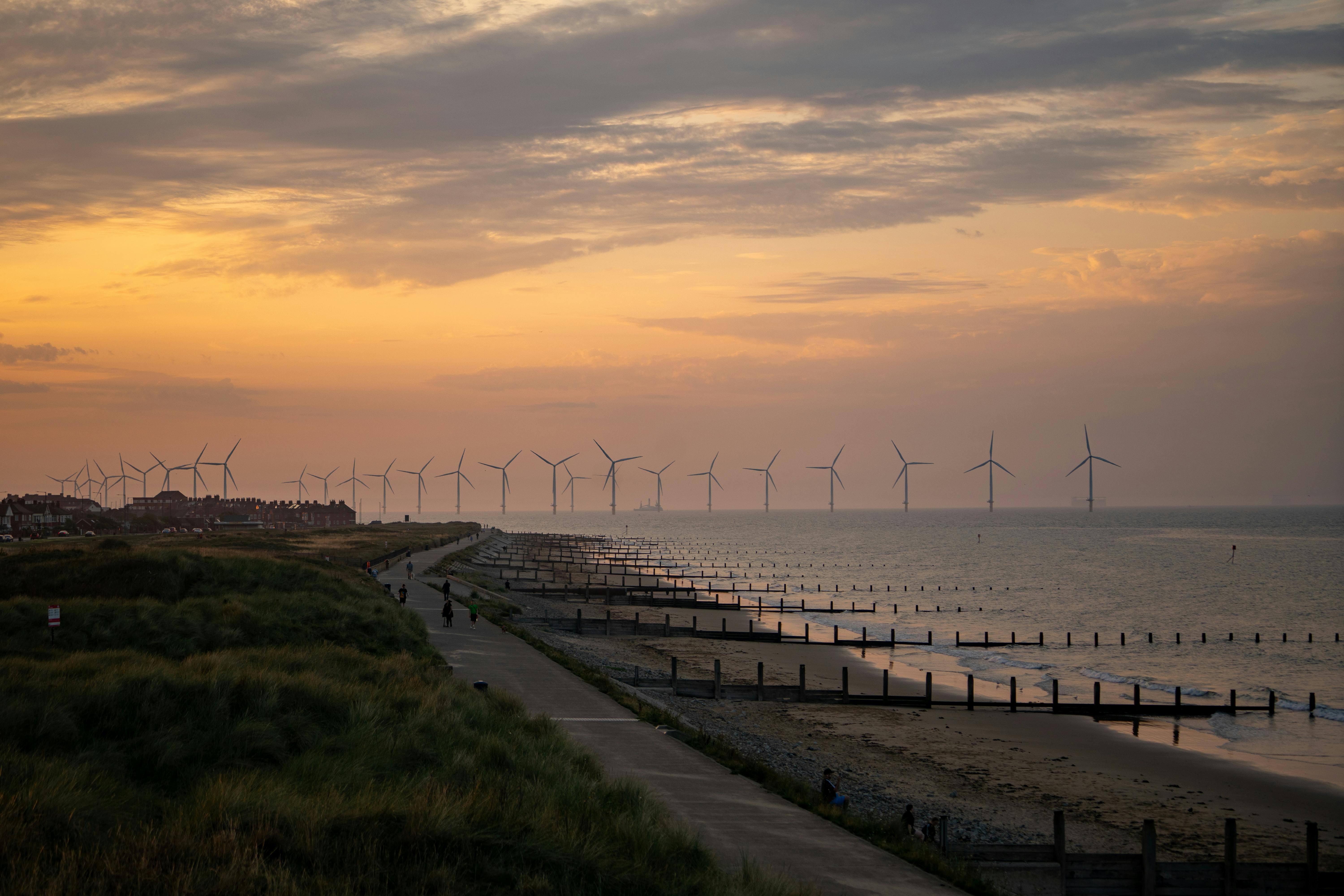
The UK has been one of the defining wind markets for more than two decades. From early onshore development in Scotland and Wales to major North Sea projects such as Dogger Bank, Hornsea and Seagreen, wind has moved from challenger technology to the country’s largest single source of electricity.
In 2025, wind remained the largest single source for the second consecutive year, providing 29.7% of UK electricity generation, ahead of gas at 26.8%.
The challenge now is delivery. The Clean Power 2030 Action Plan targets:
- 43 to 50 GW of offshore wind by 2030
- 27 to 29 GW of onshore wind by 2030
Meeting those ambitions will depend on auctions, consenting, grid connections, ports, vessels and supply chains moving together.
Confidence returns to the market
Allocation Round 7 (AR7), announced on 14th January 2026, marked an important change in sentiment after the difficulties of previous rounds.
A total of 8.4 GW was awarded, compared with 3.8 GW of fresh capacity in AR6. Six fixed-bottom projects, representing 8.2 GW, cleared at a weighted average strike price of £90.91/MWh.
RWE secured 6.9 GW of the awarded capacity, including Norfolk Vanguard East and West and a 3 GW share of Dogger Bank South. Berwick Bank Phase B also cleared, while floating wind secured 192.5 MW across the Erebus and Pentland projects.
However, awarded capacity is not the same as completed capacity. Reaching the 2030 offshore wind target still requires projects to progress through consenting, financing, construction and grid connection on time.
Floating wind moves towards delivery
Floating wind remains one of the UK’s most distinctive opportunities. ScotWind includes close to 18 GW of potential floating capacity, while the Celtic Sea leasing round has added another 4.5 GW.
Turning that pipeline into operational projects is more difficult. Developers still face front-end engineering, mooring and dynamic cable design, supply chain requirements and port constraints.
Port readiness is particularly important. Cromarty Firth, Port of Nigg, Ardersier and Port Talbot are positioning themselves for floating wind assembly, but significant investment in quaysides, water depths and laydown areas will be required.
If the UK wants to retain industrial leadership in floating wind, those investment decisions need to be made in 2026 and 2027 rather than towards the end of the decade.
Onshore wind returns to the picture
Onshore wind receives less attention than offshore development, despite remaining one of the UK’s lower-cost and faster-to-build wind technologies.
AR7 delivered 1.3 GW of onshore wind at a strike price of £72/MWh. With the de facto restrictions on new projects in England removed, developers are again considering English sites.
Repowering will also become increasingly important as older Scottish wind farms reach the point where smaller turbines can be replaced by higher-capacity machines, often using broadly similar footprints and existing grid agreements.
The grid remains the binding constraint
Perhaps the most significant issue facing UK wind is grid connection.
In January 2025, an estimated 770 GW of generation capacity was waiting in the connection queue. The TMO4+ reform introduces a ‘first ready, first needed, first connected’ approach, with more than 300 GW of excess generation and storage capacity subsequently deprioritised.
For developers, the reform has two sides. Strategically aligned projects with Contracts for Difference (CfDs) can gain greater connection certainty, while speculative or less-developed projects risk losing their queue positions.
Transmission infrastructure remains a longer-term constraint, with major programmes including Pathway to 2030, the Great Grid Upgrade and Eastern Green Link required to accommodate future generation.
The next two to three years will therefore determine whether the UK can convert its wind pipeline into operating assets. The auction mechanism is functioning again and the project pipeline is substantial. What matters now is whether consenting, connections, ports, vessels, transmission and skills can keep pace.
The UK’s position will depend less on what is announced and more on what is built.
For the complete Country Focus on auctions, floating wind, grid connections and the challenges facing UK wind deployment, visit PES Wind: https://pes.eu.com/exclusive-articles/uk-wind-at-a-delivery-crossroads