Over the past decade, the commercial solar PV sector has evolved significantly. More recently, businesses and investors going solar have shifted from focusing purely on ROI to incorporating broader criteria such as reliable performance in severe climate conditions, ethical business practices, and eco-cautious manufacturing. REC Group, a long term expert in the commercial and industrial solar PV market, has responded to these changes with the introduction of its advanced Alpha HJT technology in the new REC Alpha Pro M solar panel.
Initially, the primary focus for businesses investing in solar energy was the return on investment (ROI). However, in recent years, this focus has broadened to include a variety of other crucial factors, such as ethical manufacturing practices, the product’s carbon footprint, and reliable performance under more severe climatic conditions.
This evolution is largely driven by stricter regulations and the increasing awareness among consumers and corporations about sustainability and the impact of climate change. The solar PV industry has had to adapt to these new demands, leading to innovative developments in solar technology and solutions.
One notable response to these changing needs is the introduction of the advanced Alpha HJT technology in the new REC Alpha Pro M solar panel by REC Group, a leader in the residential, commercial, and industrial solar PV markets with almost 30 years of experience.
Heterojunction cell technology for greater ROI
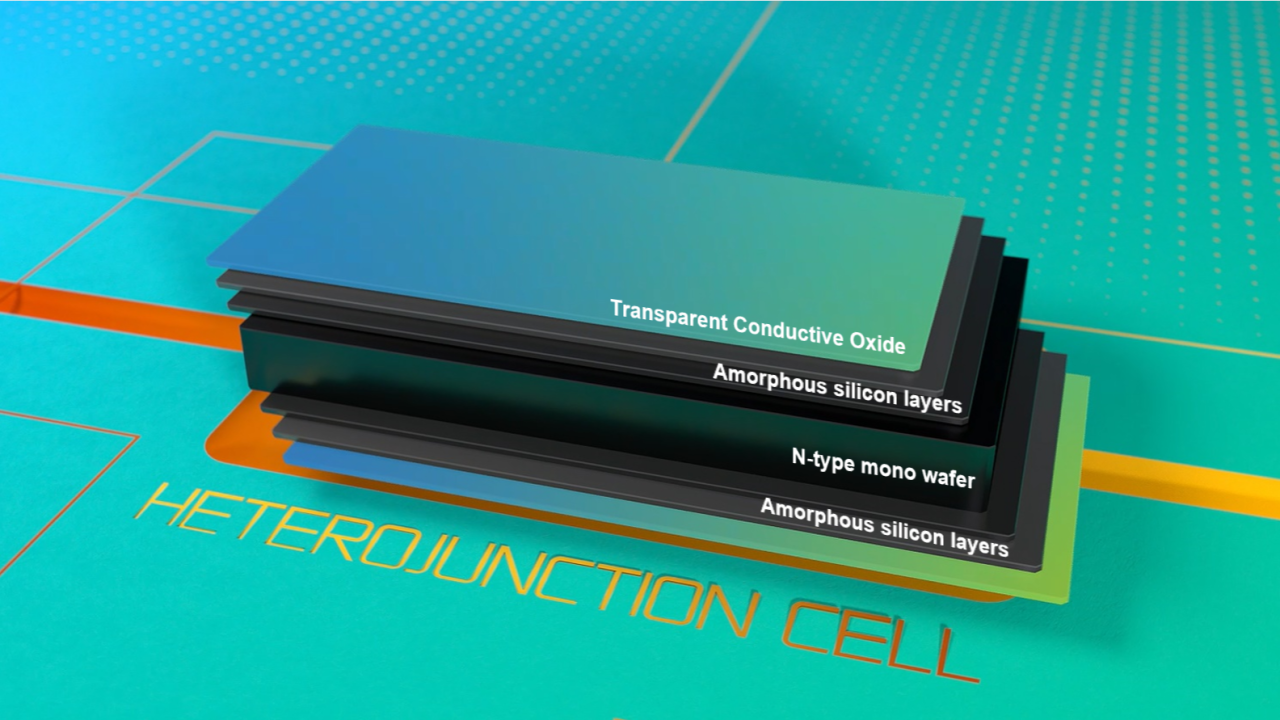
The introduction of Heterojunction Cell Technology (HJT) marks a significant advancement in solar PV technology and for commercial and industrial solar PV applications. HJT combines the best attributes of crystalline and thin film solar cells, resulting in higher utilization of sunlight and as such higher performance.
REC is strongly committed to HJT as the most advanced solar PV technology today and has been at the forefront of bringing it to market. With its Alpha revolution ongoing since 2019, REC has continuously mastered HJT technology, increasing panel performance while minimizing environmental footprint.
Reliable performance in severe climate conditions
One of the standout features of HJT technology is its leading low temperature coefficient, meaning the panels experience less degradation in efficiency when the sun is strongest, making them ideal for hot climates. Traditional solar panels, such as those based on PERC or TOPCon technologies, often see efficiency decrease as temperatures rise, affecting overall energy output and financial returns of solar PV systems.
HJT technology ensures consistent energy output and reliable ROI for solar investments. The superior temperature coefficient of HJT panels, like the REC Alpha Pro M, ensures minimal efficiency loss with rising temperatures, allowing for reliable performance even in extreme heat. This technological edge translates into higher energy production, better financial returns, and a more secure investment, especially in regions facing increasing temperatures due to climate change.
With rising global temperatures, it is crucial for solar panels to perform reliably in hotter conditions. The REC Alpha Pro M solar panel, featuring advanced Alpha HJT technology, effectively addresses this challenge with a leading temperature coefficient of -0.24% per degree.
This makes the panel a secure investment for businesses looking to future proof their energy infrastructure amidst unpredictable climate conditions
The expansion from pure ROI to comprehensive sustainability
Initially, the commercial solar PV segment was predominantly driven by financial considerations. Businesses were mainly interested in the cost savings that solar energy could provide, including reductions in electricity costs and the financial incentives offered by governments for adopting renewable energy sources.
ROI was the key metric for evaluating the feasibility of solar PV installations and with this watt class, installation costs and power prices the only criteria for going solar.
However, as the global conversation around climate change, sustainability and human rights has grown louder, businesses have started to prioritize broader criteria. Ethical manufacturing practices along the full supply chain, for instance, have become a critical consideration. Companies are now looking at how and where their solar panels are produced, ensuring that the manufacturing processes are eco cautious and socially responsible.
Their own carbon footprint is another major factor that businesses are now considering. Companies are increasingly aware of the need to reduce their overall carbon emissions and are thus interested in the lifecycle carbon footprint of the solar panels they install. This means looking at the emissions associated with manufacturing, transporting, installing, and eventually recycling the solar panels.
Consumer and corporate awareness driving change
The growing awareness among consumers and corporations of the importance of sustainability is a major driver of these evolving trends. Consumers are increasingly demanding that the companies they do business with adopt sustainable practices. This consumer pressure is compelling businesses to consider not only the financial benefits of solar energy but also its environmental and social impacts.
Corporations, on the other hand, are recognizing the long term benefits of sustainability. By investing in clean energy solutions like solar PV, businesses can reduce their carbon footprint, achieve sustainability standards such as LEED, enhance their corporate image, and comply with environmental regulations that are becoming increasingly stringent.
Moreover, adopting sustainable practices can provide a competitive edge, as more and more consumers prefer to engage with environmentally responsible companies.
REC’s ESG Chairperson, Agnieszka Schulze, states, ‘We are seeing the commercial & industrial (C&I) segment considering more sustainable aspects in their decisions. Initially,
These customer requests were mainly driven by the residential segment. As regulations for business are getting stricter and the financing banks for commercial solar PV installations are also shifting their criteria, the C&I segment is speeding up here.
Regulatory frameworks promoting sustainability
Government policies and regulations play a crucial role in shaping the commercial solar PV market. Incentives such as tax credits, grants, and subsidies for solar installations can significantly reduce the upfront costs for businesses, making solar energy more accessible and attractive. Additionally, regulations that mandate reductions in carbon emissions and the use of renewable energy sources are driving businesses to invest in solar PV systems.
Moreover, governments worldwide have begun implementing stricter ESG regulations, commencing in 2023, emphasizing holistic sustainable manufacturing practices, including ethical supply chains. This includes 35 nations and regions, accounting for 56% of the global GDP, rolling out mandatory ESG reporting.
For example, the Corporate Sustainability Reporting Directive (CSRD) in Europe mandates companies to disclose information on their environmental and social impacts, pushing businesses towards more sustainable operations. In the United States, the Securities and Exchange Commission (SEC) requires climate related disclosures by public companies. These regulations are prompting businesses to consider the broader sustainability implications of their investments in solar PV.
REC’s response to evolving market needs
REC has been a prominent player in the commercial and industrial solar PV market for years, with many impressive installations, such as IKEA stores, the Audi production plant in Belgium, Telefónica in Spain, Asia Pacific Breweries in Singapore, the Singapore National Stadium or, most recently, the CPKC Stadium in Kansas to reach the LEED Gold certification.
The introduction of the Alpha HJT technology in the REC Alpha Pro M solar panel is a testament to its commitment to innovation and sustainability. This product is specifically designed to meet the evolving needs of businesses by offering several key benefits. Among these are high efficiency and performance. The Alpha HJT technology used in the REC Alpha Pro M panels allows to reach 640 watt peak and 22.5% efficiency. These panels offer an impressive power output, allowing businesses to better achieve emission reduction targets.
Superior temperature coefficient is another advantage. One of the standout features of the REC Alpha Pro M panels is their leading temperature coefficient of -0.24% per degree. This means that the panels experience less loss in efficiency as temperatures rise, making them ideal for installation in hot climates. As global warming intensifies, this feature ensures that businesses can rely on consistent energy production and a steady return on investment from their solar installations.
Sustainability and ethical manufacturing are further plus points: REC is known for its commitment to sustainable practices and has been recently rated with the EcoVadis Silver Medal. By choosing the REC Alpha Pro M panel, customers can be confident that they are investing in products of a company that prioritizes both performance and sustainability
In summary, the panels offer a future proof investment: By combining high efficiency, superior performance in hot conditions, and sustainable manufacturing, the REC Alpha Pro M panels represent a future-proof investment. Businesses can be assured that their solar PV systems will continue to perform well and provide financial benefits even as climate conditions change, and environmental regulations become more stringent.
The broader impact of advanced solar technologies
The introduction of advanced solar technologies like REC’s Alpha HJT technology is having a broader impact on the commercial and industrial solar PV segment. These innovations are setting new standards for performance, sustainability, and reliability, allowing business to better meet their sustainability targets and fulfill national regulations.
Moreover, the focus on high performance in extreme conditions is particularly relevant in regions that are most affected by climate change. For instance, businesses in areas that experience high temperatures can benefit significantly from solar panels that maintain efficiency under such conditions. This not only ensures a stable energy supply but also supports efforts to mitigate the impacts of climate change by reducing reliance on fossil fuels.