As renewable energy penetrates deeper into global power grids, ensuring that wind turbines can meet evolving grid compliance requirements has become more critical than ever. But traditional testing methods — often conducted in the field — are limited by unpredictable weather, high costs, and logistical complexity, especially offshore.
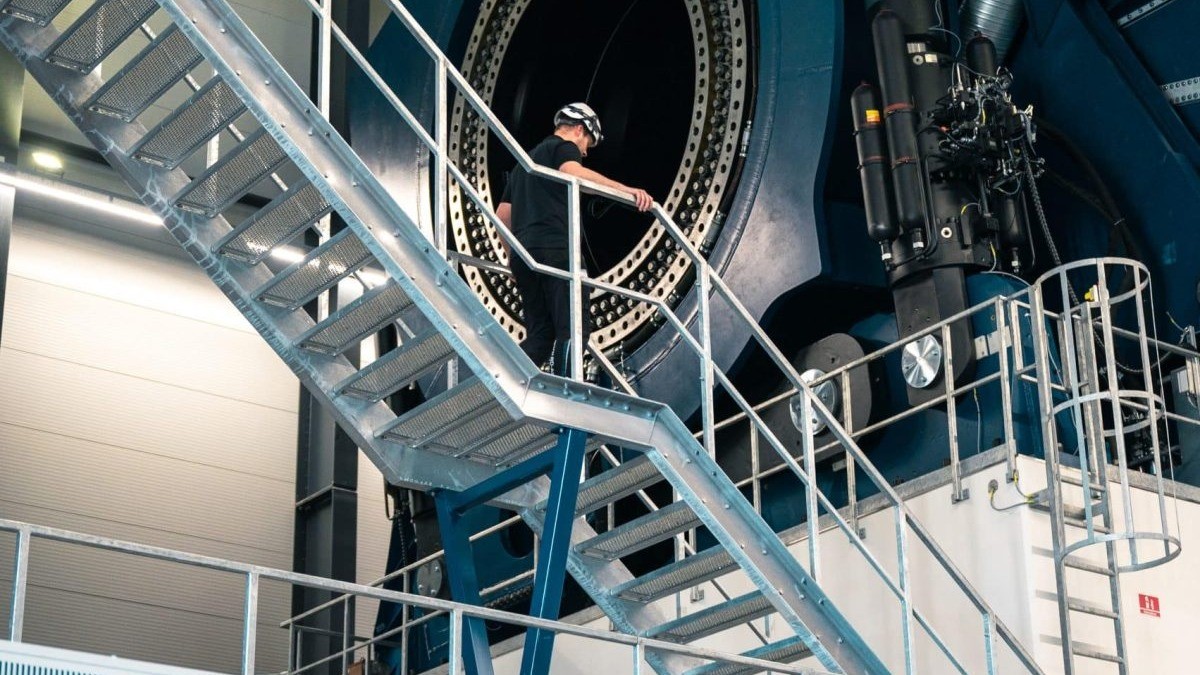
That’s where R&D Test Systems is making a transformative impact. Under the guidance of Dr. Uwe Jassmann, the company has helped develop IEC 61400-21-4, a groundbreaking international standard that defines Hardware-in-the-Loop (HiL) testing methods for wind turbine grid compliance — all conducted on advanced, controlled test benches. This innovation is now reshaping how the wind industry validates turbine performance, reduces development timelines, and enhances safety and reliability.
🧪 Why Test Benches + HiL Are a Game-Changer for Wind Energy
- What is Hardware-in-the-Loop (HiL)? It combines physical hardware (like drivetrain components or nacelles) with real-time digital simulations of wind and grid behavior. This enables precision testing in lab conditions.
- Benefits of HiL for Grid Compliance Testing:
“You can simulate an entire storm — gusts, grid faults, and power disturbances — without ever leaving the lab,” says Dr. Jassmann.
📏 What IEC 61400-21-4 Delivers
- Standardized Framework Provides a clear, harmonized process for testing wind turbine electrical behavior on test benches.
- Defined Bench Types From simple controller-level test rigs to full nacelle test benches, the standard guides how each is configured for different types of testing.
- Validation and Certification Benefits Ensures that test results are comparable to field data, enabling global certification without duplication or costly redesigns.
🤝 A Global Collaboration for a Global Challenge
- The standard was co-developed by experts from:
- Over 50 international meetings were held to align goals and resolve tensions between precision, cost, and practicality.
“Balancing the needs of manufacturers, certifiers, and grid operators isn’t easy — but that’s where standardization thrives,” says Jassmann.
🚧 The Bigger Picture: Future-Proofing Wind Energy
As wind farms get larger, grids more complex, and expectations higher, lab-based testing is becoming essential. Here’s what’s coming next:
- Digital Twins Simulated “clones” of turbines and test benches will enable even more detailed testing and predictive maintenance.
- Hybrid Systems & Inverters The standard will evolve to cover grid-forming inverters, battery integration, and multi-source plants.
- Faster Innovation Cycles With IEC 61400-21-4, turbine manufacturers can cut development time and reduce certification bottlenecks.
🧠 Key Takeaway
This isn’t just a technical milestone — it’s a leap forward for how wind energy will scale globally. Through leadership in standardization and advanced testing, R&D Test Systems is building the infrastructure the renewable industry needs to thrive — one test bench at a time.
📩 Want to learn more or collaborate?
👉 Visit: https://rdtestsystems.com