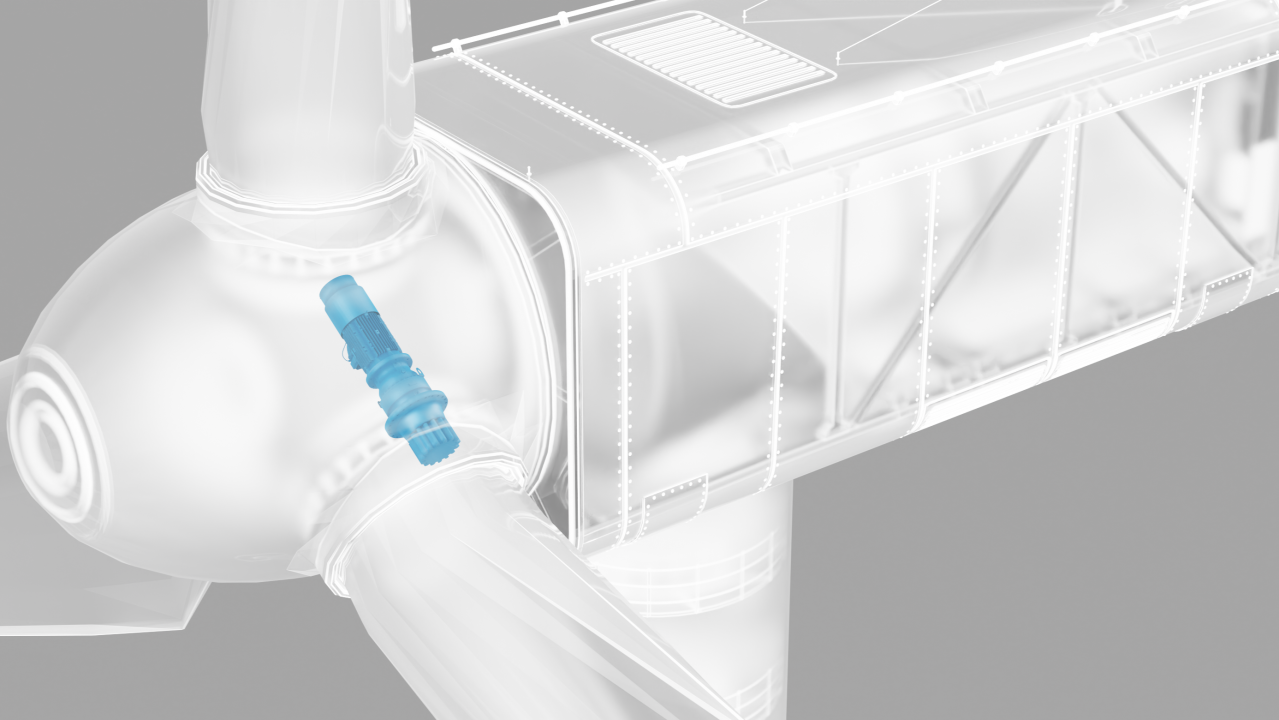
As wind turbines scale to unprecedented sizes reaching outputs of 21 MW and beyond offshore the systems that keep them oriented are becoming mission-critical. The yaw system is no longer just a mechanical component; it is a strategic asset for maximizing energy capture and minimizing operational costs.
Next-generation turbines demand more than incremental upgrades. By rethinking the yaw system as a fully integrated solution combining motor, gearbox, and inverter operators can unlock significant value. Bonfiglioli, with 30 years of experience in wind drive technology, is leading this shift with a unified architecture designed for the harsh realities of modern wind energy.
Precision Alignment: Capturing More Energy
A yaw system controlled by an inverter offers a level of precision that traditional methods cannot match. By regulating motor torque and speed in real-time, the nacelle can follow even minute changes in wind direction.
- Higher Yield: Consistently optimized rotor orientation means less downtime for realignment and improved overall energy production.
- Offshore Advantage: In environments where access is limited and losses are costly, this responsiveness is a key competitive edge.
Extending Component Life Through Soft Control
The benefits of an inverter-driven system extend deep into the turbine's mechanical health. Unlike systems with abrupt engagement, the inverter enables soft start and stop sequences.
- Reduced Stress: Controlled acceleration and deceleration minimize shock loads on the gearbox, bearings, and ring gear.
- Lower Maintenance: This smooth operation significantly extends component lifespan, reducing unplanned maintenance and lifecycle costs.
- Better Load Distribution: Finely regulated torque alleviates stress concentrations on the yaw ring, enhancing the structural integrity of the entire nacelle.
System Protection and Smart Risk Mitigation
The inverter plays a critical role in protecting the turbine during high wind events. It applies counter-torque to hold the nacelle securely, reducing the load on mechanical brakes. Furthermore, integrated logic detects excessive rotation and initiates counter-yawing to untwist cables before faults occur, preventing downtime.
From Reactive to Predictive: The Digital Dimension
Inverters are data-rich devices. They constantly measure motor current, voltage, frequency, and temperature, offering insights into mechanical coupling quality, friction changes, and potential anomalies.
- Predictive Maintenance: Analyzing trends allows operators to detect early signs of degradation and plan interventions before faults happen.
- Remote Monitoring: Bonfiglioli's Plug & Play solution, featuring IoT algorithms and dashboards, integrates seamlessly into cloud-based fleet management platforms, essential for remote offshore assets.
Modular Integration: Simplifying the Supply Chain
Traditionally, motors, gearboxes, and inverters were sourced separately, creating compatibility headaches. Bonfiglioli's fully integrated solution eliminates this complexity.
- Unified Architecture: Components are engineered to operate in concert, simplifying installation and commissioning.
- Single Point of Responsibility: If a malfunction occurs, there is no ambiguity—one partner is accountable for the entire system's performance.
- Lifecycle Efficiency: Reduced complexity means simpler spare parts inventories and lower training requirements for maintenance personnel.
The Strategic Investment in Total Cost of Ownership (TCO)
While initial capital expenditure is a factor, the long-term costs of downtime and repairs often outweigh upfront savings. An integrated yaw solution optimizes TCO by ensuring reliability and simplifying logistics—crucial for offshore wind where maintenance access is difficult and expensive.
A yaw system that proactively prevents failures and feeds health data to remote centers is not just a technical enhancement; it is a strategic investment in the future of the asset.