The offshore energy sector is constantly evolving, demanding advanced solutions that not only improve operational efficiency and safety, but also reduce environmental impact. Traditional metallic hang-off clamps (HOCs), long used in subsea cable installations, face growing challenges—particularly related to weight, corrosion, and complex assembly procedures. In response, engineered polymers are reshaping the sector.
At the forefront of this transformation is Nylacast Engineered Products, a company drawing on over five decades of polymer engineering excellence to deliver innovative alternatives to metallic components. Their latest breakthrough—the Nyla-HOC (Nyla Hang-Off Clamp)—is redefining performance, safety, and sustainability standards across offshore and renewable energy applications.
A Proven Track Record in Polymer Innovation
Nylacast has a long-standing reputation for supplying high-performance polymer solutions to demanding industries including automotive, oil & gas, mining, and offshore wind. With significant investment in R&D and manufacturing capabilities, the company has established a dedicated Engineered Solutions Division equipped with advanced CNC machining, in-house testing facilities, and a comprehensive training academy.
This infrastructure supports rapid innovation and product development tailored to exacting customer specifications. Nylacast's engineering teams work across disciplines—design, analysis, project management, and testing—to deliver full turnkey solutions.
The Nyla-HOC: Performance Through Polymer Science
Developed in close collaboration with installers and offshore operators, the Nyla-HOC was designed to address key challenges posed by traditional metallic HOCs. Manufactured from CF 110 Nylon, this clamp provides robust mechanical performance at approximately 50% less weight than steel. It is electrically neutral, eliminating the need for earthing or grounding cables, and entirely corrosion resistant.
Unlike traditional clamps that rely on external coatings to prevent corrosion—coatings that degrade over time and require maintenance—the Nyla-HOC’s material integrity offers lasting protection without such complexities. Its resin-free environmental seal ensures protection up to 2 bar, while the split clamp design allows for installation in just 40 minutes without the need for specialist tools or knowledge.
The polymer's environmental advantages are also notable. The Nyla-HOC is manufactured from a fully recyclable material and does not contribute to pollutive material oxidation, delamination, or the need for repair coatings—making it a more sustainable and responsible solution for long-term offshore use.
Enhanced Safety and Efficiency On Deck
One of the key benefits highlighted by field operators is the improved handling safety and reduced on-deck weight. By minimising the need for lifting equipment and reducing space requirements, the Nyla-HOC supports more efficient and cost-effective logistics and installation workflows.
Additionally, it allows for independent operation of both temporary and permanent clamps. In cases where temporary hang-off clamps are traditionally removed after securing the cable, the Nyla-HOC can remain in place or be quickly detached, offering greater operational flexibility.
Internal testing at Nylacast has demonstrated load bearing in excess of 20 tonnes, as well as a clamping coefficient higher than that of steel-to-steel contact when paired with advanced grip coatings. These results reinforce the clamp’s reliability and performance under real-world offshore conditions.
Sustainability and Lifecycle Benefits
In terms of lifecycle cost and sustainability, the Nyla-HOC sets a new benchmark. It is guaranteed for 40 years, requires minimal maintenance, and significantly reduces the need for specialist inspections or repairs. This long-term value proposition is especially relevant as offshore operators seek to optimise asset longevity while meeting increasing regulatory and environmental expectations.
Rapid Development and Market Impact
The Nyla-HOC went from concept to market-ready in under 12 months—a testament to Nylacast’s agile engineering culture. As Dean Sanders, Energy Director at Nylacast, explains:
“Our close relationships with customers made us aware of the need for change. Our engineering teams responded swiftly, taking the product from concept to market ready in less than 12 months. The management team at Nylacast has always championed innovation, and this achievement exemplifies the proactive approach we take in our daily operations.”
This sentiment is echoed by Andrew Hey, Renewables Sales Manager at Nylacast, who played a key role throughout the development process. From early concept discussions and in-house testing to final market launch, the team focused on solving practical challenges for offshore wind and renewables clients.
A Versatile Solution for Offshore Wind
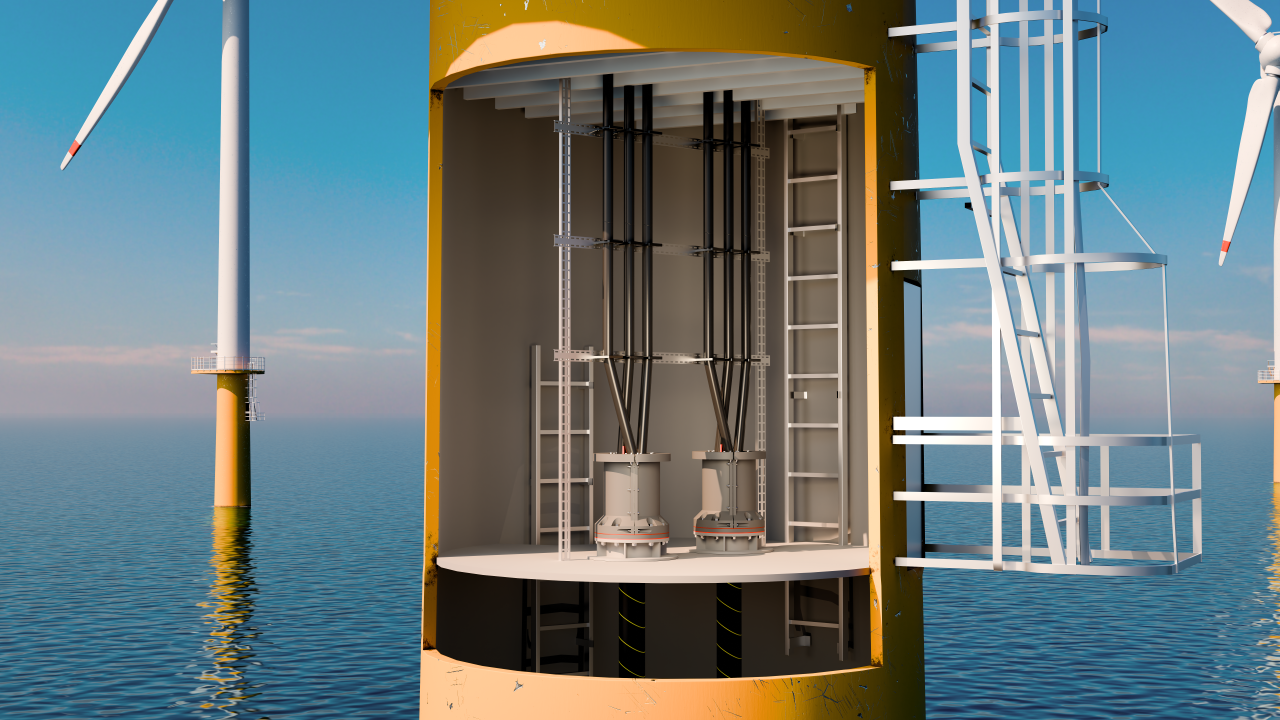
The Nyla-HOC has been developed with versatility in mind—suitable for inter-array and export cable clamping on monopiles, jackets, and offshore rigs. Its adaptability to different cable configurations, ease of use, and superior mechanical properties make it an ideal choice for modern offshore wind developments.
As the industry continues to pursue safer, lighter, and more sustainable equipment, Nylacast’s polymer engineering approach offers a compelling alternative to conventional metallic solutions—one that aligns with the energy transition’s performance, safety, and environmental goals.
Learn more at www.nylacast.com