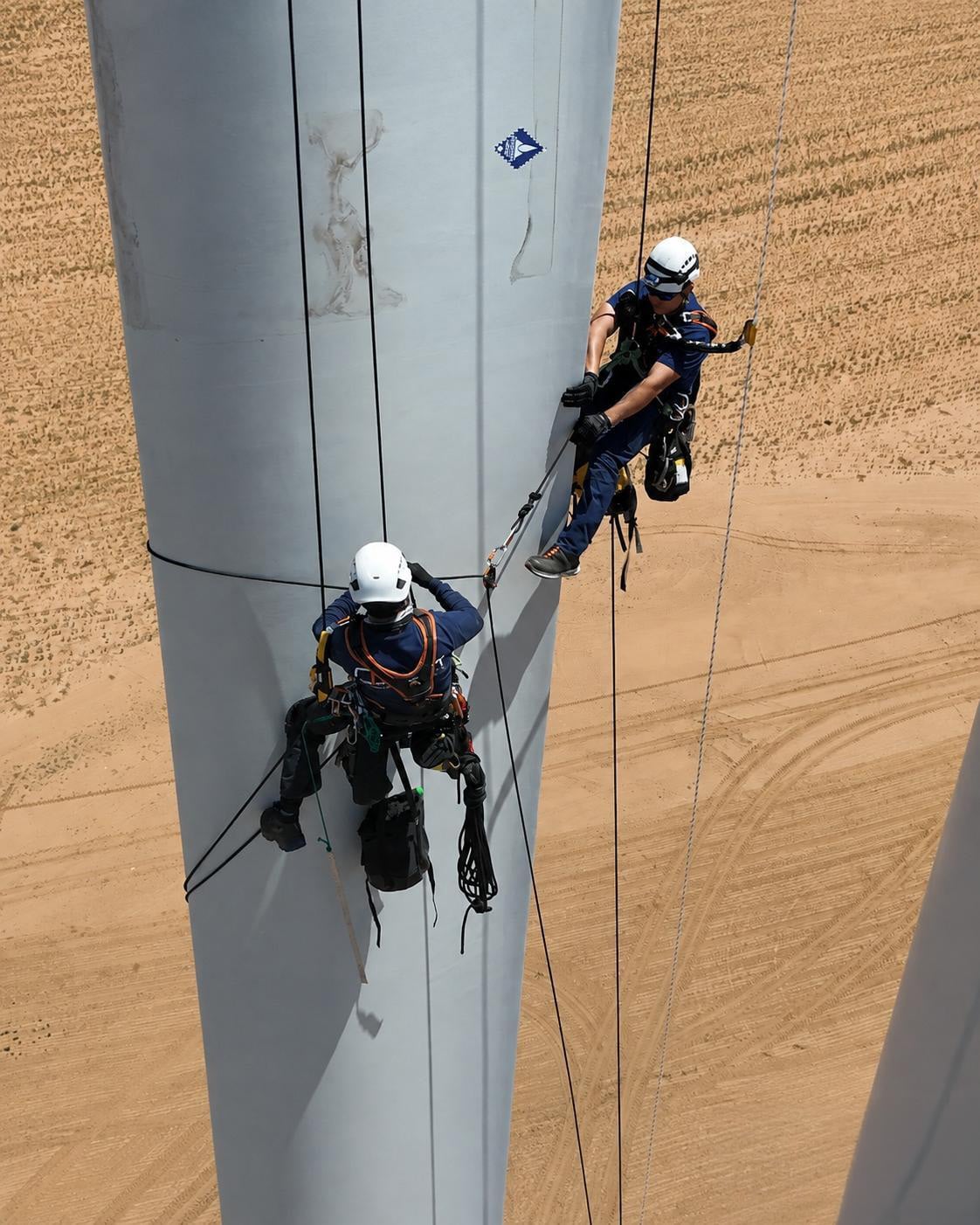
A wind turbine blade can look perfectly sound from the outside while damage is developing within its composite structure.
Drones and high-resolution cameras have made external inspection faster and easier, but they cannot show everything. CICNDT believes subsurface inspection, particularly ultrasonic testing (UT), should become a more routine part of blade operations and maintenance rather than something introduced only when a problem is suspected.
What visual inspection can miss
Drone inspections are effective for identifying leading-edge erosion, coating breakdown, surface cracks and lightning damage. However, modern blades are complex bonded composite structures containing spar caps, shear webs, sandwich panels and adhesive joints.
Internal defects can include:
- Adhesive disbonds
- Delamination
- Porosity and voids
- Resin pooling
- Ply wrinkles
- Internal cracking
These problems may initially produce no visible surface indication. By the time cracking or deformation appears externally, damage may have progressed and repair options can be more limited.
Seeing inside with ultrasonics
Ultrasonic testing (UT) introduces sound energy into the laminate and measures the returning signal. Disbonds, delamination and voids respond differently from sound material, allowing internal defects to be located and assessed.
UT can be applied to areas including the root, bondlines, spar cap, shear web and leading and trailing edges.
CICNDT also highlights complementary inspection methods. Thermography can help assess near-surface defects, while shearography can characterise ply wrinkles and near-surface delamination. Geometric scanning can measure leading-edge degradation, root roundness and blade profile.
Internal crawlers can inspect bondlines, core condition and repair integrity from inside the blade.
From reactive repairs to planned intervention
The value of finding subsurface damage early is not simply technical. Timing can substantially affect the maintenance response.
An early-stage disbond may allow a composite repair to be scheduled during a low-wind period. If the same defect develops unnoticed, the eventual response could require crane mobilisation, a longer unplanned outage or complete blade replacement.
Even where replacement is ultimately required, early detection can turn an emergency into a planned intervention.
CICNDT describes one case where root debond indications were tracked across successive inspections and a blade replacement was planned before the defect progressed to liberation. The company also reports another case where a flagged root indication progressed to blade liberation within days, highlighting the importance of acting on inspection findings.
Turning inspection data into decisions
CICNDT says analysis begins within 24 to 48 hours of inspection, with reporting that can include digital defect mapping, severity ranking, repair recommendations and warranty documentation.
The company argues that owner-held inspection records can also support end-of-warranty claims and life-extension assessments.
Ultimately, inspection data only creates value when it informs action.
As wind turbine blades grow larger and fleets age, scheduled inspection may therefore need to go beyond checking whether a blade looks sound externally. Combining ultrasonics with complementary inspection methods can provide evidence of what is happening inside the structure, giving operators more time to decide whether to monitor, repair or replace.
Read the full interview in PES Wind: https://pes.eu.com/exclusive-articles/seeing-through-the-composite