For many years, one of the greatest barriers to utility-scale and distributed solar development in the United Kingdom has not been technology land availability, or financing, but securing a grid connection. An overcrowded and highly inefficient queue, coupled with prolonged uncertainty over connection timelines, created a severe structural bottleneck that left viable schemes waiting for years while speculative projects blocked capacity. To address this stagnation, the UK’s National Energy System Operator (NESO) has introduced sweeping connection reforms that represent one of the most significant structural changes to the electricity system in decades, offering a clearer, deliverable pathway for mature solar assets.
From queue congestion to readiness-based prioritisation
The historical grid connection framework operated largely on a first-come, first-served basis, creating a speculative environment that ultimately compromised network efficiency. Restructuring this pipeline allows the network operator to clear out non-viable projects and prioritise deliverable clean energy infrastructure.
- The ballooning of speculative queues: Over time, the unmanaged first-come, first-served process allowed the grid queue to balloon to more than 700 GW of speculative generation and storage capacity, far exceeding actual system requirements.
- The transition to a readiness model: Under NESO’s new regime, the connection queue is being completely reshaped around a readiness-based approach rather than simple chronological entry.
- Mandatory project progression criteria: To secure firm connection offers, developers must now demonstrate explicit, documented evidence of project progress, including secured land rights, advanced planning status and procurement readiness.
- Unlocking short-term Gate 2 status: Approximately 65 GW of mature solar capacity is expected to successfully secure 'Gate 2' status under the reformed framework, establishing a transparent path toward immediate construction.
- Enabling asset financing and contract structures: Securing a firm, non-speculative grid connection date provides developers with the definitive milestone required to unlock external financing, finalise commercial power purchase agreements (PPAs), or bid into Contracts for Difference (CfD) auctions.
Restructuring the development pipeline to meet national targets
The new framework reorganises the country's energy pipeline to create highly realistic connection timelines that align with national decarbonisation mandates. By balancing geographic placement alongside localized network capacity, solar is uniquely positioned to accelerate deployment windows.
- A multi-phase connection roadmap: NESO has structured the long-term pipeline to progress approximately 283 GW of generation and storage capacity through 2035, divided cleanly into Phase 1 (connections up to 2030) and Phase 2 (connections between 2030 and 2035).
- Alignment with Clean Power 2030: This phased structure directly mirrors the UK government’s Clean Power 2030 ambition, which targets a rapid scaling of solar deployment toward 45 to 47 GW by the end of the decade.
- Prioritizing undersupplied geographic regions: The reform framework emphasizes system value and geographic balance, actively encouraging additional renewable capacity in undersupplied regions such as Yorkshire, Lancashire, North Wales, the Midlands and parts of southern England.
- Strategic construction timeline advantages: Because solar assets feature relatively short construction timelines compared to legacy generation-type resources, mature projects that can execute quickly are gaining a clear strategic advantage in early connection windows.
- Lifting constraints on distributed generation: In England and Wales, regulatory adjustments have modified transmission impact assessment thresholds, allowing distributed schemes up to 5 MW to bypass certain costly and time-consuming assessments.
Capitalising on hybrid layouts and alternative connection models
The transition away from single-model grid export frameworks is driving the adoption of diverse, highly flexible system designs. Developers are increasingly turning to co-located storage and behind-the-meter structures to secure economic viability independent of traditional transmission limitations.
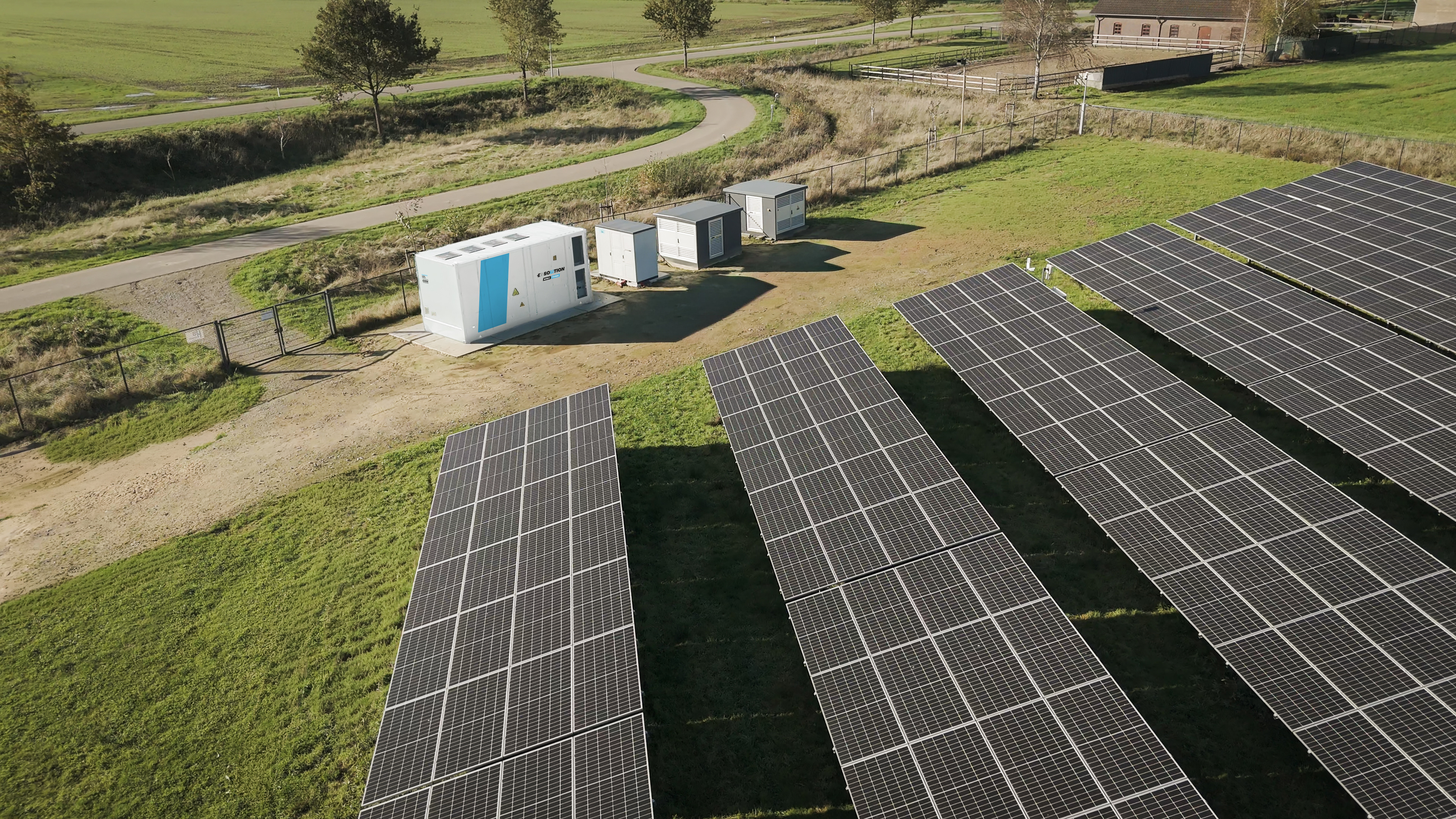
- Diversifying revenue through solar-plus-storage: Combining solar arrays with battery energy storage systems (BESS) allows hybrid assets to participate in a broader range of balancing markets, including ancillary services, capacity markets and localised flexibility mechanisms.
- The growth of private wire architectures: To circumvent grid capacity constraints entirely, developers are increasingly exploring alternative behind-the-metre and private wire connection layouts.
- Decarbonising heavy industrial consumers: Connecting clean generation directly to localised, intensive electricity demand provides a highly attractive option for energy-intensive users such as data centres, manufacturing facilities, or logistics hubs seeking to eliminate Scope 2 emissions.
- Monetising demand-side flexibility services: Non-exporting behind-the-metre storage layouts can secure alternative revenue streams by participating in demand-side mechanisms, such as NESO's Demand Flexibility Service, which incentivises users to shift or lower grid consumption during peak hours.
How is your development team using the readiness-based Gate 2 criteria to accelerate your mature solar assets and navigate the new phased connection windows? Share your thoughts in the comments below.
Looking for the full technical breakdown? To examine the complete regulatory updates on transmission impact assessment thresholds and review strategic UK grid integration services, visit the official Natural Power website: https://pes.eu.com/exclusive-articles/grid-connection-reform-unlocking-a-new-era-of-solar-opportunity-in-the-uk