Some of the most important parts of a wind turbine blade are also the hardest to inspect.
External inspections can identify leading-edge erosion, lightning damage, surface cracks and coating condition. But understanding the condition of adhesive joints, shear webs, spar caps, internal laminates and root transitions means looking inside the blade. Windbotix examines how robotics can take inspection further into areas that are difficult or impractical for technicians to reach.
Why internal inspection remains difficult
Traditional internal inspection depends heavily on technicians entering through the blade root. As the blade narrows, access can become restricted by steep gradients, internal structures, contamination and the physical demands placed on inspectors.
The work also requires confined-space procedures, rescue planning, ventilation and communication systems.
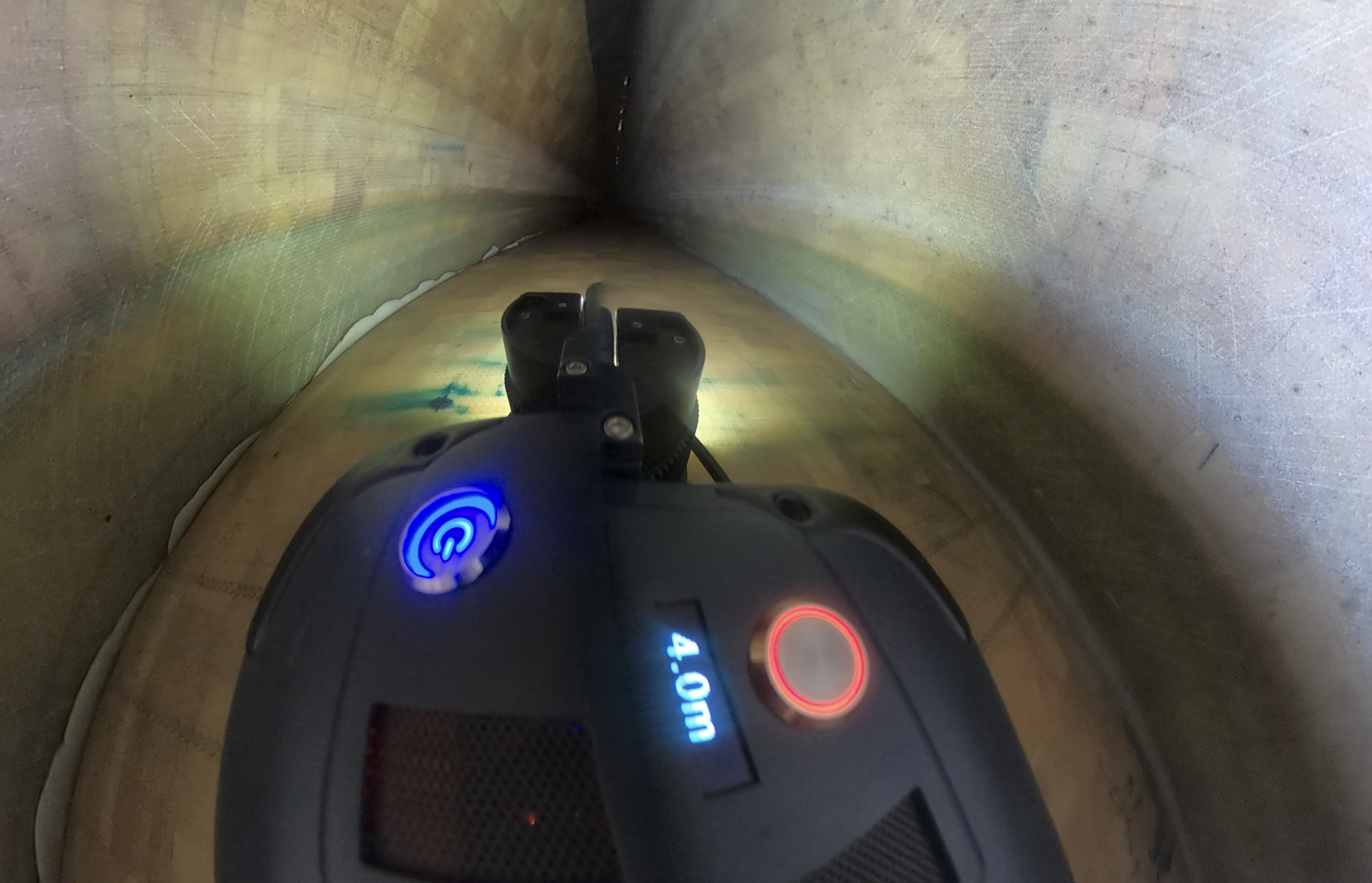
Robotic inspection offers a way to continue beyond the point where human access becomes impractical. Depending on blade geometry, robotic systems may be able to inspect 75 to 80% of the blade length.
These technologies can help technicians to:
- Extend inspection into previously inaccessible areas
- Reduce exposure to confined-space hazards
- Improve consistency between inspections
- Produce better evidence for engineering decisions
Turning images into useful evidence
Inspecting inside a blade presents its own challenges. Internal environments are dark, surfaces vary in reflectivity and important structural details can sit above, beside or behind an inspection platform.
Effective robotic inspection therefore requires cameras, lighting, measurement tools and positioning systems to work together.
High-resolution images can help engineers assess cracks, adhesive discontinuities, laminate separation, resin anomalies and local deformation. Steerable cameras can examine bondlines and other structures that a fixed forward-facing camera could miss.
Laser pointers and distance measurements can also provide references for estimating defect dimensions.
Equally important is knowing where each image was captured. Automatic labelling, travelled-distance references and structured damage records can make findings easier to compare during inspections six or 12 months apart.
Supporting proactive maintenance
Repeatable inspection records can help operators determine whether an internal indication is stable or developing.
Early detection does not necessarily mean immediate repair. Instead, engineers may classify the finding, monitor it at a defined interval or plan intervention during a suitable maintenance period.
This can provide time to:
- Schedule work during low-wind periods
- Combine several tasks within one mobilisation
- Prepare materials and specialist tooling
- Coordinate specialist personnel
- Monitor defects before they produce secondary damage
Windbotix argues that the value of inspection therefore lies not only in finding defects, but in creating time for better maintenance decisions.
Different blades require different robots
Windbotix says no single robotic configuration is suitable for every blade because internal geometry varies between manufacturers, models and generations.
Its NEMO platform is designed for detailed inspections where sufficient internal space is available. The system combines tracked mobility with high-resolution imaging, adjustable lighting, laser measurement and structured defect documentation.
EDGE is intended for narrower passages, while EDGE+ combines compact dimensions with increased mobility, using four independently driven wheels and imaging systems for examining bondlines, laminates and structural interfaces.
Moving towards condition-based maintenance
Robotics doesn’t remove the need for qualified technicians or blade engineers, and internal obstacles can still restrict access.
Its role is to extend inspection coverage and create repeatable evidence that engineers can use to support condition-based decisions.
As the installed wind fleet ages and blades continue to increase in size, better internal inspection could help operators move from responding to visible failures towards identifying structural changes earlier and planning maintenance with greater foresight.
Read the full interview in PES Wind: https://pes.eu.com/exclusive-articles/extending-inspection-beyond-human-reach