The wind energy sector is expanding at a breakneck pace. Turbines are scaling up, composite structures are becoming increasingly complex and a global shortage of skilled technicians is placing unprecedented pressure on asset reliability.
While the industry is often tempted by technological novelty, the key to protecting assets lies in a timeless message: getting the nondestructive testing (NDT) fundamentals right.
To understand how operators can safeguard their investments, Jeremy Heinks, founder and CEO of CICNDT, highlights the critical pillars of modern blade safety:
The quiet crisis: workforce scarcity
Properly trained NDT technicians are in short supply and those with specific knowledge of composite wind blades are exceptionally rare. This poses a major structural risk to the industry:
- Composite complexity: Wind blades feature glass/carbon fibre laminates, foam cores and structural adhesives that behave uniquely under fatigue.
- The steel bias danger: Inspectors trained primarily on steel cannot instinctively spot the difference between a manufacturing void and an operational delamination.
- Location matters: Without specific training, a technician may fail to understand why a root defect carries a much higher risk than one near the trailing edge.
To bridge this gap, progressive firms are transferring strict inspection methodologies from aerospace, defense and marine sectors directly into wind energy.
Critical focus: the blade root & automation
Among all blade areas, the root region requires absolute precision. As the primary zone where aerodynamic loads funnel into the hub, root failures can propagate with catastrophic speed.
- Pre-installation inspections: Inspecting blades before commissioning establishes a clear baseline record. This provides defensible documentation that is invaluable for future warranty disputes.
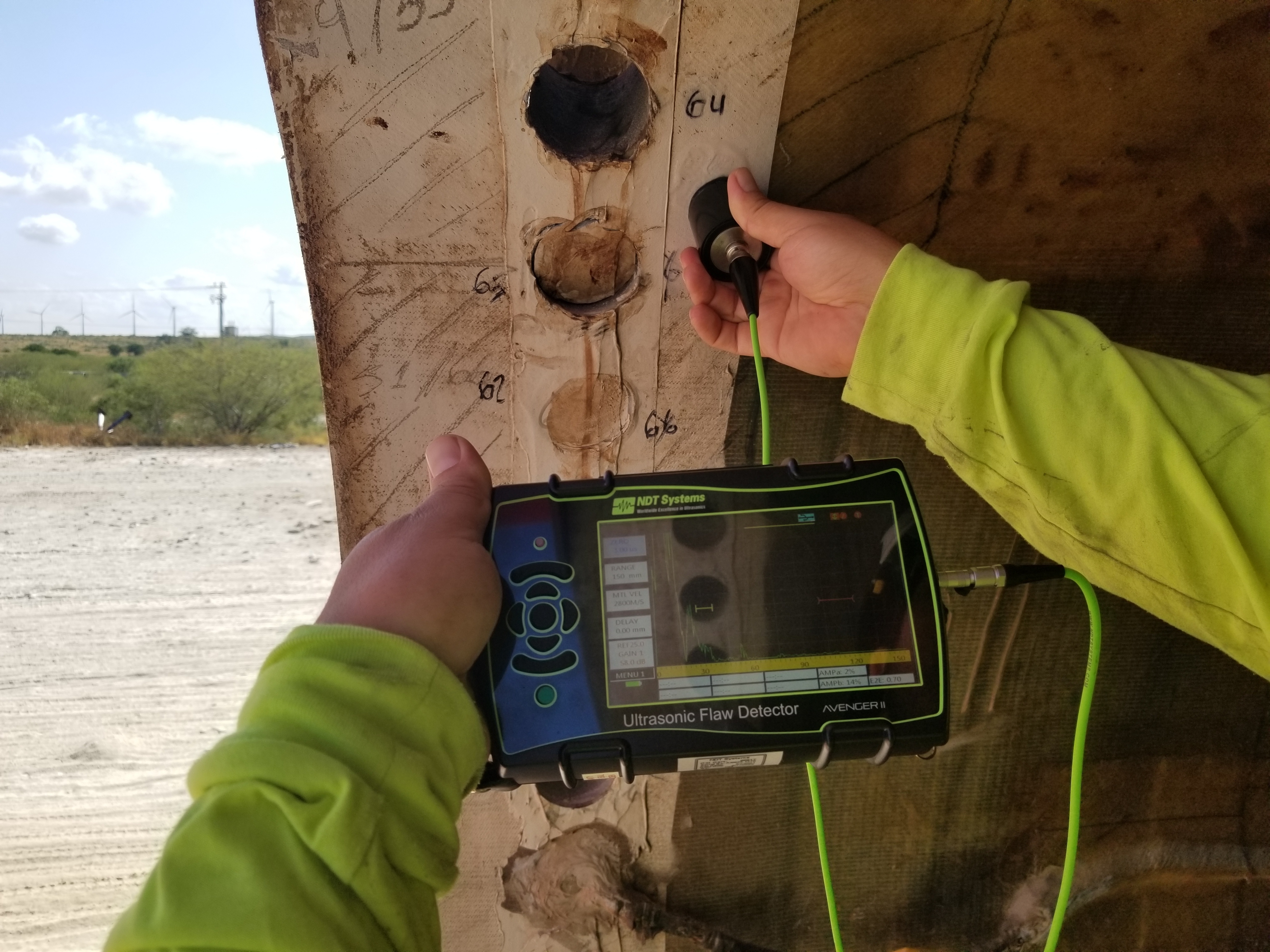
- The right tool for the job: Advanced methods like Linear Array UT, Laser Shearography and Thermography augment field capabilities, but standard encoded ultrasound remains the industry workhorse.
- The access challenge: With offshore blades exceeding 80 to 100 metres, physical access is a major bottleneck. This is where internal inspection robots and external crawlers are transitioning from concept to field reality.
Defeating ‘system complacency’
The most persistent failure mode in wind inspection programs is human cognitive drift: system complacency.
When a technician scans hundreds of blades without finding a defect, a false sense of security creeps in, lowering their vigilance. Combating this requires strict procedural discipline, independent data auditing and top-tier professional frameworks like the NAS 410 Level III aerospace standard.
Innovation and robotics are highly valuable, but they augment, rather than replace, a properly certified team working from sound procedural foundations. The roadmap to reliability is simple: get back to basics, execute proven methods flawlessly and build from there.
How is your team addressing the composite knowledge gap to ensure high-quality blade data? Share your thoughts in the comments below.
Looking for the full technical breakdown? To read the complete expert interview on NDT fundamentals, visit the original article on the PES Wind website: https://pes.eu.com/exclusive-articles/back-to-basics-why-fundamentals-matter-for-blade-inspection









_edited-300dpi-1.png)