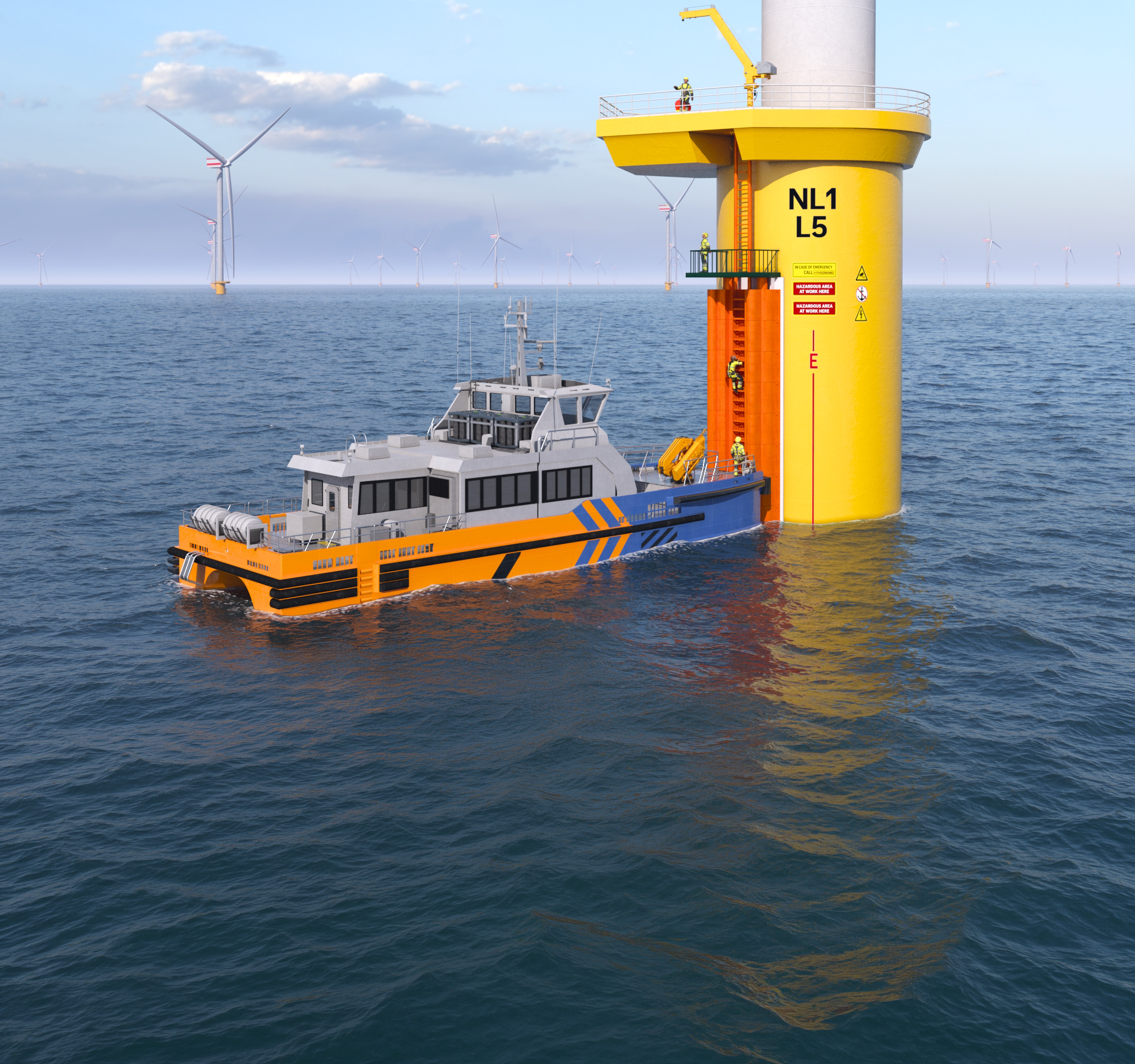
Andrew Wickham, Managing Director of Buoyant Works, explains how the company’s FlexLanding system is rethinking offshore wind boat landings with a modular polymer design that aims to improve transfer safety, reduce maintenance and lower whole-life costs.
PES: Andrew, it’s great to have you with us. Can you tell our readers a little about your background, your role at Buoyant Works and the work the company is doing in offshore wind?
Andrew Wickham: Buoyant Works is a manufacturing company based in Cornwall, operating across the offshore wind, oil and gas and marine industries. We have more than 30 years of experience in fender design and manufacturing and manufacture our products entirely in-house. Over the last five years alone, we have supplied bow fender systems to more than 230 crew transfer vessels (CTVs).
That experience has given us a strong understanding of how vessels interact with offshore structures and has led to the development of products such as Windshield and, more recently, FlexLanding. Our focus is on using high-performance polymers and our unique internal cavity technology to create impact-absorbing products with controlled and repeatable performance.
PES: Buoyant has spent a lot of time looking at what happens where vessels and offshore structures meet. What has that experience taught you about the way conventional offshore wind boat landings are designed?
AW: Our experience has shown us that the interface between a vessel and an offshore structure needs to do much more than simply provide a physical landing point. It needs to manage impact forces, provide safe and consistent access and withstand a demanding marine environment over many years.
Download full article