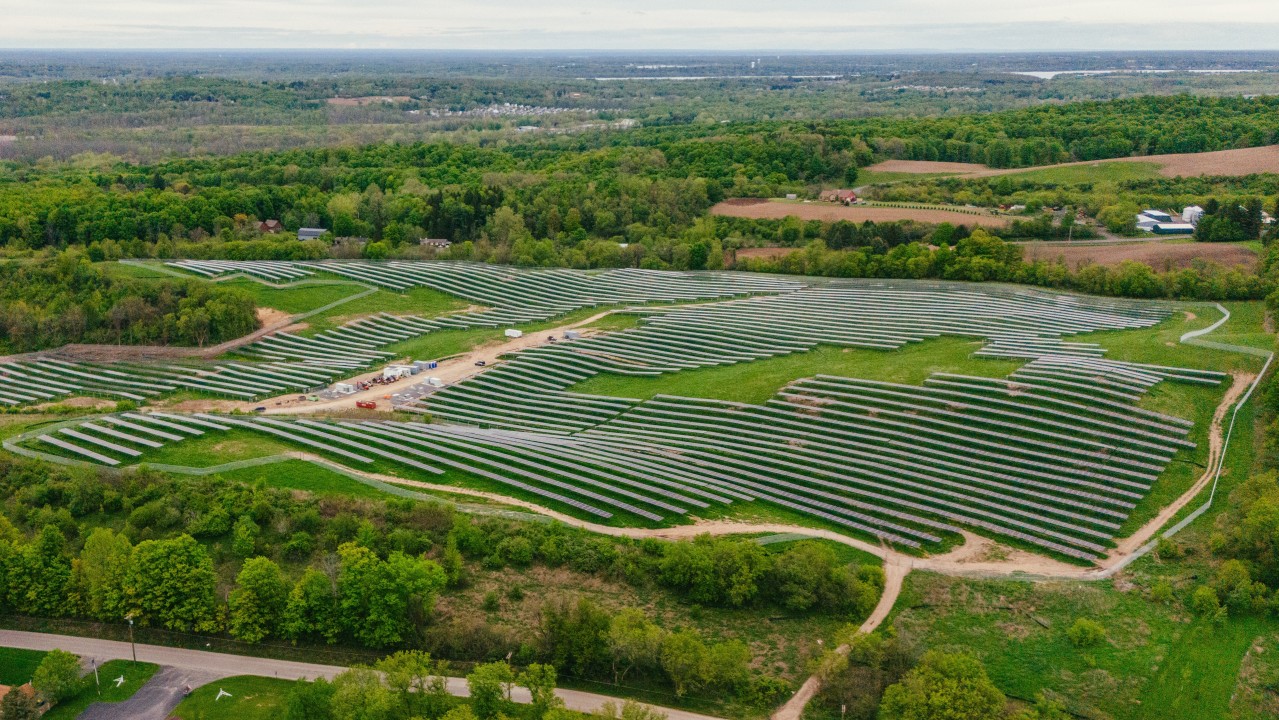
In today's utility-scale solar landscape, timelines are tighter, margins thinner, and prime, flat land is becoming a rarity. Developers are under pressure to build faster, leaner, and often on more challenging sites. Yet, one obstacle consistently complicates projects and inflates costs: terrain.
Uneven ground and complex topography have become major hurdles in solar development. While tracker manufacturers have advanced materials and controls, true terrain adaptability often lags. This isn't just a technical issue; it's a critical factor impacting project viability. As the experts at Polar Racking highlight, project success increasingly depends on designing systems that work with the land, not against it.
The Disconnect: When Tracker Engineering Meets Construction Reality
Most single-axis trackers still rely on long, rigid torque tubes – a design ideal for perfectly flat sites. But such sites are vanishing. On real-world terrain like rolling hills or repurposed land, these rigid systems create recurring, costly problems:
- Exploding Grading Costs: Flattening land to meet tight tracker tolerances can add six figures to the civil scope and trigger significant permitting delays related to stormwater, erosion control, and topsoil preservation. Aggressive grading can kill a project.
- Compromised Soil: Grading strips topsoil, disrupts natural drainage, and increases erosion risk, making projects environmentally contentious.
- Increased Pile Complexity: EPCs are forced to specify numerous custom pile lengths, driving up fabrication costs and logistical complexity.
- Slowed Installation: Tighter tolerances lead to more pile re-drives, layout rework, and require highly skilled labor that is increasingly scarce.
These aren't minor inconveniences; they are margin killers that can make or break a project in today's competitive market.
What Makes a Tracker Truly Terrain-Following?
The term 'terrain-following' is often used loosely. Many designs offer workarounds like universal joints or rely on extensive civil work. A tracker is only truly terrain-following if it can:
- Maintain structural integrity and tracking performance across variable elevations.
- Be installed efficiently without excessive civil work, custom piles, or added permitting burdens.
This is the philosophy Polar Racking adopted when designing the Sol-X single-axis tracker. Instead of expecting the land to adapt, they engineered a tracker that adapts to the land.
A Modular Approach to Adaptability: How Sol-X Solves the Terrain Problem
The Sol-X tracker departs from the traditional long-tube design. Key features include:
- Modular Tables: The tracker row is broken into smaller, structurally independent segments (typically 6-24 modules each). These tables mount on individual piles and are linked by a flexible drive shaft, allowing the system to adjust locally to the terrain without needing a continuous rigid tube.
- Result: Eliminates the need for excessive grading.
- Built-in Vertical Adjustability: Each post includes 350 mm (13.8") of vertical adjustment range as standard, with options for up to 600 mm (23.6").
- Result: Accommodates steep slopes and uneven ground, allowing crews to level tables even with imperfect pile driving, keeping projects on schedule.
- Minimal Layout Sensitivity: Only 2-3 critical posts per table need precise alignment (within ±25.4 mm / 1 inch), compared to the entire row in rigid systems.
- Result: Reduces layout stress, minimizes re-drives, and speeds up installation, especially with less experienced crews.
- High Degree of Pre-Assembly: Up to 60% of components, including T-assemblies and hardware, are preassembled off-site. Modular tables ship in kits, reducing on-site handling and bolt counts.
- Result: Faster installation, shorter training times, and fewer field errors – critical when labor is scarce and expensive.
Beyond Terrain: Additional Design Benefits
The Sol-X design offers further advantages that enhance project viability:
- Reduced Wind Loads at Flat Stow: Sol-X stows flat (0°), unlike systems needing high angles (55°+) to avoid galloping. This reduces structural loads, enabling smaller piles and shallower embedment – ideal for landfills, brownfields, and sites with challenging soil conditions.
- Integrated Wire Management: Built-in trays and clips simplify wiring, improve inspection outcomes, and reduce long-term wear risk.
- Fewer Pile SKUs: Built-in adjustability minimizes the need for numerous pile lengths, simplifying procurement and reducing waste.
Why Constructability Matters Now More Than Ever
The solar industry is evolving. Tighter budgets and tougher sites demand faster builds and leaner execution. Tracker systems must prioritize constructability.
"The biggest cost wins are often found in how we build, not just what we build," emphasizes Polar Racking. If a tracker installs faster, handles imperfect terrain gracefully, simplifies foundation work, and opens up more challenging sites, it becomes a true project enabler.
As you plan your next development, ask the hard questions: Can your chosen tracker be built without costly site reshaping? Does it give your EPC reasonable tolerances, or just more ways to fall behind schedule? In this market, success isn't just about maximizing watts per acre; it's about delivering projects on time and on budget, even when the ground isn't perfect.







-1.jpg)