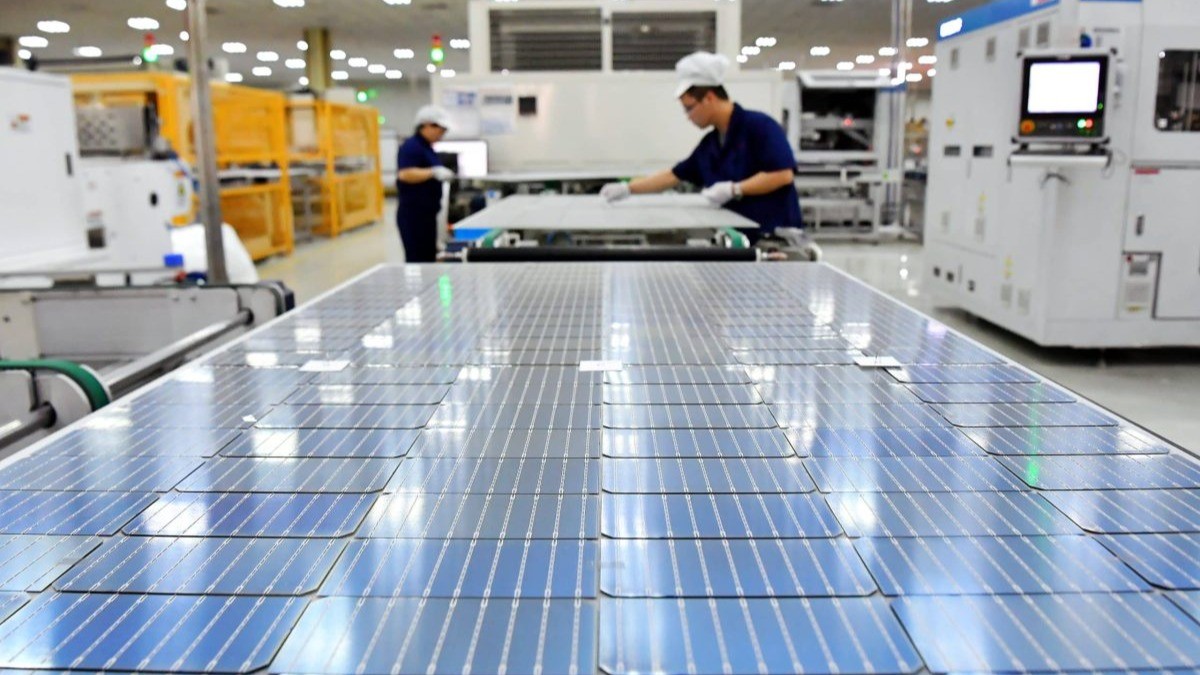
As the solar industry matures, manufacturers and project developers are becoming more and more focused on ensuring the long-term reliability of solar modules. There are inherent challenges to predicting the performance of a module over a potential lifespan of 30 years or more, but innovative approaches are emerging from leading manufacturers. PES spoke with LONGi Product Marketing Manager Alyssa Huang to learn how the solar module giant is pushing the envelope on testing and reliability standards for its products.
PES: We’ve featured LONGi in PES before, including a recent interview with CJ Fu, but in case our readers aren’t familiar, can you give us a quick introduction to the company?
Alyssa Huang: LONGi is one of the world’s largest vertically integrated solar companies. We employ over 60,000 workers and have manufacturing facilities worldwide. That amounts to over 130 GW of modules shipped over the past eight years. Additionally, LONGi has a triple-A bankability rating, which is a testament to the quality of our products.
PES: What role has technology and innovation played in LONGi’s success?
AH: LONGi was founded in 2000, and we’ve learned a lot over the past 23 years, including the importance of continuous innovation, which is a key reason why LONGi has continued to grow while so many other solar companies have failed. We invest more in R&D for both wafer and module technology than any other solar manufacturer, which has enabled us to stay ahead of the curve and lead the way in scaling up new technologies like monocrystalline wafers, PERC cells, and bifacial modules.
However, while I think that LONGi is widely recognised as an industry leader in innovations that improve efficiency and energy yield, our innovations for ensuring reliable long-term performance are less well-known, but still very important.
PES: Yes, let’s talk about reliability. First, what does reliability mean from the perspective of a solar developer?
AH: As a solar developer, your overall goal is to maximize your ROI by minimizing your LCOE. And that means maximizing your energy output while minimizing the costs of installation and operations over a project’s lifespan. Through this lens, we can understand reliable performance as having two dimensions: avoiding failures to major system components which require expensive repairs and thus increase your opex, while also minimizing more subtle issues that degrade panel performance and reduce your energy output.
Reliability challenges can emerge from virtually any component of a solar installation, including inverters, cabling, mounting systems, and more, and they can occur at any point in a project’s 30 year lifespan. However, according to a recent report from the IEA, about 27 % of reported O&M cases at utility-scale solar projects are related to issues with solar modules, such as glass breakage, cell microcracks, mechanical failures, and junction box failures. Thus, as a module manufacturer we have a responsibility as well as an opportunity to support the success of our customers by aiming to achieve the highest possible level of reliability in our products.
PES: Can you tell me which standards are commonly used in the solar industry to ensure reliability?
AH: Today, the main standards that our industry uses are set by the International Electrotechnical Commission (IEC), such as the IEC 61215 standard that defines the design and qualification of crystalline silicon terrestrial PV modules. To meet these IEC standards, modules are subjected to environmental stresses such as high temperatures and mechanical loads and then tested to evaluate any damage or degradation in performance. Because solar modules typically have a lifespan of 25 years or more, these test cycles are typically repeated many times, to simulate impacts over time.
While basic IEC standards establish an adequate baseline for reliability, they have limitations. The series of environmental stressors are proxies for real-world conditions, but they may not capture the full range of climate conditions that solar modules are subjected to, nor the ways that combinations of stressors can interact to produce specific types of failures in the field. More broadly, merely increasing the number of test cycles to accelerate degradation is not really a scientific way of simulating long-term performance, which is of course inherently difficult.
PES: Given the limitations of the IEC standards, how does LONGi approach reliability testing?
AH: As a supplement to the IEC process, LONGi invests a significant portion of our R&D budget on the development of raw material and module tests and standards to better evaluate long-term performance. First, we conduct forensic studies on failure mechanisms that occur in the field to determine and validate the specific ways in which performance breaks down. Then, we develop testing methods that simulate these failure mechanisms under conditions designed to resemble real-world operating environments as closely as possible, which provides a more accurate representation of the long-term reliability of a module.
PES: Can you give us examples of some of your innovations in this area? For example, how do you address the glass breakage and cell crack risks you talked about earlier?
AH: Testing for cell quality and aiming to reduce risks of cell microcracks and mechanical load failures in early stage is commonly done with a cell bending test, but there is no standard methodology across suppliers, making it difficult to compare reliability of different modules. LONGi developed a four-point testing standard based on the actual deformation characteristics of solar cells, which are brittle by nature. We experimented with indenter spacing and diameter and other aspects of the testing setup to ensure compatibility with cells of varying sizes and thicknesses. This process has helped us accurately screen for the highest-quality cells in the early raw material selection stage.
To help minimise the risk of glass breakage, we pioneered a local thermal shock resistance test to address hotspot induced glass failures. We started with the industry standard glass test and optimised it in several ways to more accurately reflect conditions in the field. Conventional glass testing occurs in a uniformly heated chamber, but we apply local heating at various locations of the glass and temperatures of up to 200°C, which more closely resembles hotspot occurrences in the field. We also replaced the conventional 300 mm x 300 mm test sample with a full-sized module, further improving our ability to screen out unqualified suppliers and reducing hotspot induced glass failure rates for our modules. This standard has been approved by CPIA (China Photovoltaic Industry Association) and recognized by mainstream glass suppliers in the industry.
PES: You mentioned the need to improve reliability testing procedures to reflect real-world operating conditions. I’m curious, does this include different types of climates? For example, an increasing amount of solar development is occurring in cold-weather regions.
AH: Absolutely. As a global company, we have to deliver reliable performance across all climates, and to your point we have been very focused on building our customer base in colder-weather markets such as Canada and Europe. One LONGi innovation in this area is our development of a low temperature static mechanical load test, which tests module mechanical load performance at low temperatures, using historical data from periods of extreme cold and snow loads. This simultaneous temperature and load testing is crucial because module components have different properties at low temperatures, for example, module encapsulants stiffen as temperatures decrease, causing embrittlement and worsening mechanical load performance.
We’ve also developed new methodologies based on conditions in hot-weather climates, such as our high temperature reverse bias standard to reduce bypass diode failures. High temperature diode failures are one of the bigger risks for solar projects, as they can result in serious production losses or even fires!
So to prevent diode thermal failure and potential fires, we have taken the lead in raising the temperature of the diode reverse bias test to 100°C. By subjecting the diodes to this elevated temperature, which takes into account the high operating temperatures experienced by the modules in the field, like in a hot desert, it becomes possible to identify and eliminate unqualified diodes that are unable to withstand high temperatures at an early stage. This inclusion in the testing process effectively mitigates the risk of thermal failure in diodes and reduces potential fire hazards.
PES: Now that you’ve developed these processes for more accurate testing procedures, how has it impacted your manufacturing supply chains?
AH: These more stringent standards have allowed us to filter out unqualified suppliers at the earliest possible stage of the module manufacturing process. For example, we required LONGi’s solar glass suppliers to meet our local glass thermal shock resistance standard, and we found that while all eight suppliers met the conventional glass test, only six met our higher standard, so we were able to eliminate two subpar suppliers from our supply chain. In addition to the standards we’ve already discussed, LONGi has used a similar process to improve upon testing procedures for components including junction boxes and EVA, and these improvements have similarly helped us to identify the highest-quality suppliers.
PES: Finally, what are the implications of LONGi’s work in this area for the solar industry more broadly?
AH: Our confidence in these higher standards, and particularly our testing for specific module risks stemming from extreme environmental conditions, has enabled us to offer full-scenario product protection for our modules under the LONGi Lifecycle Quality guarantee. I think this level of guarantee is valued by customers everywhere, but especially in emerging markets in colder weather climates that may still be cautious about solar adoption compared to more established markets.
While this has helped us to win new customers, LONGi also believes that a rising tide lifts all boats. As more solar companies go beyond the basic IEC standards to improve the reliability of their products, it will improve the reputation of the solar industry more broadly and expand the market for all of us.
Thus, we hope that we can come together with other stakeholders in the industry to identify the root causes of module failures and standardise the testing processes used to address them, which will ultimately provide a more accurate view of long-term performance.