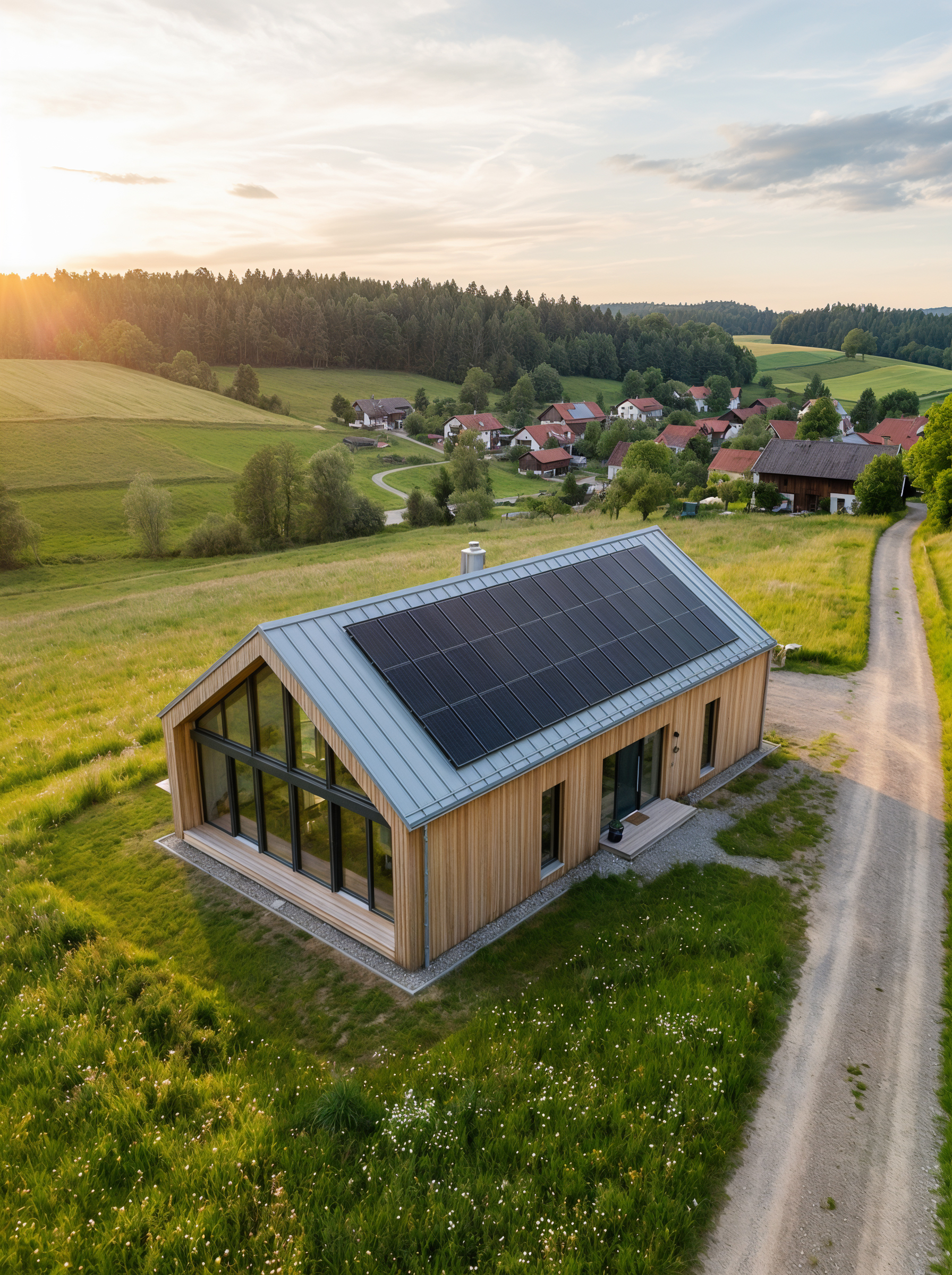
As solar deployment expands into airports, transport corridors and urban areas, reflected sunlight can become a significant planning constraint. Even relatively small reflections from PV modules may cause disruptive glare for pilots, drivers and nearby residents, potentially delaying or preventing project approval.
Dr Ruben Hünig, co-founder and CEO of Phytonics, argues that bio-inspired light management can allow PV to be installed at sites where conventional modules may create unacceptable glare.
When small reflections become a problem
The sun has a luminance of around 1.6 billion candela per square metre (cd/m²), while the human eye can experience glare at levels as low as 100,000 cd/m². Conventional anti-reflective coatings can still reflect at least 1 per cent of incoming light, with the effect becoming stronger at shallow angles.
Regulation is responding. Germany’s Federal Highway Authority has introduced a tolerance threshold of 30,000 cd/m² for PV systems alongside motorways, while aviation authorities assess glint and glare near approach and departure routes.
The issue has practical consequences. At Amsterdam Schiphol Airport, glare from a nearby solar park contributed to temporary runway closures in 2025, followed by a court order requiring part of the installation to be removed.
Using nature to manage light
Phytonics, a spin-off from Karlsruhe Institute of Technology, developed its XRF anti-glare film using microscopic structures inspired by plant surfaces.
The film consists of a scratch-resistant functional coating on a UV and weather-resistant polymethyl methacrylate (PMMA) carrier, bonded to the solar glass. Its micro-textured surface is designed to scatter reflected light while allowing useful radiation to reach the module.
According to Phytonics, its key characteristics include:
- Reflected luminance below 100,000 cd/m²
- More than 98 per cent transmission of visible and near-infrared light
- 95 to 97 per cent module performance at perpendicular incidence
- A service life of more than 25 years
- Application to new and existing modules
The company also says the film improves performance at oblique angles. At an incidence angle of 80°, it reports approximately 40 per cent higher electricity yield compared with a standard anti-reflection coated module.
These are company-specific performance claims based on its testing.
Testing the approach at an airport
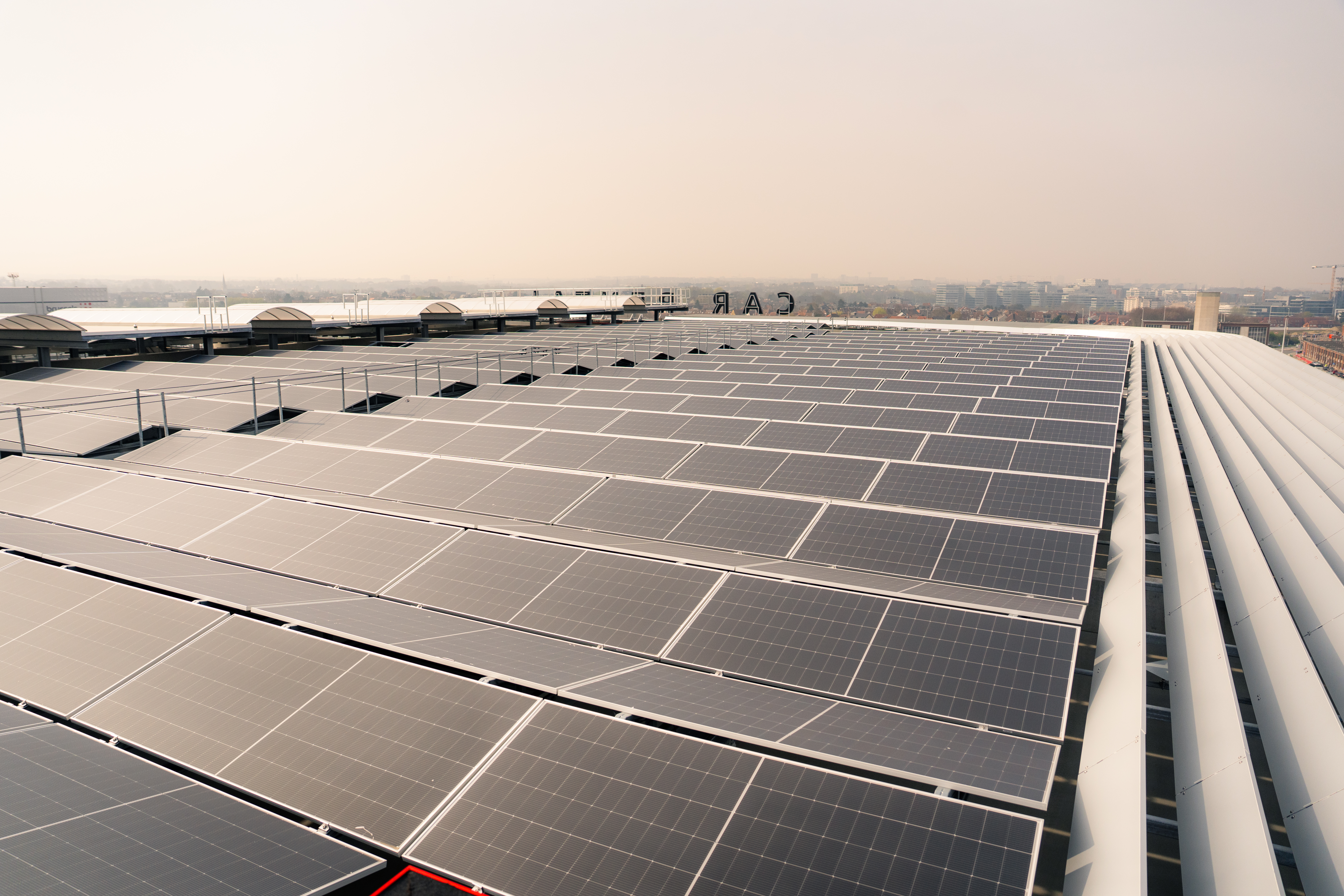
A Belgian airport provides an industrial example. More than 2,200 modules fitted with the film were installed across 6,380 m² on the seventh floor of a new car rental parking structure.
The system produces around 1,150 MWh annually, supplying the building and electric vehicle charging points, with surplus electricity exported to the grid.
Because the structure is directly alongside runways, approval depended on preventing glare for pilots and tower personnel.
Phytonics reports reflected luminance of:
- 2,000 cd/m² at a 10° light incidence
- 4,000 cd/m² at 30°
- 6,000 cd/m² at 50°
- 23,000 cd/m² at 70°
All are below the 100,000 cd/m² disruptive glare threshold cited in the feature.
The installation extends across a large rooftop PV system on an eight-storey car park.
Opening more sites to solar
A further 8.5 MWp project at Brussels Charleroi Airport uses the film on around 5,000 of its 12,000 modules.
Phytonics says the technology can also be retrofitted, allowing existing modules to remain in service rather than requiring replacement. The film has passed weathering testing under IEC 61215, including damp heat and hail tests, according to the company.
As solar moves closer to transport infrastructure and densely populated areas, glare is becoming more than an optical consideration. It can influence safety, permitting and ultimately whether a project is viable.
Managing reflections at module level could therefore help make previously difficult roofs and sites available for solar generation.
Read the full Industrial Insight feature from Phytonics on anti-glare film, light management and solar PV at sensitive sites in PES Solar: https://pes.eu.com/exclusive-articles/making-solar-pv-viable-at-sensitive-sites