Offshore wind is a cornerstone of global net-zero ambitions, with capacity targets soaring and turbines reaching unprecedented sizes of 20 MW or more. Yet, the fundamental drivetrain technologies powering these giants have remained largely static for nearly two decades. As turbines grow larger and supply chain complexities intensify, the need for more flexible, scalable, and regionally adaptable generator technology is undeniable.
GreenSpur is rising to this challenge, not by merely refining the status quo, but by introducing a fundamentally new approach. Their magnet-agnostic axial flux generator architecture offers scalability, efficiency, and crucial adaptability, providing a much-needed alternative for manufacturers and developers seeking resilience in a demanding market.
Reframing the Generator Challenge: Beyond Radial Flux
Most utility-scale turbines today rely on radial flux permanent magnet generators, often using powerful neodymium-based magnets. While effective, these designs face significant drawbacks:
- They tend to be large and heavy.
- They are tightly bound to global rare earth supply chains, exposing the industry to price volatility, environmental concerns, and geopolitical risks.
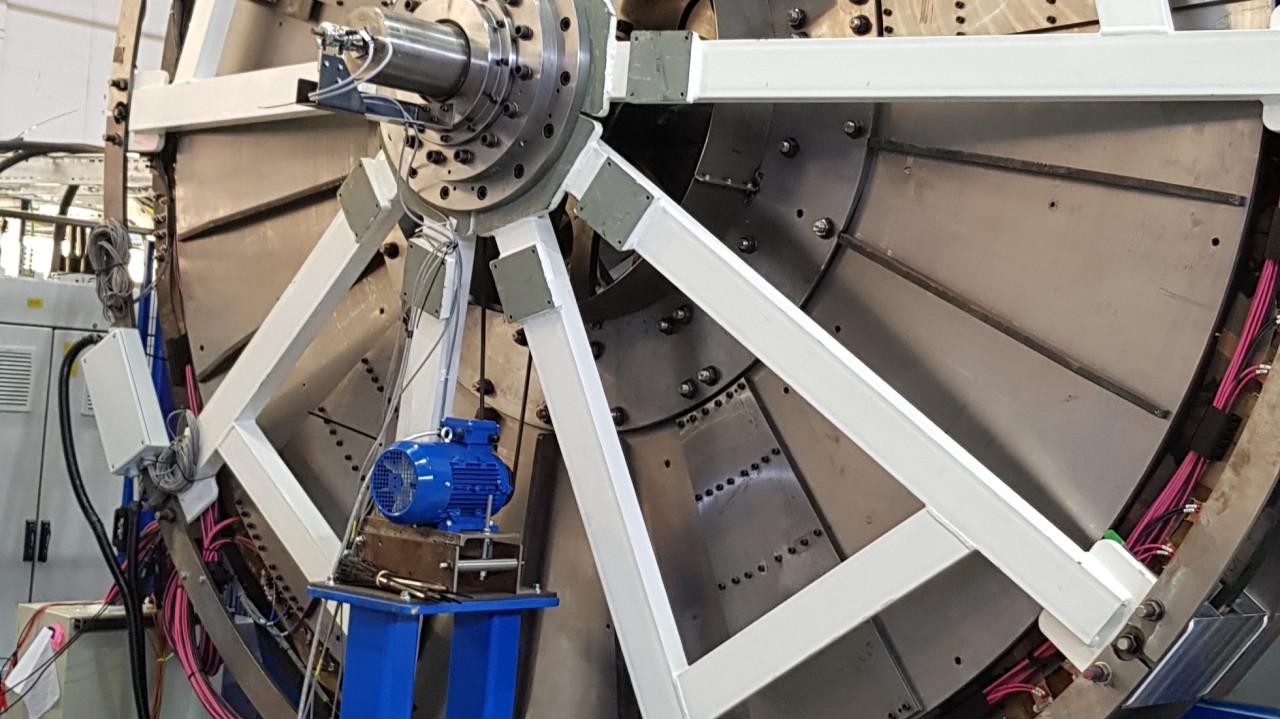
GreenSpur's axial flux alternative offers a different path. Built from the ground up, this design achieves high torque density in a more compact, modular layout. Crucially, it is magnet-agnostic.
"Being magnet agnostic is not a philosophical position but a practical design choice," explains Jason Moody, Chairman of GreenSpur. "It allows optimisation around what matters most in a given context, whether that is cost, weight, sustainability or local sourcing". This flexibility means the generator can be optimized for lower-powered ferrites where readily available or tuned for high-grade neodymium where maximum power density is paramount, without altering the core design.
Performance Through Innovative Design
The technology isn't just theoretical. GreenSpur's platform has been independently validated by the UK's Offshore Renewable Energy (ORE) Catapult. An 18 MW system-level review confirmed the design meets critical industry requirements for mass, efficiency, and manufacturability, placing it in direct competition with market leaders.
Key design advantages include:
- Advanced Air-Cooling: Eliminates the need for complex, maintenance-heavy water-cooling systems, even at 18 MW+, a significant benefit offshore.
- High Modularity: Enables rapid design iterations (typically 2-3 weeks) to suit different turbine platforms, magnet grades, or supply chain constraints using a COMSOL-based simulation environment.
- Adaptability: Can be configured for various regional requirements – low-carbon ferrites in Europe, high power density in Asia, or local sourcing mandates.
Engineered for Real-World Manufacturability
A core differentiator is the focus on practical production. The GreenSpur generator design features:
- Flat windings.
- Simplified lamination assemblies.
- Minimal dependence on exotic tooling.
- Tolerance for regional supply chain variations.
"Development took place in close consultation with suppliers to ensure manufacturability in existing facilities, or easy transfer to new ones," Moody highlights. This isn't an R&D prototype; it's engineered for industrial deployment, underpinning GreenSpur's strategy of enabling localized manufacturing through licensing.
A Flexible Business Model: Licensing and Beyond
GreenSpur's primary model involves licensing its design, IP, and simulation tools to OEMs and regional partners. This offers a fast route to scale, reduces capital intensity, and supports local content requirements. It also allows OEMs to trial alternative generator technologies without long-term manufacturing commitments.
However, recognizing the need to accelerate deployment, the company is pragmatically exploring limited manufacturing initiatives in certain regions to demonstrate capability or meet early market access needs, complementing the core licensing strategy. The approach is shaped by regional priorities – sustainability in Europe, local manufacturing in North America, power density and cost in Asia.
The technology is robustly protected by nine patent families, providing partners with a secure foundation for collaboration and co-development.
Supporting a Changing Energy System: Geared vs. Direct Drive
The offshore wind market is dynamic. After years favouring direct drive, geared drivetrains are being reconsidered for ultra-large turbines due to potential cost, packaging, and serviceability benefits. Axial flux machines are naturally well-suited to this trend, potentially achieving system efficiencies near 99% in geared configurations.
Simultaneously, demands for grid-forming capability, dispatchability, and integration with storage are growing. The modularity of GreenSpur's architecture allows it to adapt to these evolving system requirements where traditional generator topologies may be reaching their limits.
From Innovation to Impact
GreenSpur, part of the UK-listed clean tech group Time To ACT, embodies a long-term vision focused on supporting the energy transition technically and systemically. Despite market turbulence, the company has gained momentum through system validation and alignment with industrial decarbonization policies.
The team is actively engaging with turbine stakeholders to explore various generator configurations and design studies. A UK-based manufacturing initiative is also under consideration to support domestic production and national clean energy goals, complementing the global licensing model.
GreenSpur's generator technology is more than just hardware; it's a strategic response to a global wind sector demanding flexibility, scalability, supply chain resilience, and regional adaptability. As turbines continue to grow in scale and complexity, drivetrain innovation must keep pace. This adaptable, magnet-agnostic approach offers a compelling pathway, enabling OEMs to build what they need, where they need it, with fewer constraints.