The solar industry is evolving at an unprecedented pace, but this progress brings new complexities. The rapid advancement of solar technology, increasingly unpredictable weather patterns, and stricter financial requirements have made many traditional PV system modeling and evaluation methodologies outdated. To ensure solar projects remain resilient, financially viable, and technically sound, the industry must move away from the simplified, low granularity approaches of the past and embrace new standards in data and modeling.
The New Reality: Complex Technology and Climate Variability
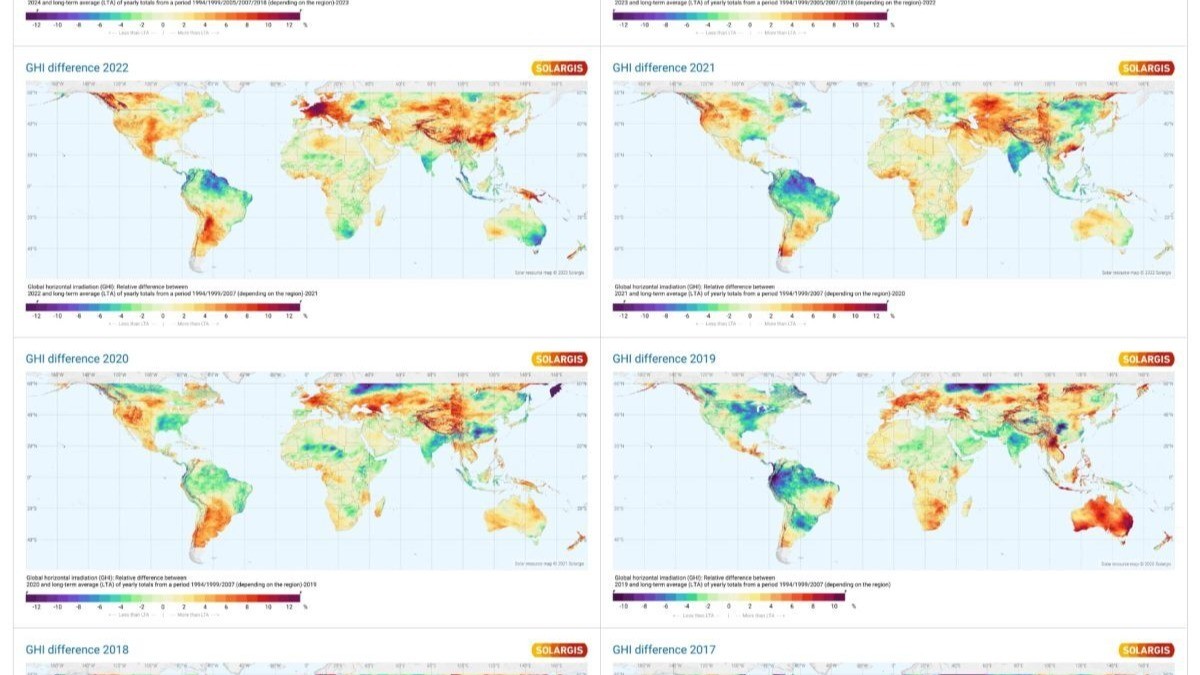
The challenges facing solar projects today are multi-faceted. On one hand, technology has become more complex with the rise of bifacial modules, intelligent inverters, and battery storage systems. On the other, weather variability and climate change are making energy production increasingly difficult to predict. Extreme weather events are becoming more frequent and severe. In 2024 alone, parts of Europe saw notable declines in solar irradiation, while record rainfalls caused widespread disruption. In Portugal, smoke from forest fires caused a temporary GHI reduction of up to 30%, followed by increased soiling. These climate-driven disruptions highlight the need for a more robust approach that accounts for real-world variability rather than relying on long-term averages.
As the financial stakes grow higher, investors and banks are responding with stricter funding requirements. To secure bankability, the industry must transition to higher standards in three key areas.
Standard #1: Moving from 'Typical Years' to High-Resolution Time Series Data
For years, the solar industry has relied on hourly Typical Meteorological Year (TMY) datasets to model PV performance. While useful for quick pre feasibility estimates, TMY aggregates historical data into an idealized typical year, which smooths out variability and ignores short term, interannual, and long term climate fluctuations.
The new standard must be high resolution Time Series data. By providing data in 15-minute intervals spanning up to 30 years, this approach offers over 1 million data points per parameter, compared to the 8,760 points in a standard hourly TMY dataset. This granularity is no longer optional; it is a necessity for capturing fast-frequency variability and extreme weather events. By analyzing year-over-year changes at a sub hourly resolution, developers can gain a realistic picture of energy output, ensuring more robust risk assessments and better project bankability.
Standard #2: Embracing Ray Tracing for Accurate Bifacial Modeling
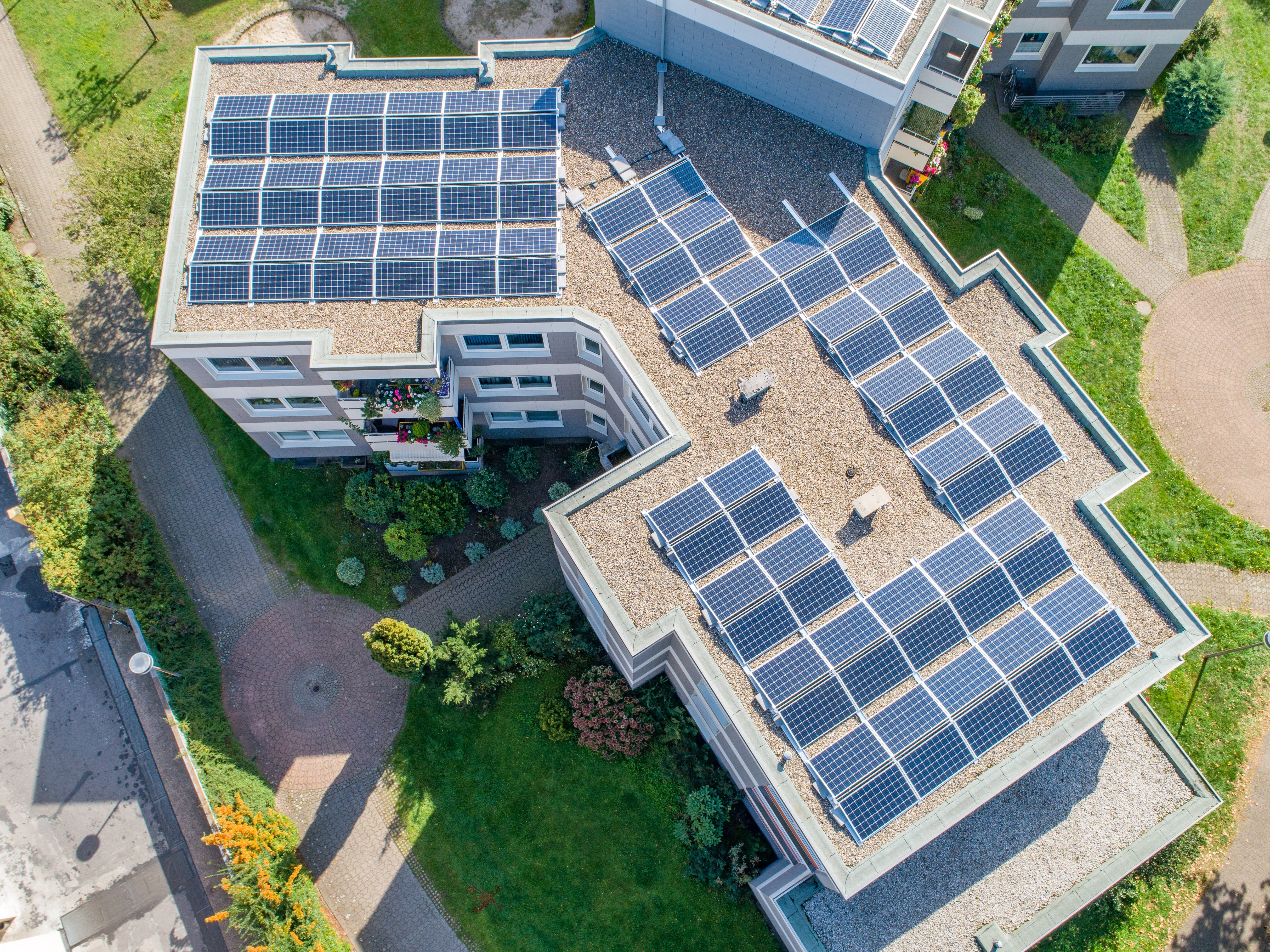
Bifacial PV modules, which capture sunlight on both sides, are becoming standard in the industry. However, most PV modeling tools use a view factor model that fails to properly simulate rear side irradiance, account for shading, or capture dynamic reflections from surrounding surfaces. This often leads to inaccurate yield predictions and suboptimal system designs.
To accurately optimize bifacial performance, the industry must adopt ray tracing technology combined with an anisotropic sky model. Unlike older models, ray tracing simulates how individual light rays interact with the environment, accounting for shading from modules and nearby structures, as well as variations in surface reflections. This allows developers to optimize bifacial system designs for real-world conditions, improving both PV performance and investment confidence.
Standard #3: The Urgent Need for Verified Component Data
A persistent challenge in the industry is the lack of standardization in the technical specifications of PV components. Many developers still rely on unverified PAN and OND files that are often incomplete or tampered with, leading to flawed PV designs and distorted energy yield calculations. This inconsistency creates confusion, increases financial uncertainty, and can result in underperforming projects.
The industry needs a new approach, such as implementing a verification system for PV component specifications and introducing a confidence rating based on data quality and validation. This would provide trusted information for performance modeling, improve transparency in due diligence, and reduce risk for developers and investors.
The future of PV project modeling is a shift from assumed to validated, and from empirical to scientific. By embracing these data driven, physics-based approaches, solar developers can build resilient projects that meet both performance and financial expectations in an era of increasing complexity.
Learn more about advanced solar data and modeling: www.solargis.com