Damage can develop within a blade’s composite structure without being visible from the outside.
As blades become larger and more highly loaded, finding that damage before it develops into a serious problem becomes increasingly important. Stephen Chambers, Head of NDT & Inspection at 3WIS, looks at how nondestructive testing (NDT), artificial intelligence (AI) and robotics could help operators understand more about what is happening inside the blade and make better informed maintenance decisions.
Looking beyond surface defects
Visual inspections remain important, but they may not identify damage developing internally within composite structures. This creates a need for techniques capable of detecting defects before they progress.
Key defects include:
- Delamination between composite layers
- Wrinkles created during manufacturing
- Voids that can become stress concentration points
- Disbonding between materials that should remain bonded
There are currently no universally adopted standards defining the most appropriate procedure for every blade defect, although new standards are being developed.
Combining inspection technologies
Chambers believes that relying on one inspection method may not provide a complete understanding of blade condition. Recent trials suggest complementary techniques can improve confidence in findings.
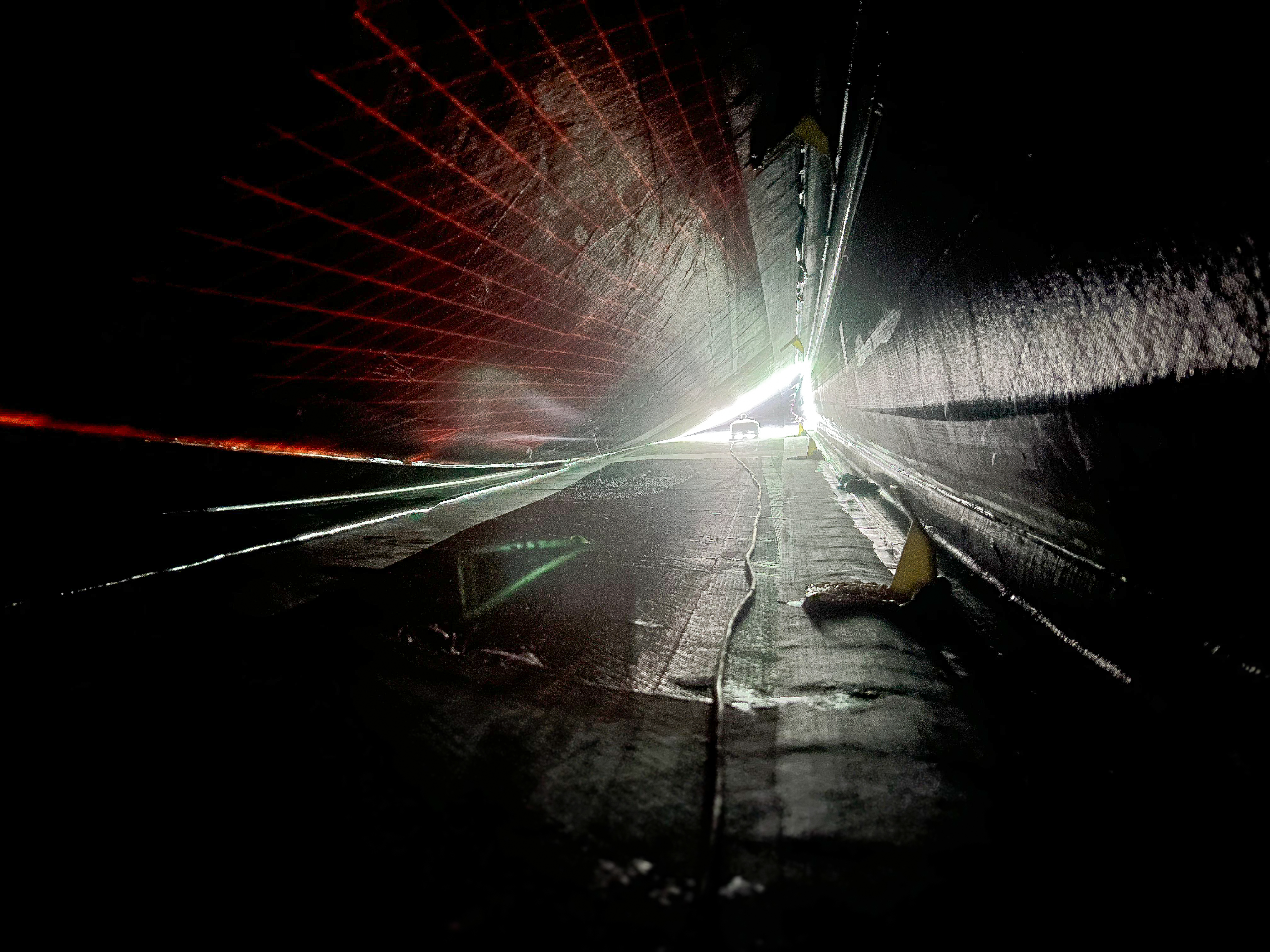
Visual inspection combined with Wave Check Laser Technology has shown potential for detecting wrinkles. Ultrasonic testing is being used to identify delamination, while phased array technology is being investigated for detecting voids and disbonding.
The aim is not simply to collect more data, but to produce information that supports practical maintenance decisions.
AI supports faster analysis
Advanced inspection techniques generate increasingly large datasets, making manual analysis more demanding.
AI is being explored to:
- Identify potential defects
- Highlight areas requiring further review
- Analyse large datasets more consistently
- Reduce interpretation time
- Support engineering decision making
A proof-of-concept project with Abraham George Smith at the University of Copenhagen demonstrated AI-assisted analysis of phased array ultrasonic testing data. The model was trained to identify patterns in trailing-edge bond scans and estimate effective bond width. Further work will explore AI-assisted analysis of images from internal blade inspections.
Chambers emphasises that AI is intended to assist experienced inspectors rather than replace them.
Robotics improve access
The physical size and location of modern blades make inspection difficult and can require specialist access equipment, personnel and turbine downtime.
Robotics and drone technology could reduce some of these requirements. Testing described by Chambers has demonstrated robotic systems capable of scanning spar caps up to 850 mm wide in a single run. Tethered specialist composite climbers have also operated at heights of up to 100 m while producing inspection data with fewer personnel requirements and reduced downtime.
Towards more predictive maintenance
International standards could help make these methods more consistent. IEC 61400-32, currently under development and expected around 2027, aims to provide guidance for composite blade inspection.
For Chambers, combining improved NDT, AI-assisted analysis and automation could help operators detect developing defects earlier, reduce unnecessary downtime and make better informed maintenance decisions.
The aim is to understand what is happening inside the blade early enough for operators to make a planned maintenance decision rather than react to a failure.
Read the complete feature in PES Wind: https://pes.eu.com/exclusive-articles/advancing-turbine-blade-inspection







(1)_wide-1.png)