News
Published in: Solar, Press Releases
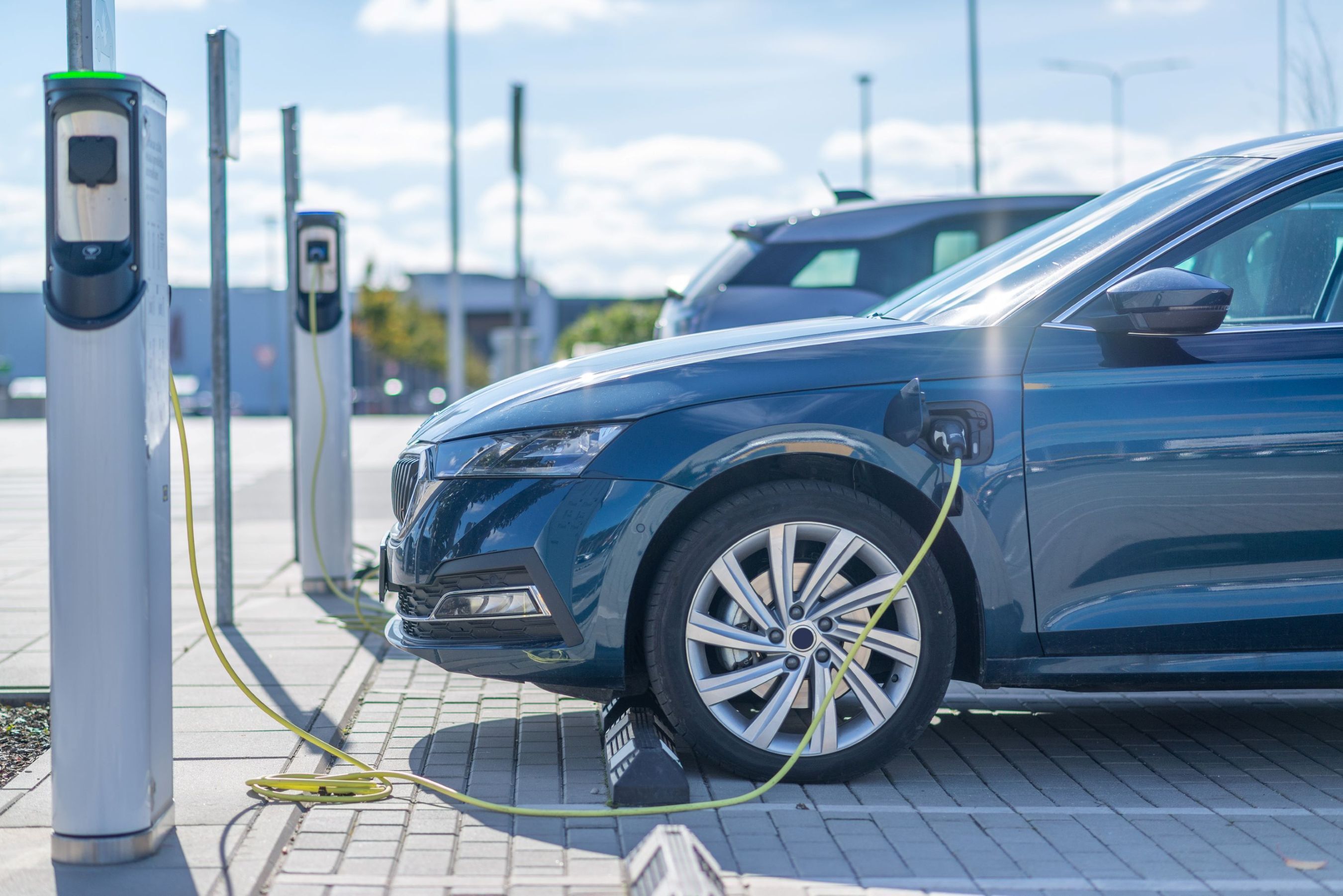
As of January 1, 2026, the UK had 116,052 public EV chargers across 87,796 charging devices – an average of 1.32 chargers per charging device. The ongoing expansion of charging infrastructure will be key as the UK further transitions to electric vehicles, but installing more chargers is only part of the challenge. As charging networks grow in both scale and power, ensuring long-term reliability will increasingly depend on good power quality, explains John Mitchell, global sales and marketing director at industrial power quality specialist CP Automation.
Whenever we hear discussions around electric vehicles, the same criticisms usually arise: “There’s not enough chargers”, “They’re too expensive”, or “They can’t do long distances”. These are all valid concerns, but they overlook another important factor – the electrical infrastructure behind every charger.
Unless power quality is given the consideration it deserves, operators could soon face increased maintenance costs, reduced equipment lifespan and avoidable, unplanned downtime.
More power, more complexity
It’s important to remember that modern EV chargers are sophisticated power electronic systems. They continuously convert electrical energy to meet vehicle charging requirements, but in doing so they can introduce disturbances to the surrounding network. As the number of chargers connected to the same supply increases, so too does the cumulative effect of these disturbances.
One of the most familiar challenges is voltage distortion, which can manifest as voltage dips, swells, interruptions, transients, fluctuations, harmonic and supra-harmonic distortion, and voltage unbalance. Harmonics are unwanted frequencies up to 2.5kHz depending on the standard applied, created by non-linear loads that can increase transformer heating, reduce system efficiency and place unnecessary stress on electrical assets. High-power rapid and ultra-rapid chargers can make these effects more pronounced unless power quality is actively considered during system design.
Meanwhile, engineers are overlooking the attention needed towards supra-harmonics, which are high-frequency emissions between approximately 2 kHz and 150 kHz generated by “low harmonic” / “high supra-harmonic” chargers. These emissions sit between harmonics and EMC regulations and are less well understood than conventional harmonics. They can only be assessed using a meter capable of measuring beyond the 50th harmonic (2.5kHz up to 150kHz) – beyond the remit of many traditional power and voltage analysers. For example, our fixed solutions from Powerside’s Pqube3 and online monitoring QubeScan cloud-based software add a dimension of control to the system, and portable metering from A-Eberle’s PQBox range is perfect for this role.
Nevertheless, as EV charging infrastructure expands, supra-harmonics are becoming a more pressing concern for electrical engineers. This is where the importance of permanent online monitoring is critical to see the effects recorded by such upgrades.
Protection by design
The good news is that these issues can be managed, provided they’re considered early enough. Rather than treating power quality as something to investigate after chargers have been installed, developers should assess the electrical environment before a project begins.
This is particularly important for chargers installed at industrial facilities, distribution centres, supermarkets or transport hubs, where EV chargers will share a supply with other non-linear loads. Understanding the existing electrical conditions allows engineers to identify potential harmonic issues before they affect either the chargers themselves or neighbouring equipment.
Protection against transient voltage events should also form part of the design process. Voltage spikes caused by switching operations or lightning activity can damage sensitive electronics and reduce the operational life of charging equipment. Installing surge protection devices (SPDs), such as SineTamer devices, provides an effective first line of defence by diverting damaging transient energy away from critical assets.
A coordinated approach
Surge protection is only one part of the solution. Where harmonic distortion is expected to be significant, additional mitigation may be required. Active harmonic filters continuously monitor the electrical supply and inject compensating currents to reduce distortion as loading conditions change, making them particularly suited to charging hubs where demand fluctuates throughout the day. The Comsys ADF range has a well-established impedance control software licence to help manage site resonances with ease and avoid costly failures caused when a site's electrical system is mostly capacitive due to the EV chargers.
As EV adoption grows, attention will naturally focus on increasing the number of charging points available across the country. However, reliability is just as important as availability.
By considering metering and monitoring, surge protection and harmonic / supra-harmonic mitigation and making power quality part of the design process from the outset, operators can reduce downtime and build charging networks that are ready to support the UK's transition to electric mobility.

To find out more about the power quality support and solutions that can protect your EV application, visit the CP Automation website https://www.cpaltd.net/industries/power-quality/.
For further information contact: John Mitchell, CP Automation
Unit 8, Ashley Industrial Estate, Exmoor Avenue,
Scunthorpe, DN15 8NJ
Telephone: +44 (0)1724 851 515
Fax: +44 (0)1724 851516
e-mail: john.mitchell@cpaltd.net
Press enquiries: Martin Deakin or Matt Perry
Suites 1 and 2, The Malthouse, Water Street, Stafford,
Staffordshire, ST16 1AR
Telephone: +44 (0) 1785 225416
e-mail: martin@stonejunction.co.uk or matt@stonejunction.co.uk
www: https://www.wechangeminds.com/
X: https://twitter.com/StoneJunctionPR
Facebook: http://www.facebook.com/technicalPR
LinkedIn: https://www.linkedin.com/company/stone-junction-ltd?
About CP Automation: CP Automation is a trusted, reliable provider for applications in the drives, automation and power quality markets. As well as supplying a wide portfolio of products, it has an experienced team of specialists that can support with everything from specific guidance on certain software tools and applications to round-the-clock power quality monitoring.
Ref: CPA538/08/26








-1.jpg)