Exclusive Articles

Verifying dual-scanning lidar performance for offshore wind measurement


Published in: Wind, Exclusive Articles, Industrial Insight
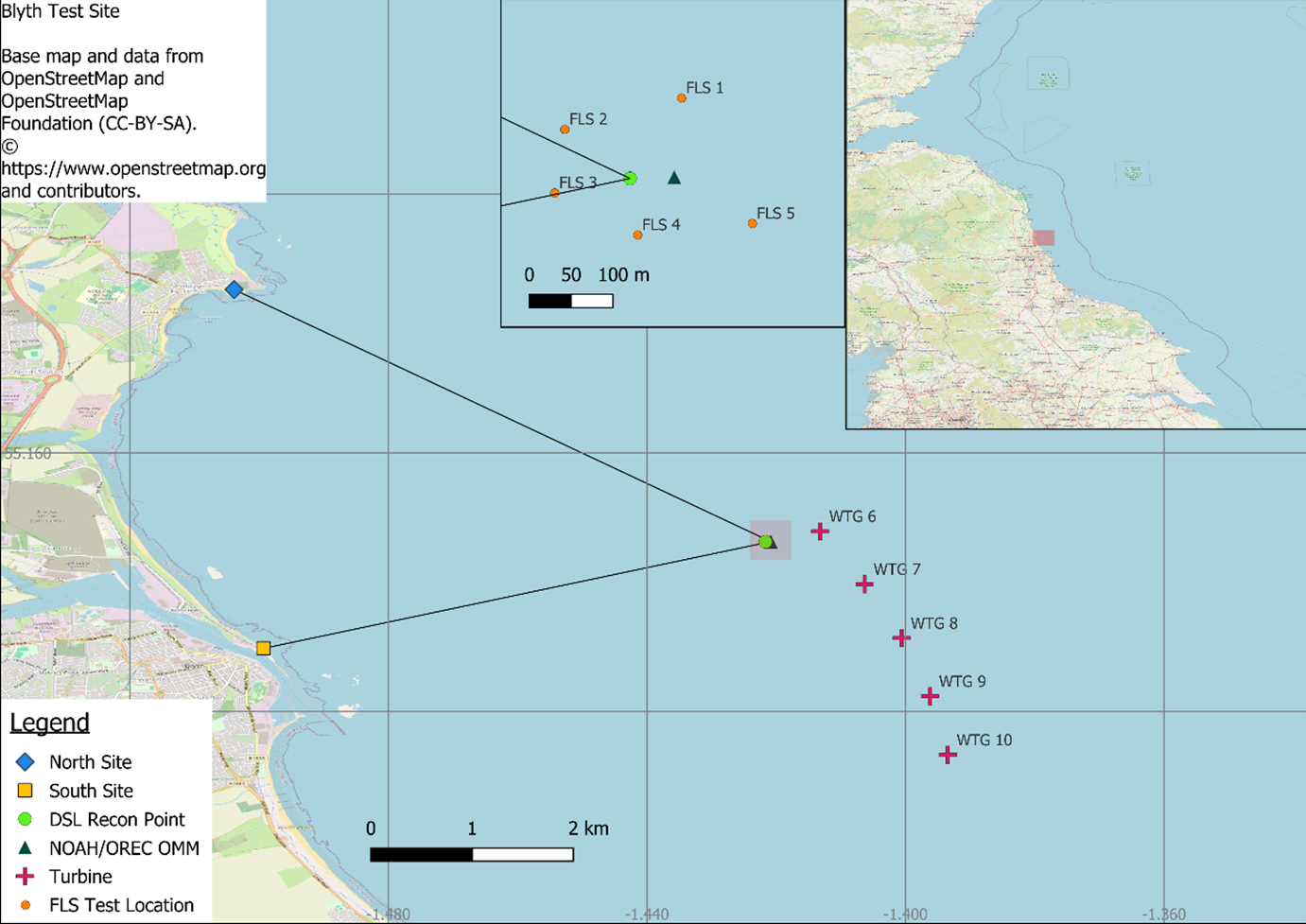

Verifying dual-scanning lidar performance for offshore wind measurement image

New testing at the C-TEST site near Newcastle, UK, is helping to demonstrate the potential of dual-scanning lidar for offshore wind measurement campaigns. Data from the NEMO project shows the technology can deliver accurate wind speed and turbulence intensity measurements at multi-kilometre distances while reliably capturing extreme weather events.

Dual-scanning lidar (DSL), combining two long-range scanning lidar devices whose beams intersect at a measurement point of interest, is a promising measurement approach, particularly for offshore wind resource and site assessment. In principle, it can be applied to any location within the range of the scanning lidars, i.e., currently up to 10 to 15 km, depending on the technology and instrument type used. It may therefore cover many sites of interest for the development of offshore wind projects globally.

In Europe, and in particular in the German North Sea, this criterion is often not met. For this reason, the use of floating lidar, a vertically profiling lidar device mounted on an autonomous buoy, has been more prominent for offshore wind resource assessment.

By contrast, in Japan, DSL applications have been prioritised, as the first offshore project developments fell within the manageable range of the technology. In addition, DSL has been considered more promising for providing reliable turbulence intensity (TI) information, which is required for the structural design of an offshore wind farm project, as outlined in the ‘Offshore Wind Measurement Guidebook’, released by the Japanese ‘New Energy and Industrial Technology Development Organization’ (NEDO)1.

 Download full article