Repeated crew transfer vessel impacts are exposing a recurring weakness in offshore wind asset protection. By reconsidering how boat landings are protected from wear-corrosion, operators may be able to extend coating life and reduce offshore intervention.
As offshore wind projects mature and move into longer-term operation, increasing attention is being directed towards the integrity of secondary steel structures. While the condition of primary structural components such as monopiles, transition pieces and towers is extensively monitored, secondary structures often receive comparatively less scrutiny despite their critical operational function.
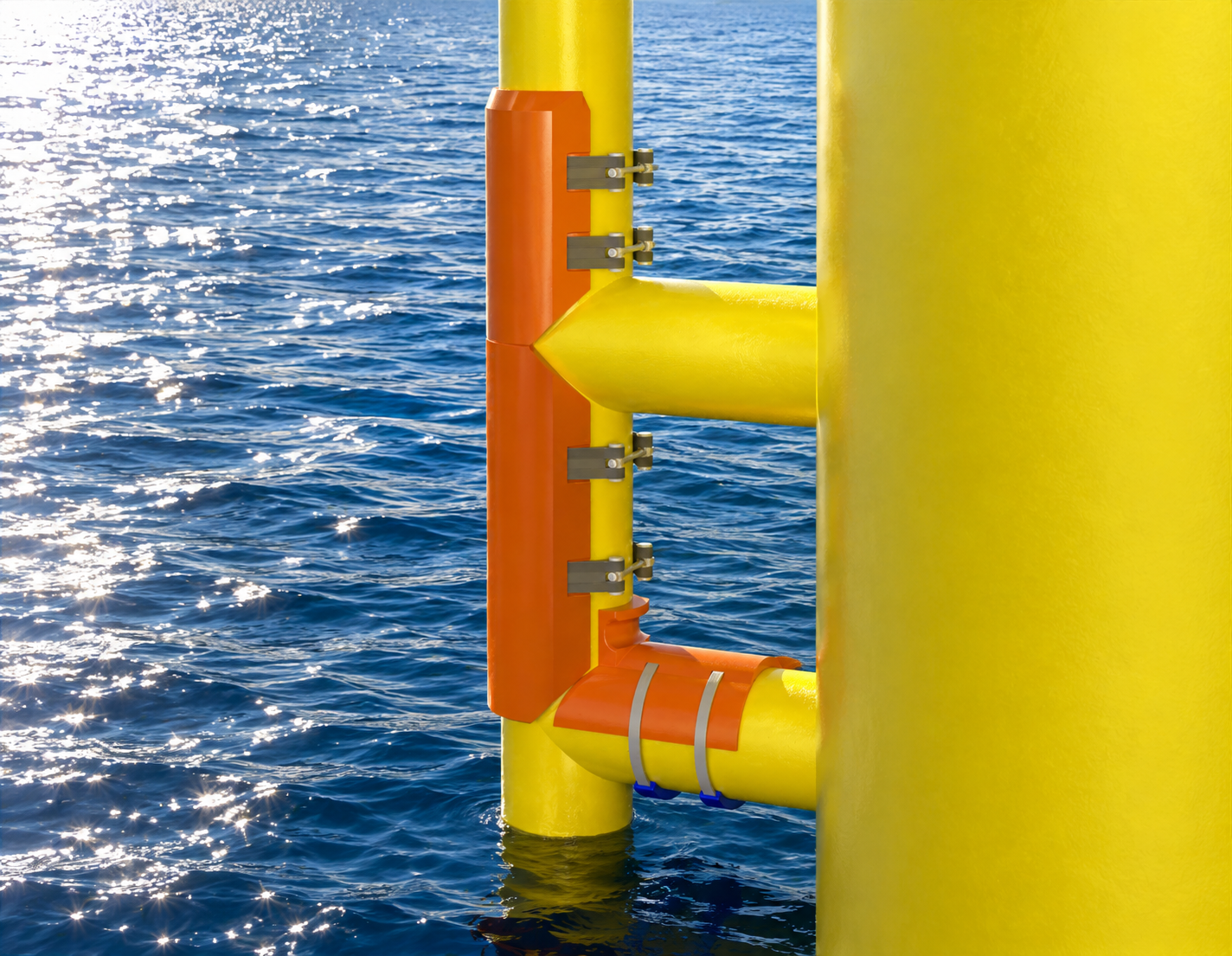
Among these, boat landings represent one of the most heavily utilised and mechanically challenged interfaces on an offshore wind turbine.
Designed to facilitate safe personnel transfer between crew transfer vessels (CTVs) and turbine access systems, boat landings are exposed to repeated berthing loads throughout the life of the asset. Although these interactions are anticipated during design, their cumulative effect on protective coatings and corrosion performance is increasingly becoming apparent across ageing offshore fleets.
The degradation observed is not simply a corrosion problem; it is a wear-corrosion problem. Understanding this distinction is important when selecting appropriate mitigation strategies.
Download full article