Blade damage at the most advanced stages has long pushed operators towards slower structural intervention or full replacement. New work on UV-curable materials, fibre-reinforced repair systems and robotic process control could give asset owners a repair option between the two, but only if laboratory progress translates into repeatable field performance.
Severe leading-edge erosion has become one of the most difficult decisions in blade maintenance.
Once damage moves beyond surface protection and into the laminate, operators are no longer choosing between simple repair methods. They are weighing downtime, weather risk, repair consistency, remaining blade life and the cost of replacement.
That is why replacement has gained ground in some severe erosion cases. Not because Category 4 and 5 damage can never be repaired, but because the repair process is harder to specify, harder to schedule and harder to execute consistently at height.
Lower and moderate stages of leading-edge erosion are now relatively well understood. Up to Category 3, the typical repair sequence is familiar: prepare the damaged area, restore the blade profile with filler, apply leading-edge protection and return the turbine to service.
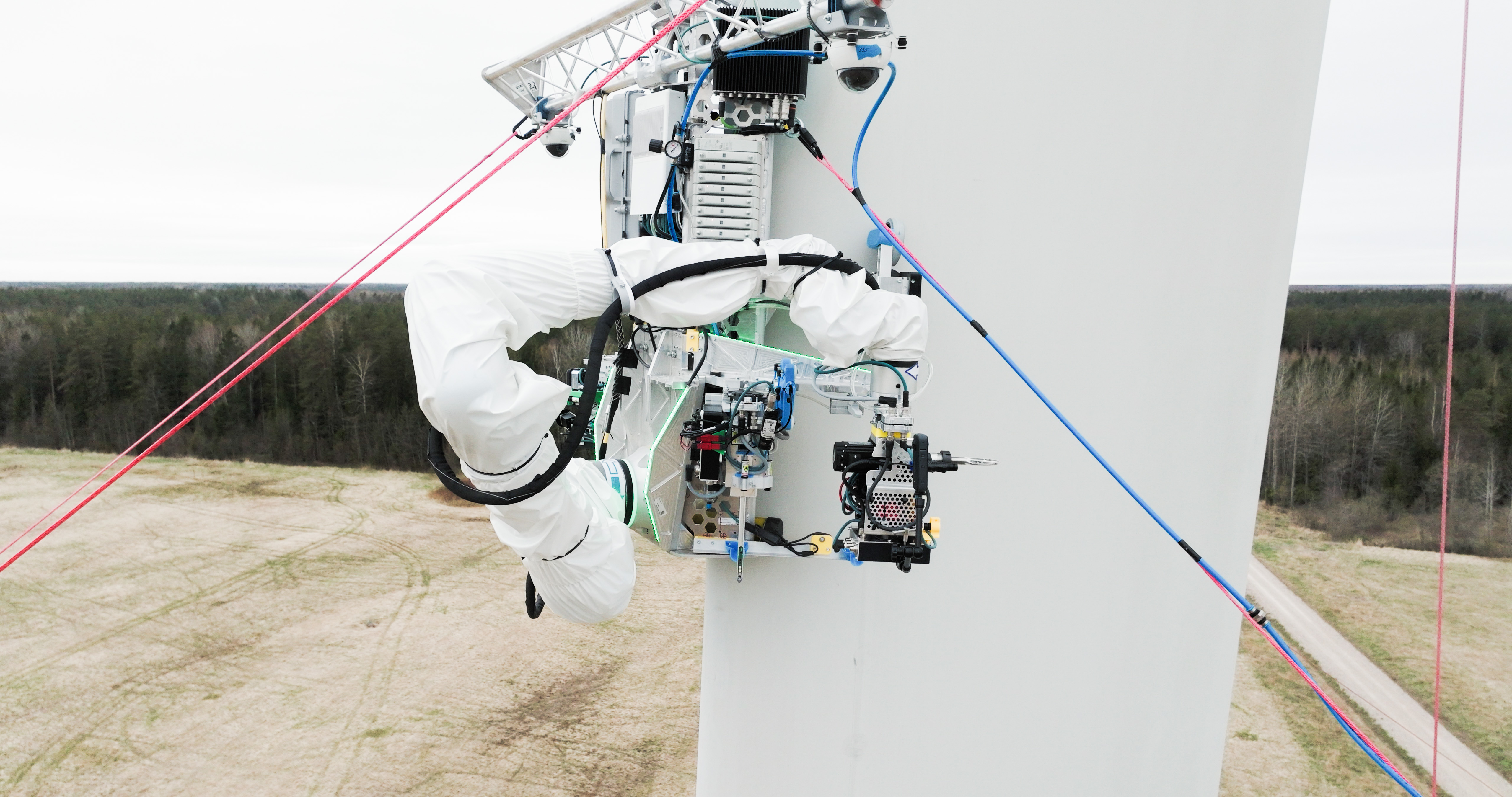
Robotic systems have helped compress parts of that workflow by improving repeatability in surface preparation, application and inspection.
Download full article