Exclusive Articles

Cable testing moves into the reliability era


Published in: Wind, Corporate Focus, Exclusive Articles

Cable testing moves into the reliability era image

As offshore wind projects move to higher voltages and longer cable routes, resonant testing and advanced partial discharge monitoring are becoming central to reducing commissioning risk and supporting long-term cable reliability.

Offshore wind cable systems are being asked to do more than ever before. Larger turbines, longer export routes and higher levels of grid integration are placing new demands on the inter array and transmission cables that connect renewable generation to the wider power system. In this environment, cable testing is no longer simply a final check at the end of installation. It is becoming a core part of project risk management, operational assurance and long-term asset reliability.

The basic challenge remains familiar. As individual wind turbine ratings continue to increase, inter array grid designs have moved from 36 kV towards 66 kV and an operating voltage class of 72.5 kV, helping to reduce current and thermal losses. This has important technical implications. These cables are closer to high voltage practice than conventional medium voltage practice, which changes the expectations around commissioning, diagnostics and documentation.

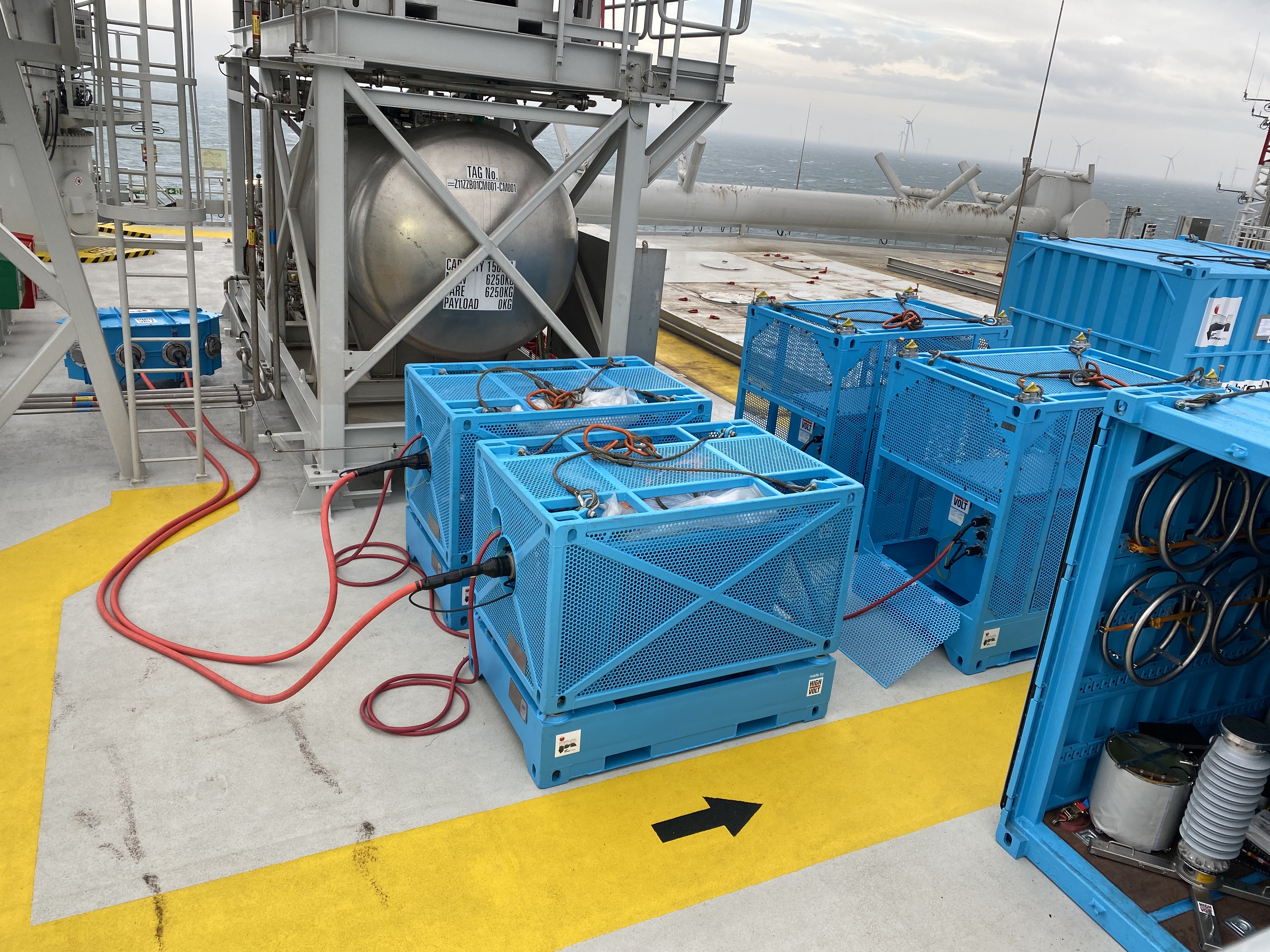
For primary distribution cables rated above 36 kV, standards and industry practice continue to point towards resonant AC testing as the preferred method. This is why resonant test systems (RTS) remain highly relevant for offshore wind farms, where cable terminations, joints and installation quality are critical to project availability. HIGHVOLT’s offshore solution was originally developed around this requirement: a compact system suitable for offshore weather conditions that could be transported, lifted, installed and operated in the demanding conditions of an offshore substation.

 Download full article