As wind energy becomes critical national infrastructure, expectations around asset reliability are changing. Turbines are larger, fleets are expanding and operating lives are being extended, yet Stacey Rivers, Chief Innovation Officer at BladeBUG, argues that inspection methods have not always kept pace.
Visual surveys and rope access remain important, but many defects with serious structural consequences can begin beneath the surface. Robotics combined with advanced non-destructive testing (NDT) could provide operators with earlier insight while reducing operational risk and technician exposure.
Finding damage before it becomes visible
Modern offshore turbine blades can exceed 100 m in length, while towers can rise above 150 m. These large composite structures operate for decades in demanding environments.
Visual inspection can identify erosion, lightning strike damage, cracking and coating degradation, but Rivers highlights several defects that may develop internally:
- Delaminations and bondline failures
- Fibre wrinkles and laminate voids
- Manufacturing anomalies
- Moisture ingress
- Fatigue-driven degradation
By the time visible signs appear, repair costs, downtime and operational risk may already have increased. Earlier detection therefore becomes increasingly important as fleets mature.
Robotics can address the access challenge
Larger blades also make inspection more difficult. Conventional access can require specialist technicians, offshore coordination, suitable weather windows and turbine downtime. At the same time, the industry faces a limited supply of experienced rope access and inspection personnel.
Robotic systems can provide more consistent access while reducing technician exposure to high-risk environments. BladeBUG’s argument is not that robotics should replace engineering expertise, but that it can improve repeatability, positional accuracy and data capture.
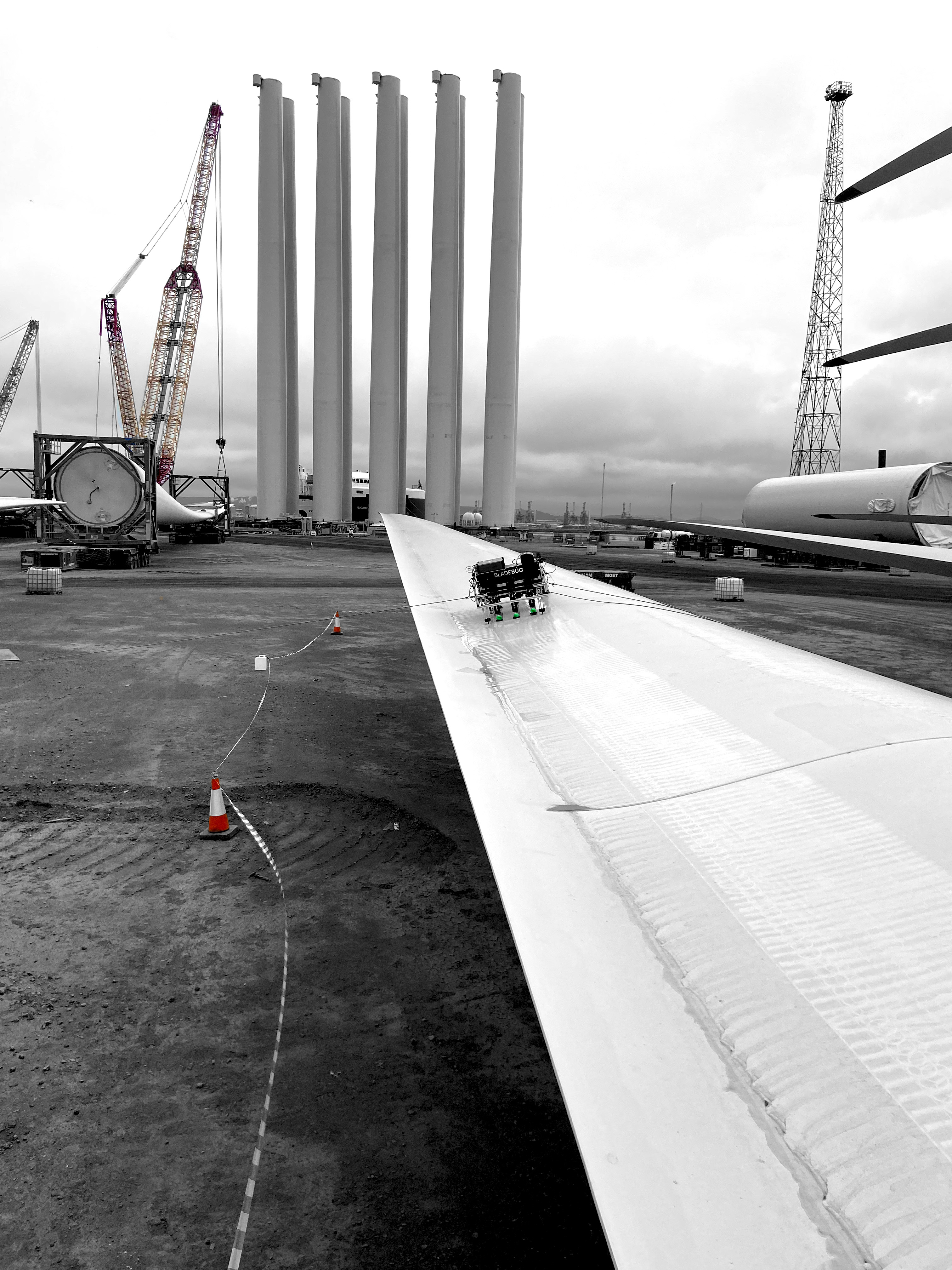
BladeBUG’s robotic platform is designed to operate directly on blade surfaces, showing how robotic access can bring inspection equipment to areas that would otherwise require more complex personnel access.
No single inspection method is enough
Different materials and defect types require different inspection techniques. Rivers therefore argues for modular systems capable of deploying several NDT methods.
These can include:
- Ultrasonic testing for laminate integrity
- Phased array ultrasonics for bondline imaging
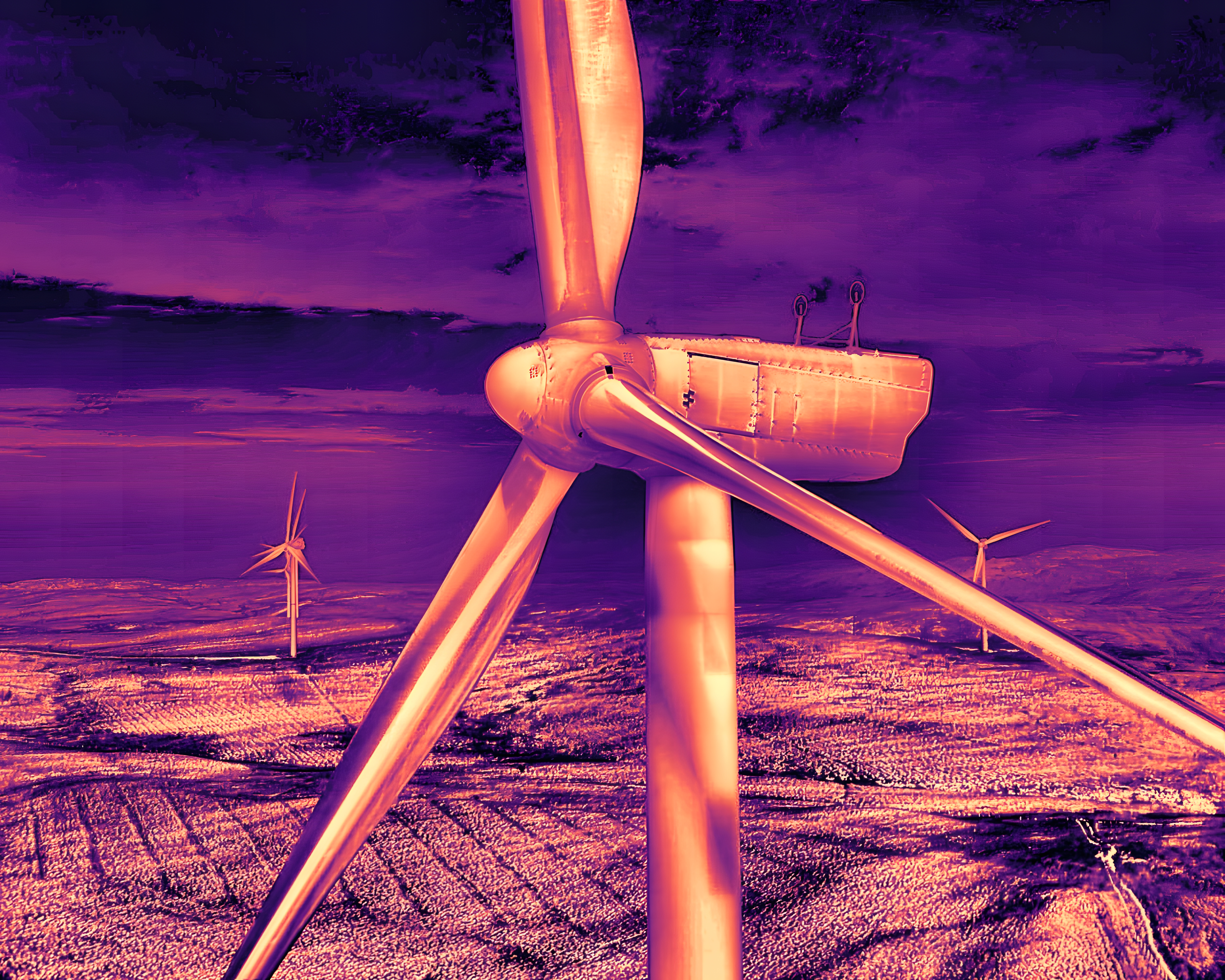
- Thermography for moisture ingress and bonding anomalies
- Eddy current testing for cracks in conductive components
- Laser scanning for geometry, wear analysis and digital modelling
These methods can produce detailed subsurface information. Combining different techniques can provide a more complete picture of structural condition than relying on one method alone.
Turning inspection into engineering intelligence
Robotic inspection is only part of the opportunity. Asset information is often fragmented across manufacturing records, transport reports, commissioning documents, inspections and repair histories.
Rivers proposes a continuous digital record, effectively a ‘blade passport’, that follows an asset through manufacture, transport, installation, operation, repair and life extension.
This could allow inspection data to be compared over time, helping operators understand whether defects are stable or developing and supporting:
- Defect growth monitoring
- Repair verification
- Fleet-wide trend analysis
- Better informed life-extension decisions
BladeBUG’s strategic partnership with Nexxis reflects this move towards combining robotic access, advanced NDT and asset integrity expertise rather than treating individual inspection technologies in isolation.
Moving from innovation to routine operations
The consequences of delayed inspection can extend beyond maintenance costs. Hidden defects can develop into major repairs, downtime can increase and technicians may spend longer in high-risk environments. Incomplete asset information can also complicate insurance scrutiny and life-extension or repowering decisions.
For Rivers, the priority is therefore not technology for its own sake. Robotics and advanced NDT need to demonstrate repeatable deployment, high-quality data and reduced operational risk.
As wind becomes increasingly important to energy security, inspection quality becomes directly connected to reliability, safety and financial performance. The next stage is to move these technologies beyond innovation programmes and make them part of routine maintenance and long-term asset planning.
Read the complete Industrial Insight feature from BladeBUG on robotic inspection, advanced NDT and protecting wind turbine assets throughout their operating lives in PES Wind: https://pes.eu.com/exclusive-articles/from-renewable-energy-to-critical-infrastructure