As solar technology advances at breakneck speed, particularly with the rise of promising materials like perovskites, the methods for testing and validating photovoltaic (PV) module performance must evolve just as quickly. Accurately evaluating next-generation solar requires integrating various measurement techniques seamlessly, a challenge that traditional, multi-instrument approaches often fail to meet efficiently or reliably.
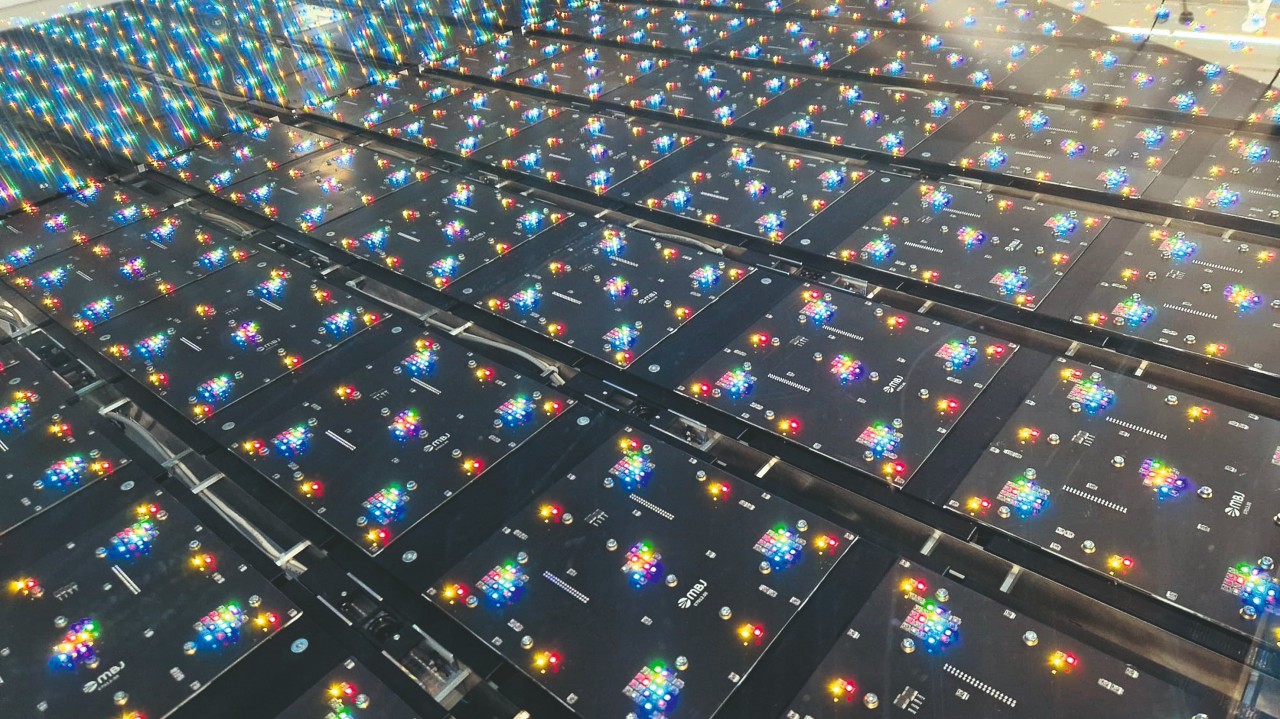
MBJ Solutions GmbH has introduced a new hardware and software platform designed specifically to address these complexities, offering researchers and manufacturers a unified system for comprehensive sun simulation and module characterization.
The Evolving Needs of PV Testing
Accurate PV module evaluation hinges on several key methods:
- Electroluminescence (EL) Analysis: Crucial for revealing internal structures and defects, especially in tandem cells where imaging each sub-cell at distinct wavelengths is necessary to map charge carrier lifetime.
- Sunlight Simulation: Evaluating devices under adjustable spectra and intensities that mimic real-world conditions, including testing under different current-limiting regimes, is vital.
- Current-Voltage (I-V) Analysis: Essential for characterizing cell behavior both in the dark and under illumination, providing key parameters like short-circuit current, open-circuit voltage, and peak power.
Historically, performing these measurements required different instruments, leading to extended testing times and potential variability between procedures. This inconsistency is particularly risky for modules exhibiting metastable behavior – common in newer technologies like perovskites – where characteristics change upon exposure to light or electrical current. Furthermore, managing complex manual tests or custom automation scripts across multiple samples introduces the potential for errors. Full automation of test sequences has become essential.
The Perovskite Challenge: Characterization Complexities
Perovskite solar cells, especially in tandem configurations with silicon, offer immense potential for higher efficiencies and lower production costs. However, significant challenges remain:
- Long-Term Stability: Degradation under standard operating conditions is a primary concern.
- Scalable Production: Developing consistent, high-quality manufacturing techniques is ongoing.
- Metastability: Perovskite properties can temporarily shift due to light, electrical fields, or environmental changes, impacting I-V measurements. Ionic movement within the cell leads to hysteresis (where current output varies with voltage sweep direction), making accurate performance determination difficult.
- Light-Induced Effects: Phenomena like photodoping and light soaking (where performance improves under illumination) can distort measurements if the cell isn't properly stabilized beforehand through preconditioning.
Careful control over testing conditions and standardized procedures, like preconditioning, are therefore crucial for obtaining reliable data on perovskite devices.
An Integrated Solution: MBJ's New Platform
To address these challenges, MBJ's new platform incorporates key measurement functions into a single, unified system, operated through intuitive software. Researchers can define complex workflows using a graphical interface with drag-and-drop sequencing, enhancing consistency and simplifying setup.
Three system designs cater to different laboratory needs:
- Sun Simulator Lab: The core solution with 15 LED types (94.5% spectral coverage) and flash duration up to 200 ms, suitable for all current technologies, including tandem perovskites using multi-flash constant voltage methods.
- Steady State Sun Simulator: Optimized for cell/mini-modules with 22 LED types (98% spectral coverage), offering steady illumination and combined spectra use for soaking and measurement.
- Sunlike Lab: The most advanced model with 32 LED types (full 100% spectral coverage, 11.9% deviation) and a built-in temperature chamber ($15^{\circ}C$ to $75^{\circ}C$) for thermal stress testing and evaluating temperature coefficients.
Key Features Designed for Photovoltaic R&D
This integrated platform offers a comprehensive suite of features tailored for advanced research:
- Maximum Power Point Tracking (MPPT).
- Extended I-V routines (slow sweeps, forward/reverse) to reduce hysteresis.
- Multi-wavelength EL imaging with automatic filter switching for top/bottom cell analysis.
- Dark I-V measurements.
- Precise temperature control.
- Compact footprints for easy lab integration.
- Finely tunable LED spectrum, vital for tandem modules.
- Optional real-time spectral monitoring.
- Bypass diode testing capabilities.
- Graphical software for building custom test sequences without coding (saving as reusable recipes).
Streamlining Data Handling and Experimental Tracking
Effective data management is built-in. Each measurement is stored with time and module ID, simplifying data retrieval (e.g., comparing EL images before/after stress tests). Results can be exported in various formats (Excel, PDF) with visual summaries, and integration with central databases allows for tracking long-term trends.
Accelerating Next-Generation Solar
The combination of advanced, integrated hardware and intuitive software provides researchers with a powerful, efficient, and reliable platform. By precisely controlling complex measurements and minimizing errors in high-throughput environments, these unified systems meet the evolving needs of PV research and accelerate the development of next-generation solar technologies like perovskites.